When it comes to leaving a job, a resignation letter is one of the most crucial documents you’ll submit. Whether you’re a newcomer, a seasoned professional, a teacher, or an intern, it’s important to write a clear and professional resignation letter to ensure a smooth departure. Many people find it tough to nail down the right format, especially when they’re pressed for time. That’s why having a straightforward resignation letter format in Word can be a real lifesaver, helping you save time and stick to a professional layout. This all-inclusive guide will walk you through everything you need to know—its significance, various formats, sample letters, useful tips, mistakes to steer clear of, and ready-made Word templates.
What Is a Resignation Letter?
A resignation letter is a formal document that employees submit to inform their employer of their decision to leave the company. It acts as written confirmation of your intent to resign. You’ll find that a resignation letter is necessary in corporate jobs, government roles, schools, colleges, internships, and even small businesses. It helps uphold professionalism and allows the organization to start the exit process. Without a proper resignation letter, HR can’t initiate your final settlement, relieving letter, or experience letter.
Why You Need a Professional Resignation Letter Format in Word
A professional letter of resignation ensures a smooth and respectful exit from your current job. It reflects your good behavior and professionalism. A well-written letter helps you maintain a positive relationship with your employer even after you leave the company.
Here’s why it matters:
- It avoids misunderstandings/miscommunication between HR and employees.
- It serves as your official proof of resignation.
- You need it for full and final settlement.
- HR requires it to issue relieving and experience letters.
- It maintains professionalism and keeps your reputation positive.
- It shows gratitude and respect towards the organization.
Why use a Word DOC/DOCX format for a resignation letter format in Word?
Most companies prefer a resignation letter in Word format because it is easily editable and clean in layout. Word documents maintain proper alignment and look professional. They can be printed, e-mailed, or saved as PDF.
Benefits of using a resignation letter format in Word:
- Easy to adjust before sending.
- Universally accepted across companies.
- Works on almost every computer or laptop.
- Can be saved as PDF without losing formatting.
- Clean and professional-looking appearance.
- HR-friendly layout for documentation.
Key Components of a Professional Resignation Letter Format in Word
Every resignation letter should include certain elements to make it complete and professional. These components help HR understand your purpose clearly and avoid confusion. Below are the key parts you must include:
1. Date
The date in a resignation letter is among the most important information contained in it because it serves as the official record of when you submitted your resignation. The HR needs this date to calculate your notice period, plan your exit formalities, and update company records. Putting the date at the very beginning ensures there will not be any confusion later over timelines. It also aligns your resignation with legal and contractual requirements. Clearly stated, it helps maintain transparency throughout the offboarding process.
2. Employer/Manager Name
Addressing the letter of resignation to the right person shows professionalism and ensures that your request reaches the right authority. This is usually the person responsible for handling the exit of team members, which could be your manager, supervisor, or head of human resources. Mentioning their name adds a more personalized touch and reflects respect towards the reporting structure. It avoids delays that could happen if the letter is directed to the wrong person. An appropriately addressed letter sets the right tone for the rest of your communication.
3. Designation and Company Name
Including the designation and name of the company to which one is addressing the letter helps ensure that the letter is formally correct and that it has reached the relevant department or authority within the organization. This detail is quite crucial for large companies where several managers or HR people may share a similar name. It also shows respect for professional business communication. Adding these details helps the letter remain structured and easy to process.
4. Subject Line
A clear subject line will let the reader know at once about the purpose of your letter, thus giving the HR a starting point of categorizing and processing the letter. Without a proper subject line, your resignation might get overlooked or misunderstood. A straightforward and simple subject line like “Resignation from the Position of [Your Job Title]” tells your intention within seconds. This saves time for both you and the HR department. A well-penned subject line also retains professionalism in formal communication.
5. Statement of Resignation
A statement of resignation is the heart of your letter, whereby you communicate your decision to leave the organization directly. It should be straightforward with clarity and simplicity to avoid any misunderstanding. Avoid overly emotional or negative language; instead, focus on making it clear. The statement will formally notify your employer of your resignation and subsequently initiate the transition process. A straightforward statement of resignation reflects your maturity and respect for corporate processes.
6. Last Working Day
Mentioning the last working day is important because it helps HR estimate the exact date of your exit. Your last working date should consider your notice period, company policy, or the conditions in your contract. This information enables the manager to plan for your replacement or relocation of your responsibilities. It also aids in scheduling the dates for exit interviews, handovers, and pending task reviews. Clearly stating your last day reflects transparency and responsibility.
7. Reason of Resignation (Optional)
While stating the reason for resignation is not mandatory, in certain cases, it may provide clarity to the employer. This will help them realize your reason for resignation without making unnecessary assumptions. A brief, positive, and polite reason, such as career growth, family commitments, relocation, or education, upholds professionalism. Avoid negative remarks about the company or colleagues, as this can affect their memory of you. A soft explanation fortifies goodwill and seamless exit communication.
8. Appreciation Line
A gratitude line conveys an appreciation for the opportunities, learning, and experiences one gained during their stay. Showing thanks gives a very good impression, enables you to continue having a good relationship with your employer, and gives a good impression even after leaving. Companies appreciate people who exit gracefully, and such simple appreciation messages show emotional intelligence. It also helps in building a strong professional network for future references. A polite thank-you note makes your resignation letter warm and respectful.
9. Handover Support
Ensuring support during the handover process is a responsible and professional approach. You can mention the completion of pending tasks, helping with documentation, or even training your replacement. This commitment helps the company manage your exit without disruption. Handover support also builds up your goodwill and shows your dedication until the last day. Employers appreciate employees who leave with cooperation and teamwork.
10. Signature
Your signature shows the final touches on your letter of resignation, demonstrating that the information you provided is accurate and the letter is submitted formally by you. End with your full name; if you are submitting an electronic or digital version, it is sufficient to type your name. A correct signature gives authenticity and professionalism to the document. It will enable HR to validate and put your resignation on record correctly. The signature closes the structure of the letter nicely.
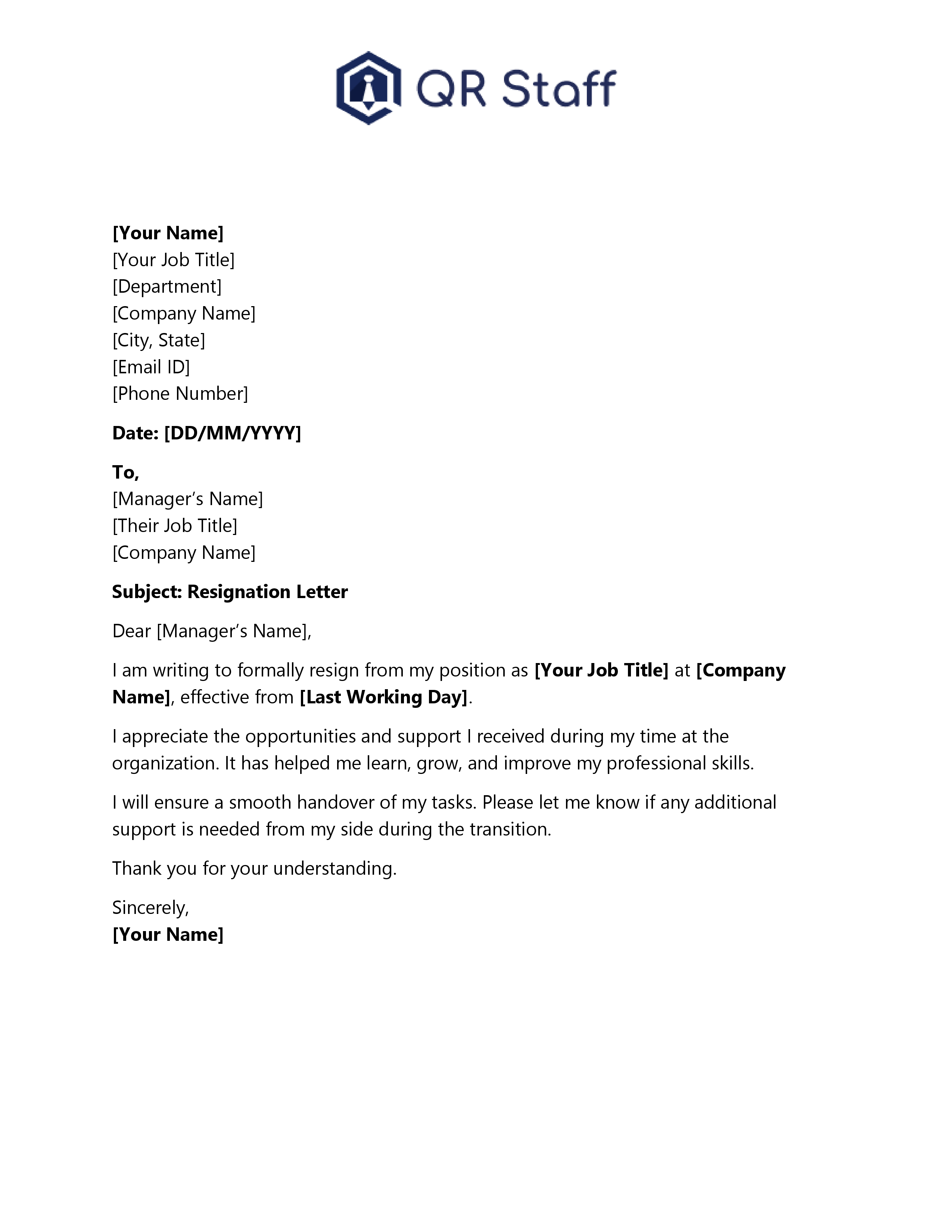
Resignation Letter Format in Word
Below is a clean and professional Word-style layout you can use:
Download Resignation Letter in Different Format
| Formats | Files |
|---|---|
| Resignation Letter Format in Word | Download Word File |
| Resignation Letter Format in PDF | Download PDF File |
Samples of Resignation Letter Format in Word
With the basic template in your hands now, you can now explore some specific situations regarding your resignation.
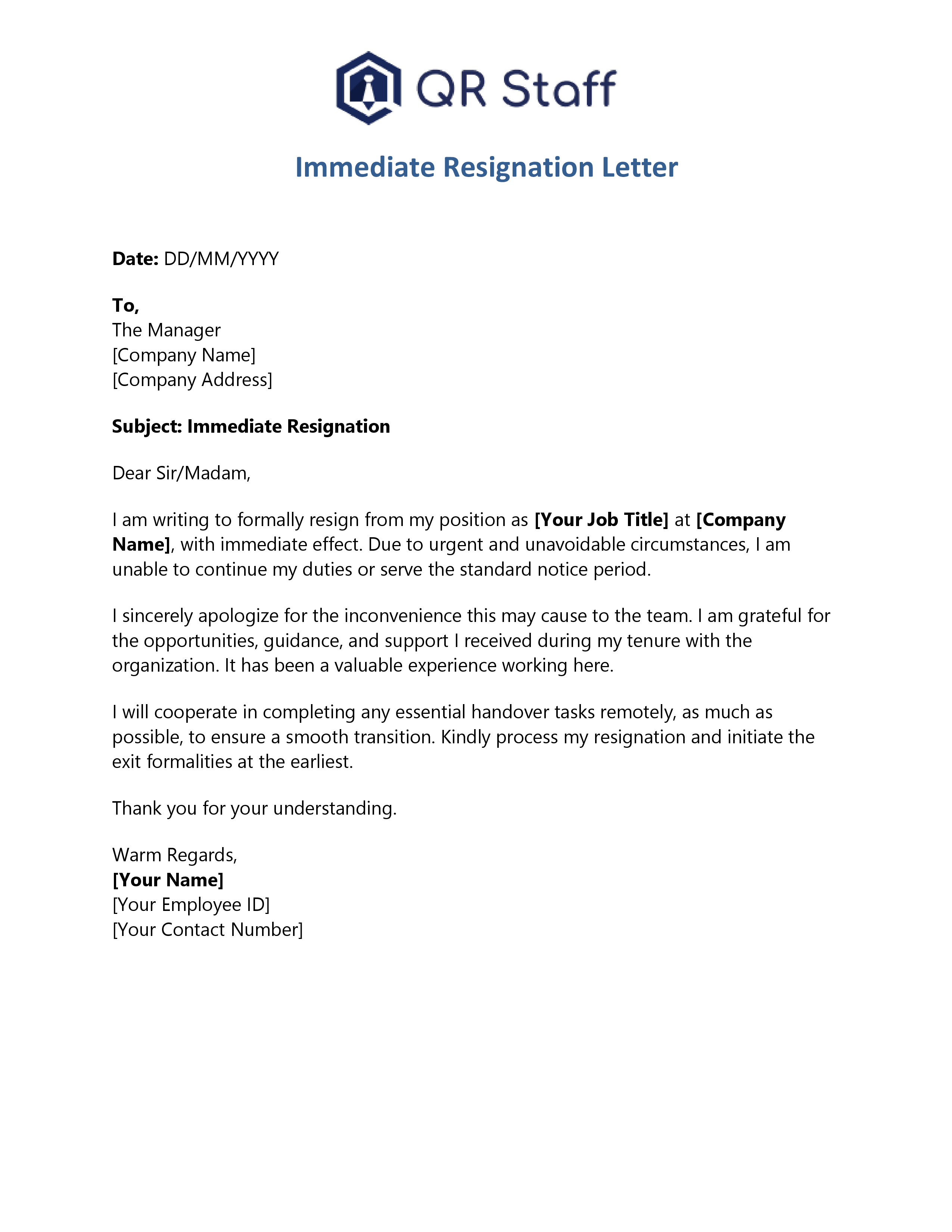
Sample 1: Immediate Resignation Letter
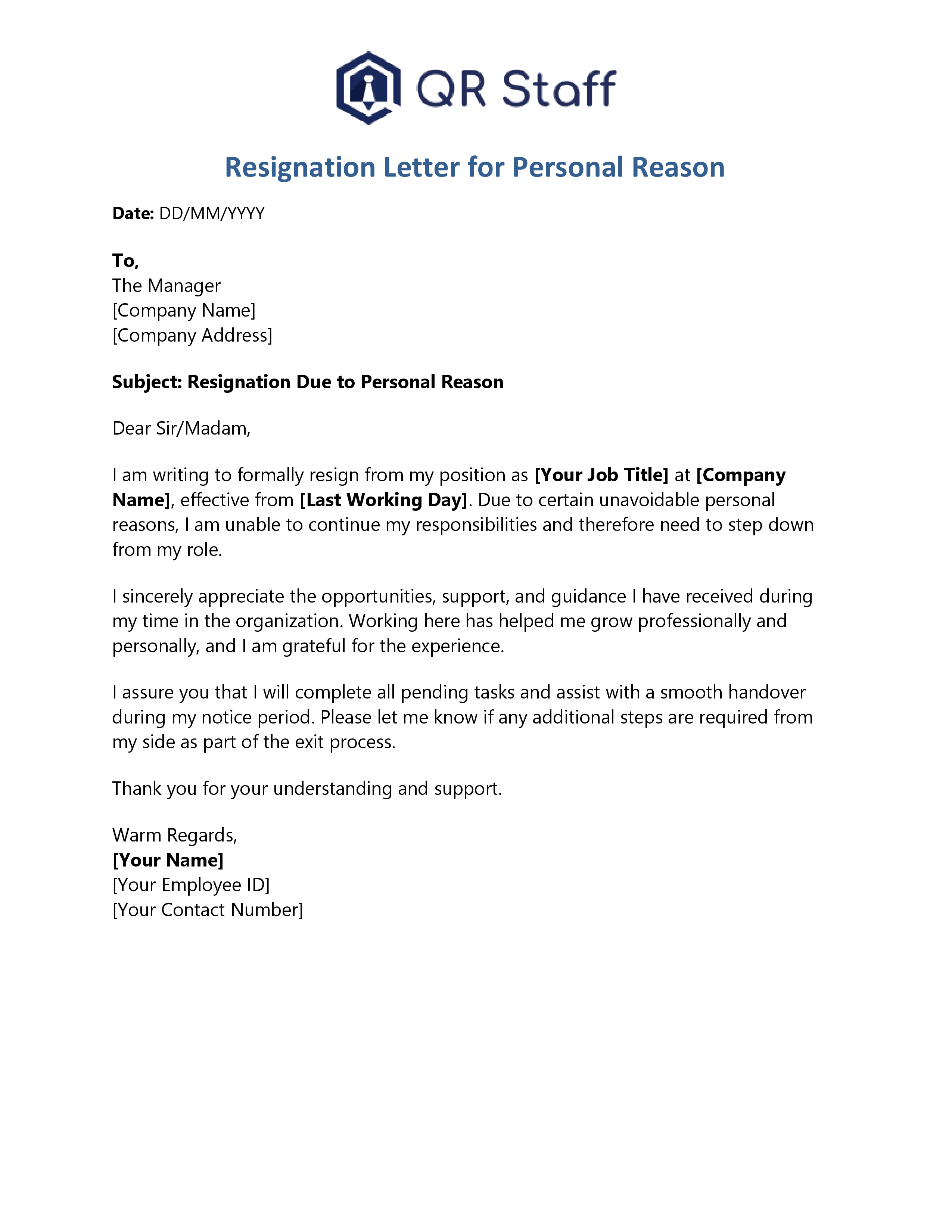
Sample 2: Resignation Letter Format in Word for Personal Reasons
Sample 3: Resignation Letter Format in Word for Career Growth

Sample 4: Resignation Letter Format in Word for New Job Opportunity
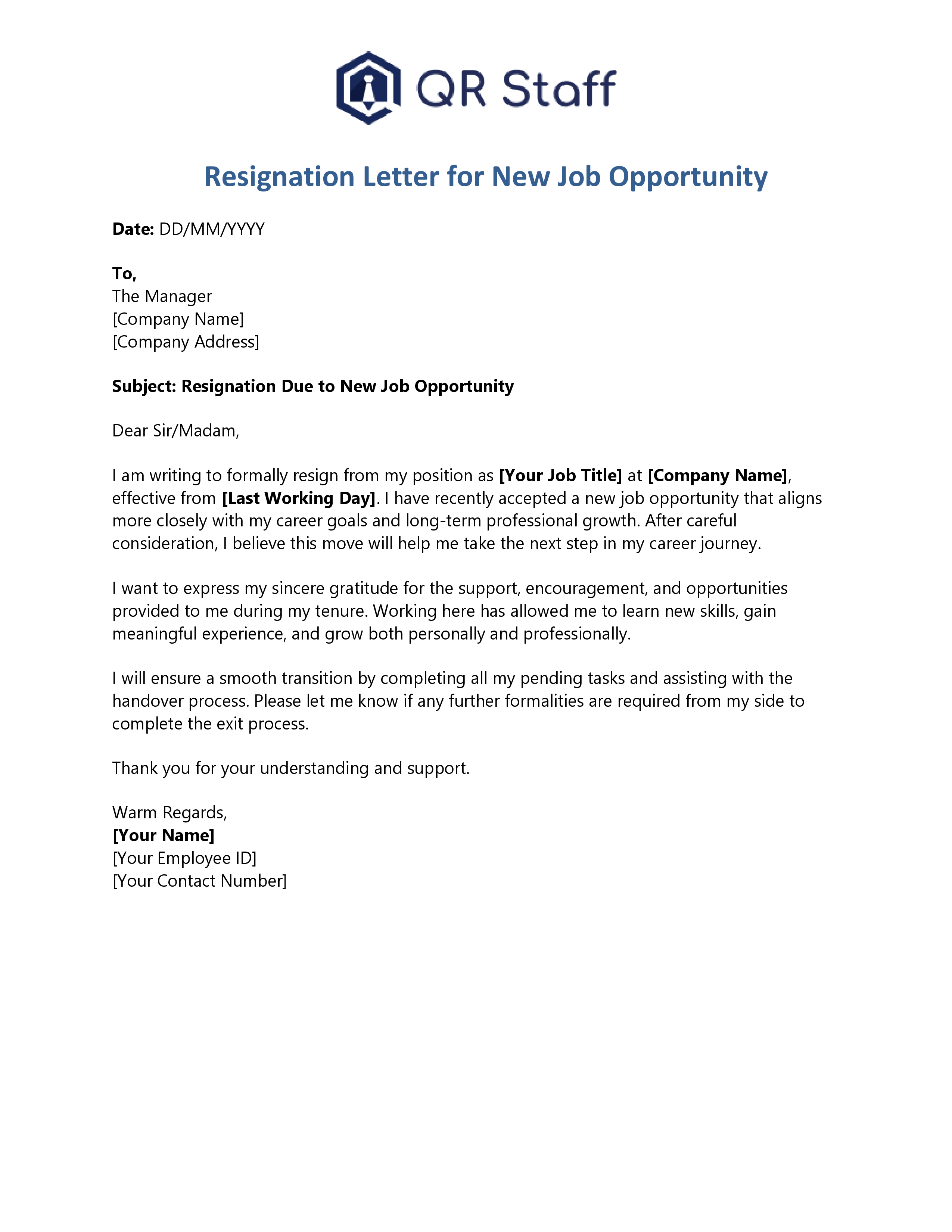
Sample 5: Resignation Letter Format in Word for Pursuing Education
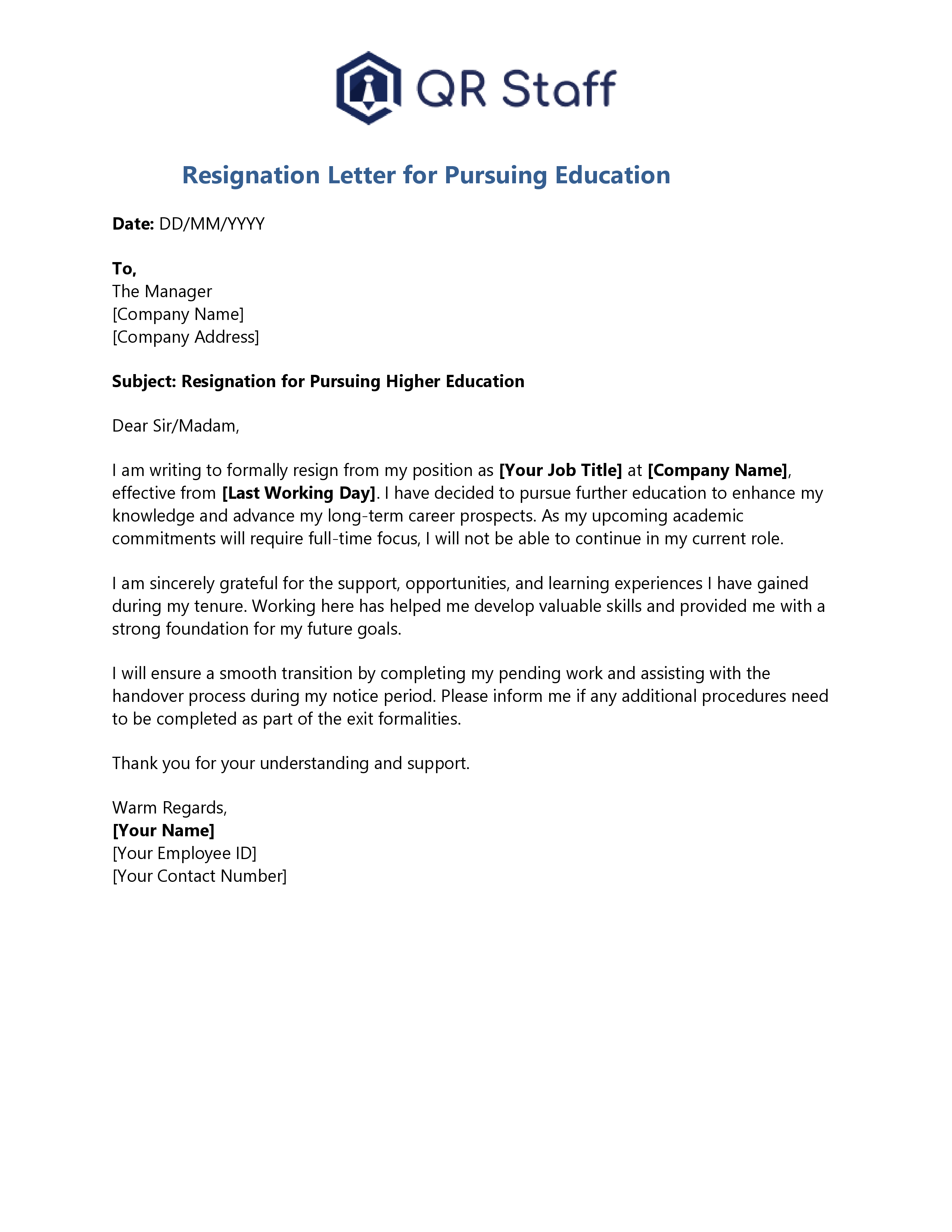
Sample 6: Resignation Letter Format in Word for Personal Health Issue
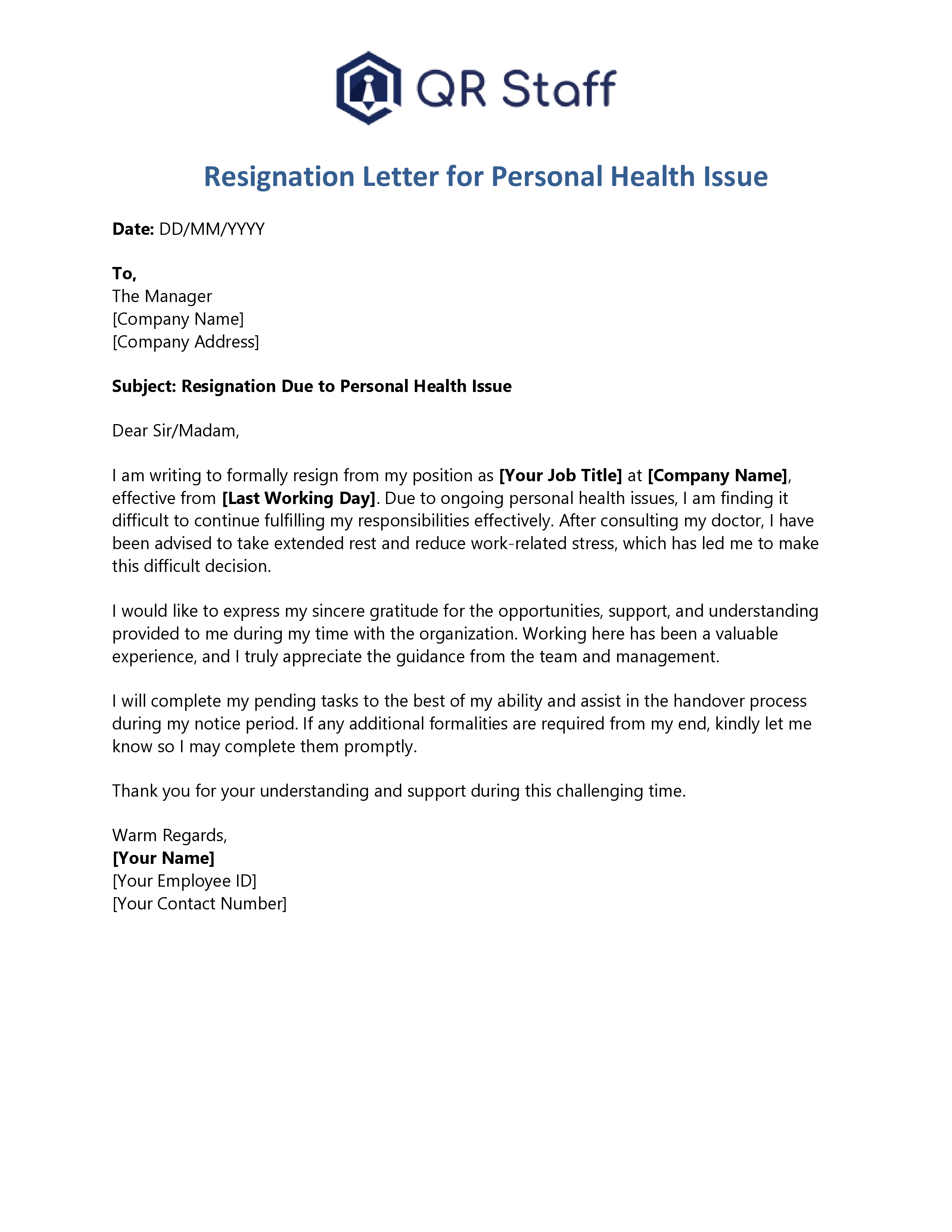
Sample 7: Resignation Letter Format in Word for Unfair Treatment
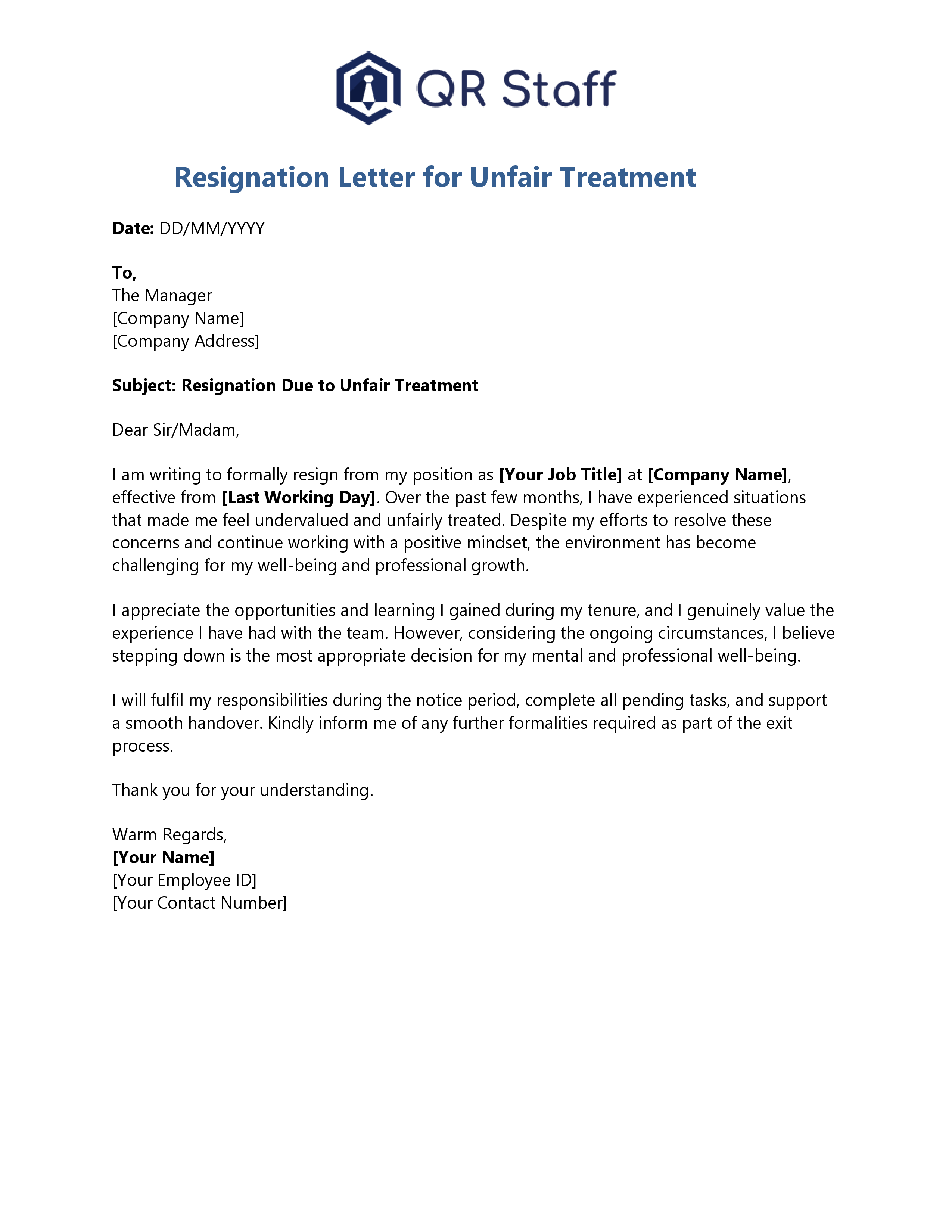
Sample 8: Resignation Letter Format in Word for Job Dissatisfaction
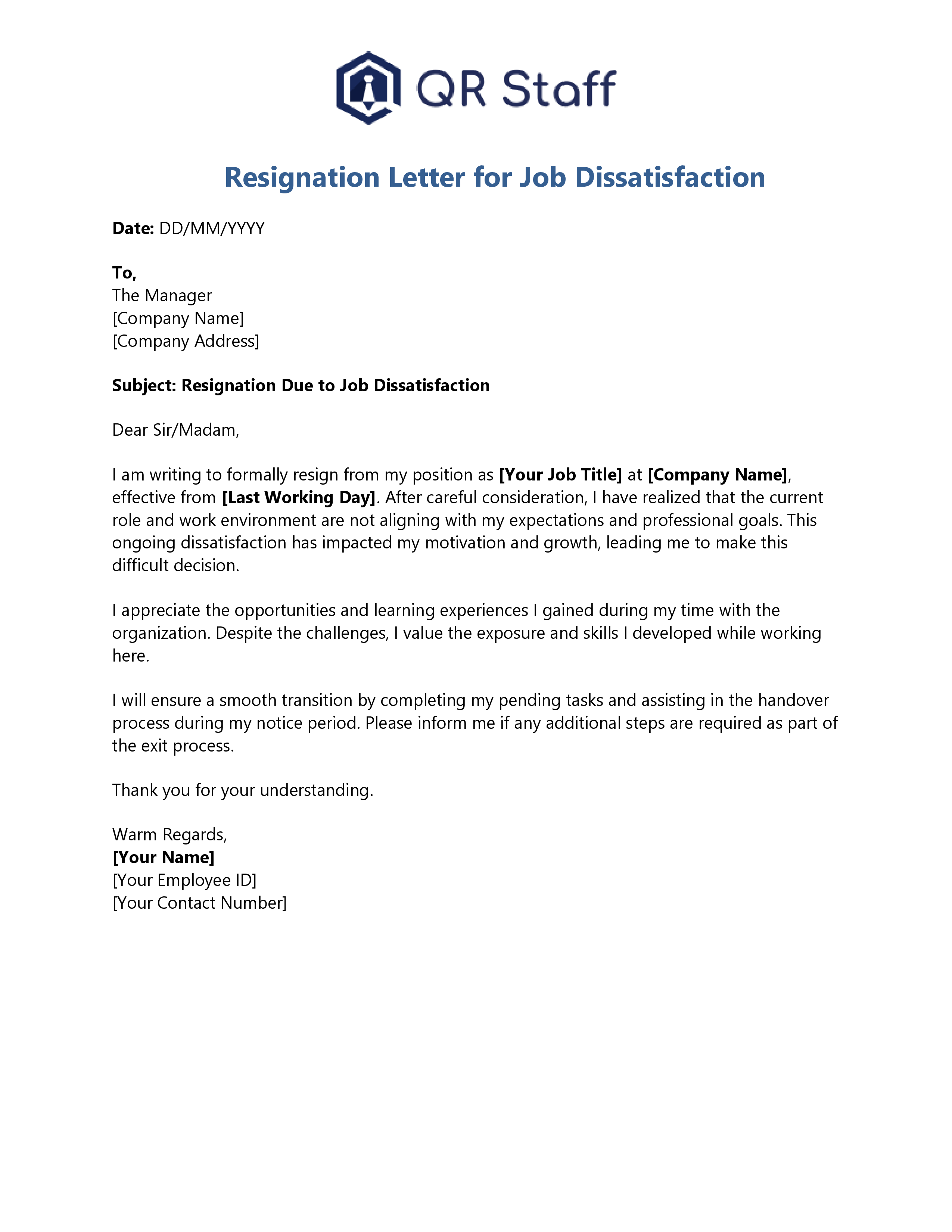
Sample 9: Resignation Letter Format in Word for an over-commute time

Sample 10: Resignation Letter with an Advance Notice
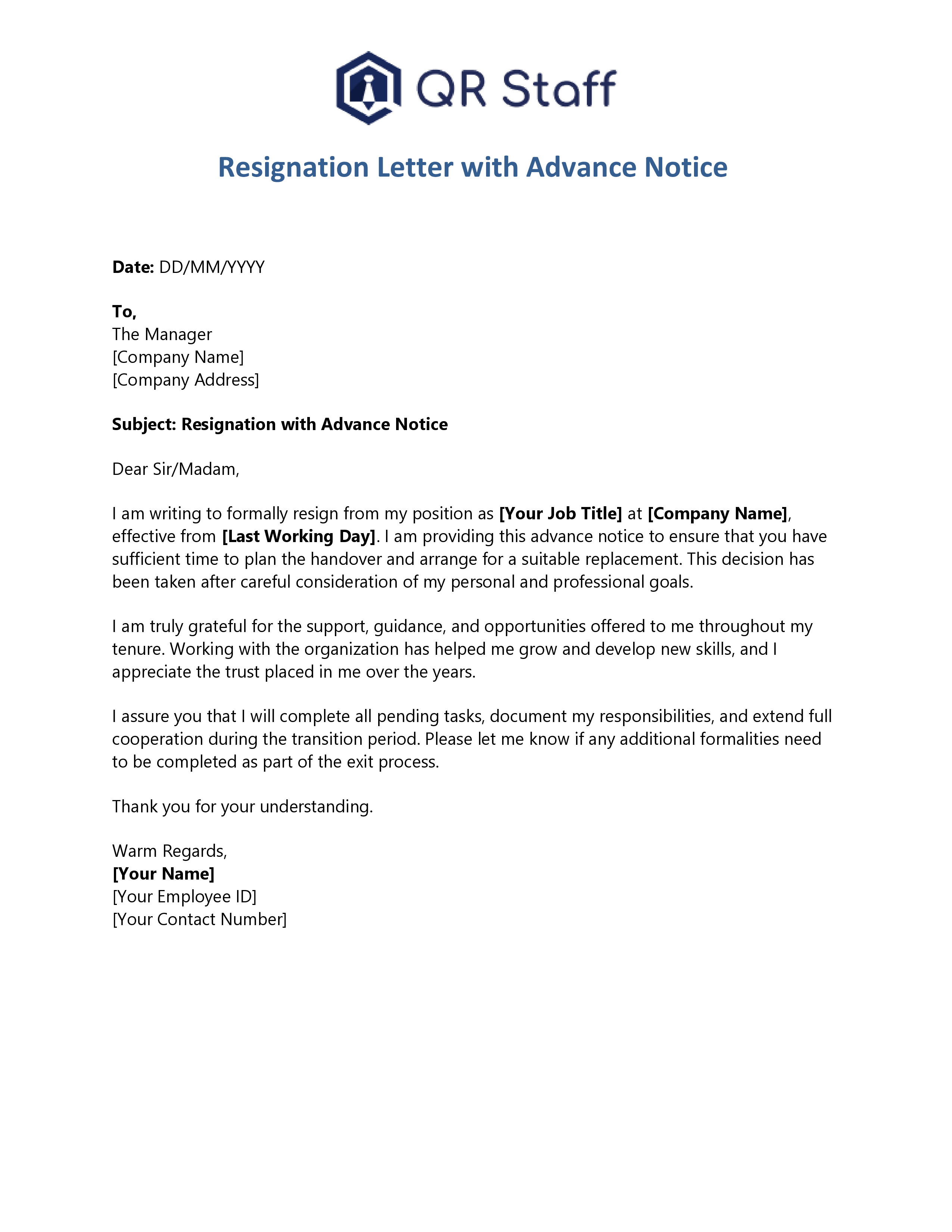
Sample 11: Resignation Letter Format in Word for an Unfit Role

How to Write a Resignation Letter Format in Word (Step-by-Step Guide)
Below is a practical, step-by-step walkthrough you can follow in Microsoft Word. Each step is written clearly so you can complete a professional resignation letter quickly and confidently.
1. Open Microsoft Word and start a new document
Open Word and select Blank Document to create a new page. That will give you complete freedom regarding layout and formatting. If desired, you could select a simple “Letter” template, but for a short resignation letter, a blank is easier. Immediately save the file with a descriptive name, such as Resignation_[YourName]_[YYYYMMDD].docx. Early saving avoids data loss, and future edits are easy.
2. Set page layout and basic formatting
Set the margins to 1 inch, by default, and the page size to A4 or Letter, whichever applies. Choose a professional font: Calibri, Arial, or Times New Roman in font size 11 or 12 for the body. Set single line spacing with a blank line between paragraphs to ensure readability. Activate spell check and grammar check (Review → Spelling & Grammar) before you begin writing. These minor formatting options will render the letter neat and clean.
3. Include the date and your contact information
On the top left, mention the date on which one is submitting the letter, such as 24 November 2025. On the line below, write your full name, job title, phone number, and email address separately. This block helps the HR connect with you regarding exit formalities, if any. If you want a letterhead look, center your name and contact information and use a slightly larger font for your name. Keep this section simple — clarity, not decoration, is the objective here.
4. Correct addressing of the recipient
Leave one line and write the recipient information in this format: name of manager/HR, designation, and organization name. If you happen to be familiar with that person, then you can use his or her full name with the proper title, like Mr. Amit Sharma, HR Manager. This gives the letter a professional look by ensuring it goes to the right person. In an email attachment of the letter, you could just use their name and title, foregoing full postal details. One should not forget to spell-check the receiver’s name to avoid awkwardness.
5. Write a clear subject line – for printed/email letters
If the letter is going to be emailed or placed at the top of a printed document, add a subject line such as Subject: Resignation — [Your Job Title]. The subject line can be placed above the salutation and may also be bolded to make sure it’s immediately noticed. This helps HR categorize your letter quickly among other documents. In a printed letter, the subject line can sit between the recipient block and the salutation. Keep it short and direct — clarity is the point.
6. Start with a formal salutation.
Start with a formal opening such as “Dear Mr./Ms. [Last Name],” or “Dear [Manager’s Name],”; then add an empty line. A formal greeting helps in ensuring the professional tone of the letter right from the very first lines. Never use openings like “Hi” in formal letters of resignation. If you don’t know the name, then address “Dear Hiring Manager” or “To the HR Team”. The salutation should be left-justified.
7. Make the statement of resignation clear and direct.
Begin the first paragraph with a straightforward sentence: something like, “I am writing to formally resign from my position as [Your Job Title] at [Company Name].” State your intention clearly so that there is no doubt about your intention. This is the formal notice of resignation, so be direct. Then add a short sentence naming your last working day in relation to your period of notice. For example: “My last working day will be [Date].”
8. Optionally provide a brief explanation (keep it positive)
If you decide to include a reason, make sure it’s brief, factual, and positive, such as career growth, relocation, new opportunity, or personal reasons. Comments that reflect negatively on the company, colleagues, or leadership should not appear in a letter of resignation; that is not what it’s for. One short paragraph justifying the reason will help maintain good relations. Remember: You are never obligated to provide a reason, so don’t include it if you want to keep things private.
9. Show appreciation and reflect positively
Include a couple of lines of gratitude to the employer for the opportunity, guidance, or skills one has gained within their tenure. If possible, be specific: mention a department, project, or mentorship if appropriate. This politeness will forge a good ongoing relation and may be helpful for future references, too. Keep this paragraph sincere but brief-one short paragraph of 3–5 sentences is enough.
10. Offer handover assistance and practical next steps
Indicate clearly that you’ll help with a smooth transition: offer to complete pending work, document procedures, or train your replacement. Give the contact details or preferred ways of handover, where applicable-; for example, shared drive links and final report date. This reassures the manager and reduces friction at the offboarding stage. Be realistic about what you can commit to within your remaining time.
11. Close formally and add your signature
Close the letter with a professional ending like “Sincerely,” “Regards,” or “Yours faithfully,” followed by a blank line and your typed full name. If you are printing the letter, allow space to sign manually above your typed name. In an emailed or other digital letter, you could paste in a scanned signature image if you wished to give an appearance of greater formality. You may put your designation and employee ID below your name for clarity.
12. Proof, save, export as needed
Spell and grammar check the letter in Word, then read it out loud to identify any issues with tone or flow. Save the final file as a .docx; be prepared to export a PDF also for secure sharing that preserves formatting: File → Save As → PDF. If emailing, attach the PDF and paste a short message in the email body, or attach the Word file if HR requested it. Lastly, save a copy in your own records and note the date you submitted it for future reference.
Common Mistakes to Avoid in a Resignation Letter Format in Word
Although writing a letter of resignation may seem pretty simple, many employees make mistakes that reflect negatively on their professional image. Your resignation letter should be polite, clear, and respectful, whatever your reason for leaving may be. By avoiding the following mistakes, you are going to ensure that your exit is smooth and your relationship with the company remains positive. Here are the most common errors that you must keep away from:
1. Being Emotional or Negative
Expressing anger, frustration, or personal issues in the resignation letter is one of the greatest mistakes an employee makes. It has to remain neutral and professional, even if the experience was bad. Any negative comment will dent your reputation and future references. Remember, your resignation letter will go into your permanent HR file. Keeping it free of emotions makes sure you leave on a positive note and with dignity.
2. Not Mentioning the Last Working Day
Most employees forget to clearly mention their last working day, which again creates confusion among the HR and team managers. This is quite an important date because it allows the company to plan your handover, final payments, and notice period. Omitting this information prolongs the processing of the exit and causes avoidable direct communication. Always mention your last day in accordance with the notice period. Clear timelines help both you and your employer transition smoothly.
3. Giving too much detail about why you’re leaving
Some employees make the mistake of writing long explanations or even personal stories about why they are resigning. Your letter of resignation is not a place for detailed justifications or emotional reasons. Too much information can make the letter seem unprofessional and, quite honestly, not necessary. A short, polite reason, if you choose to include one, is sufficient. Focus on clarity, not storytelling.
4. Using Casual or Unprofessional Language
Your resignation letter should be formal in tone, even when you are on good terms with your boss. Phrases like “I quit,” “I’m done,” or “I’m leaving ASAP” do sound too casual. Slang and poor writing will always diminish your credibility and hurt any future references. A letter of resignation is a part of your record in your career; therefore, you need to keep this in mind while choosing the words. Formal, polite expressions always create a positive impression.
5. Forgetting to Provide Handover Support
Not providing simple support during the transition can make your exit look sudden or irresponsible. Even a simple line saying you will help with tasks or provide handover documents shows professionalism. Companies like those employees who leave gracefully and responsibly. Without offering your support, pending tasks may get stuck or delayed, affecting the team in a negative manner. Such small gestures of cooperation build trust and leave a good legacy.
6. Not Thanking the Employer
Some employees skip the gratitude line, assuming it is not necessary, but it is an important part of keeping relations okay. Thanking the company for opportunities, training, or experience helps to end the relationship respectfully. Appreciation shows maturity and professionalism. Even if your experience wasn’t perfect, finding something positive to acknowledge makes the letter balanced. A polite thank-you strengthens future networking possibilities.
7. Sending a badly formatted or mistake-ridden letter
Spelling errors, grammatical mistakes, and incorrect formatting make your letter of resignation a less professional document. The HR departments take these letters seriously, and sloppiness creates a very bad impression. Always proofread for spelling and grammar errors before submitting, and make sure there is appropriate spacing, alignment, and size of font. A clean layout signals a regard for detail and respect for the company. Good formatting makes the letter easier to read and process.
8. Not Keeping a Copy for Yourself
Many employees forget to save a copy of their resignation letter and later struggle to prove the submission date. Keeping a copy—both in Word and PDF—helps you maintain a record of your official notice. In case of disputes about the notice period, exit date, or clearance, your saved letter becomes proof. A personal copy also helps track your professional documentation. Simple record-keeping prevents future confusion.
Best Tips to Write a Polite Resignation Letter Format in Word
Writing a polite resignation letter will enable you to leave your job on good terms and will help you maintain a good professional reputation. Even when you are not satisfied with your current role, the tone of your letter should be respectful and composed. A correctly written resignation letter reflects maturity and professionalism; this is where you show respect to the company for investing time and effort in you. Here are some tips to guide you in writing a polite and effective resignation letter.
1. Employ a professional and respectful tone.
Your resignation letter should be composed in a calm, polite, and respectful tone from the very first line to the last. Never use emotional or harsh language, even if your workplace presented certain difficulties. A professional tone demonstrates an adult approach to some situations and your respect for oneself. Note that resignation letters form part of your HR record, so the tone is important here. Keeping your words soft and positive means leaving a good impression.
2. Begin with a formal and straightforward statement of resignation.
You should start by simply stating your intention to resign from the position that you are currently holding. Keeping the first line simple eliminates confusion and makes your intention clear. You also do not need to add extra details or emotional sentences here. A straightforward statement sets the right tone for the rest of the letter. It would help the human resource section and the management comprehend your purpose at once without needing to read between lines.
3. Provide Proper Notice According to Company Policy
Always mention your last working day as per your notice period to ensure a smooth transition. The advance period the company gets is helpful for planning your replacement or workload distribution. It also means that you follow company policies, which may be based on official notice periods. It avoids misunderstandings and unnecessary disputes over your date of leaving. A polite resignation letter will always give a clear timeline for your departure.
4. Keep Your Reason Short and Positive
If you decide to include your reason for leaving, make sure it is brief, professional, and positive in nature. Never criticize your job, team, or management, as negativity harms relationships. A simple career growth, personal commitments, or education would do just fine. This says a lot about how much you respect diplomacy and would not like to bring about a confrontation. Light and polite reasons will help in maintaining a healthy connect in the future.
5. Express Sincere Gratitude
A letter of polite resignation always contains words of thanks for the opportunities extended. These words of thanks show that one is grateful for the learning, experience, or support received while working. Sometimes, even though your experience might not be perfect, something said on a positive note helps you leave graciously. Employers do appreciate employees who leave politely and respectfully. A thank-you message genuinely conveys a sense of goodwill that would help you in future references.
6. Provide Handover and Transition Support
Assuring your employer of your contribution in easing the transition process shows responsibility and cooperation. You may say that you will finish crucial tasks, prepare handover documents, or train the next person. This attitude on your part indicates that you respect the company’s workflow even after you resign. Employers appreciate employees who leave without creating operational disruption. A polite offer of support strengthens your professional image.
7. Avoid Negative Remarks About the Company or People
Even if there were problems with working, it is not worth mentioning in the letter of resignation. Negative comments harm your reputation as a professional and make the process of your leaving uncomfortable. A letter of polite resignation does not concentrate on complaints but on positivity. It actually reflects emotional maturity by keeping negative thoughts away from the letter. This way, you preserve relationships that might be helpful for you later in life.
8. Keep the Letter Concise and Easy to Read
While your letter of resignation should be polite and complete, it shouldn’t be too long. A clear, well-structured letter is easier for HR to process and understand. Avoid unnecessary details or long stories that distract from the main purpose. Keeping it concise makes the letter more professional and impactful. A short, polite letter respects the time of the reader.
9. Close the Letter Politely and Formally
Close the letter with a respectful closing line, like “Sincerely,” “Regards,” or “Thank you.” A polite closing shows your desire to stay on good terms even beyond your time of work. Your full name and signature complete the professionalism of the letter.
A good closing confirms again your respectful tone as stated in the message. Such a last impression is equally important as the opening.
When to Submit Your Resignation Letter Format in Word?
Submitting the resignation letter at the right time is equally important as writing it professionally. The timing of your resignation sets the tone for your notice period, final settlement, workload planning, and even your relationship with your employer. When you submit the letter at the right moment, it helps in a smoother transition both for you and the company. Here are some of the best situations and ideal timings to submit your resignation letter.
1. After receiving a final job offer-not just an interview
The safest time to send in your letter of resignation is when you have received a confirmed job offer in writing from the new employer. Many people make the mistake of sending in their resignation letters too early, sometimes immediately after an interview or a verbal promise, which could lead to problems in case something goes wrong with the offer later. A written offer guarantees that one has a secure next step before leaving the current role. It reduces stress and prevents the risk of unemployment gaps. Always double-check salary, joining date, and contract terms before submitting your resignation.
2. At the beginning of each new work cycle or billing period
Resigning at the start of a month or a new work cycle is convenient for human resources to process your exit. This is because many companies do monthly calculations of salary, attendance, and notice periods; hence, resigning in that period makes the transition cleaner. This will also help you avoid extra complications related to partial payments or tasks that are not finished. It also saves your team from confusion and makes planning easier. The smoother the timing, the quicker your clearance gets completed.
3. When Major Projects are Near Completion
If you are dealing with a major project, it is better to wait until you get near the end of it or reach a stable stage of it. Leaving in the middle of a critical project may build unnecessary pressure on your team and may affect your reputation. Finishing all big tasks before quitting indicates responsible and professional behavior. The managers also like such employees who don’t quit during peak workload. This increases your chances of getting positive references in future years.
4. When you are emotionally calm and ready
Avoid submitting your resignation letter when you are angry, frustrated, or stressed. You might regret resigning too quickly, or you might make things difficult between you and your employer. When you wait until you are calm, composed, and genuinely clear-headed, you usually make informed decisions and write a professional letter. This also allows for thoughtful planning of your transition rather than an emotional reaction. A well-timed resignation ensures your exit is smooth and respectful.
5. Upon careful review of your employment contract
Before sending in your resignation, read through your contract to understand the notice period, exit policies, and financial obligations. Understanding your responsibilities saves you from last-minute surprises like deduction of salary, bond rules, or extended notice. Most employees resign without going back to check on these details and are surprised at the time of their full and final settlement. Submit your letter after reviewing it carefully so that you follow all company rules correctly. This helps you leave without any legal or financial complications.
6. When You Can Provide Proper Handover Time
It is better to quit at a time when you can complete your handover process smoothly. Submitting your resignation during busy periods when you cannot support the transition may create challenges for your team. Choosing a time when you can document the processes, train colleagues, or finish pending tasks makes for a more professional exit. Managers appreciate employees who leave responsibly and do not create sudden workflow gaps. A proper handover period builds up your professional image.
Difference Between a Resignation Letter and Notice Letter
While many people use the terms resignation letter and notice letter interchangeably, they are technically not the same thing. Though both documents are important in their own right when an employee decides to leave a job, the purpose, tone, and structure differ. Understanding the difference helps employees communicate more precisely and follow company policies correctly. Here are the differences summarized clearly:
1. Purpose of the Letter
A letter of resignation is supposed to convey to the employer one’s intention to quit. In essence, it will communicate a clear and professional decision of departure from work. A notice letter shows the company about the notice period and timeline of your departure. The key difference lies in that although related, a resignation letter conveys the decision, whereas a notice letter communicates the schedule. This makes their purpose slightly different even though they work together.
2. Content and Details Included
A resignation letter typically comprises your statement of resignation, your last working day, appreciation, and support for handovers. It focuses on how to leave the company respectfully and remain on good terms. A notice letter is typically brief; it only states the number of days or weeks you are serving as notice. Emotional aspects, such as appreciation and reasons for leaving, may not be included. In short, the resignation letter is more comprehensive, while the notice letter is more factual.
3. Tone and Structure
Since the letter of resignation is a form of last correspondence with the company, it would include thanking and offering to support the company during transition. A notice letter, on the other hand, is direct, mainly because this is a letter used to inform the employer about the period of notice. The tone of a notice letter is professional, with less expression. That makes the structure of resignation letters more detailed.
4. When Each Letter Is Used
A resignation letter format in Word is used when an employee has officially decided to leave the organization and needs to initiate the process. It is the first step in the end of the employment relationship. A notice letter is required when a company specifically requires written notice, or when the duration an employee will continue working needs to be mentioned by the employee. Sometimes employees submit only a resignation letter that includes notice details; however, in companies with strict policies, both may be separately required.
5. Legal and Policy Importance
Most organizations view resignation letter format in Word as the official document marking the initiation of offboarding and final settlements. It forms a part of your HR file and is thus crucial for generating experience and relieving letters. Notice letters relate more to compliance with company policy, to ensure that you serve the due notice period. Employers use notice letters to manage workload and plan replacements. Both are important, but resignation letters have more legal weight.
Final Words on Writing a Resignation Letter Format in Word
A resignation letter format in Word might seem like just a small piece of paper, but it actually holds a lot of weight in your career. By submitting a clear and courteous resignation letter, you can leave your job on a professional note and make a lasting positive impression on your employer. Using a tidy resignation letter format in Word not only simplifies the process but also ensures that your letter appears neat, professional, and well-organized. Remember to keep your tone respectful, clearly state your last working day, and express gratitude for the opportunities you’ve had with the organization.
If you’re looking to streamline HR tasks in your company—like tracking attendance, calculating payroll, and creating documents such as resignation letters, appointment letters, and experience letters—QR Staff is an excellent choice. QR Staff helps businesses manage their employees more effectively with automated attendance, precise working hours, and hassle-free HR documentation. It saves time, minimizes errors, and makes the entire HR process smooth and easy for any business.
FAQs – Resignation Letter Format in Word
In writing a letter of resignation, keep the format simple and professional. Mention the date, manager’s name, company name, and subject line. Clearly state that you are resigning from your position. Mention the last working day and the notice period. Add a small thank-you note for the opportunity given by this company and also mention the support for the handover process. Finally, include your name and signature. A clean resignation letter format in Word will make things easier.
A professional resignation would involve writing a polite letter of resignation, observing the policy on notice period, and informing your manager before anyone else. Remain positive in tone, avoid negative comments, and show your appreciation for the opportunity. Finish your tasks, cooperate during the handover, and maintain respect on your last day. This ensures a smooth, respectful exit.
A simple resignation letter is brief and to the point, stating your intention to leave your job. It typically includes a statement of job title, company name, last day of work, and a line of thanks. This type does not need to include elaborate explanations or long paragraphs; it only needs a neat and polite message that confirms your resignation.
Firstly, you should inform the manager about your decision. After discussing with the manager, you can submit your resignation letter to the HR department because usually, HR processes your notice period, full and final settlement, relieving letter, and other formalities. In most companies, both the manager and HR receive the resignation letter.
The right to resign involves informing the manager, submitting a formal letter of resignation, serving the notice period, and assisting the team in ensuring a smooth transition. Be polite; avoid negativity and complete your pending work. A professional resignation letter in Word helps in presenting your resignation clearly and respectfully.
A simple resignation letter is enough, stating that one is leaving the job, together with the date of the last working day. One should keep their message polite, thank the company for the experience, and provide basic support in handing over ongoing work. Usually, a simple resignation letter format is only 5–6 lines and easy to prepare in Word.
Leave a Reply