Category: HR & Compliance

Learn about HR best practices, employee policies, compliance with labor laws, and strategies for effective workforce management.

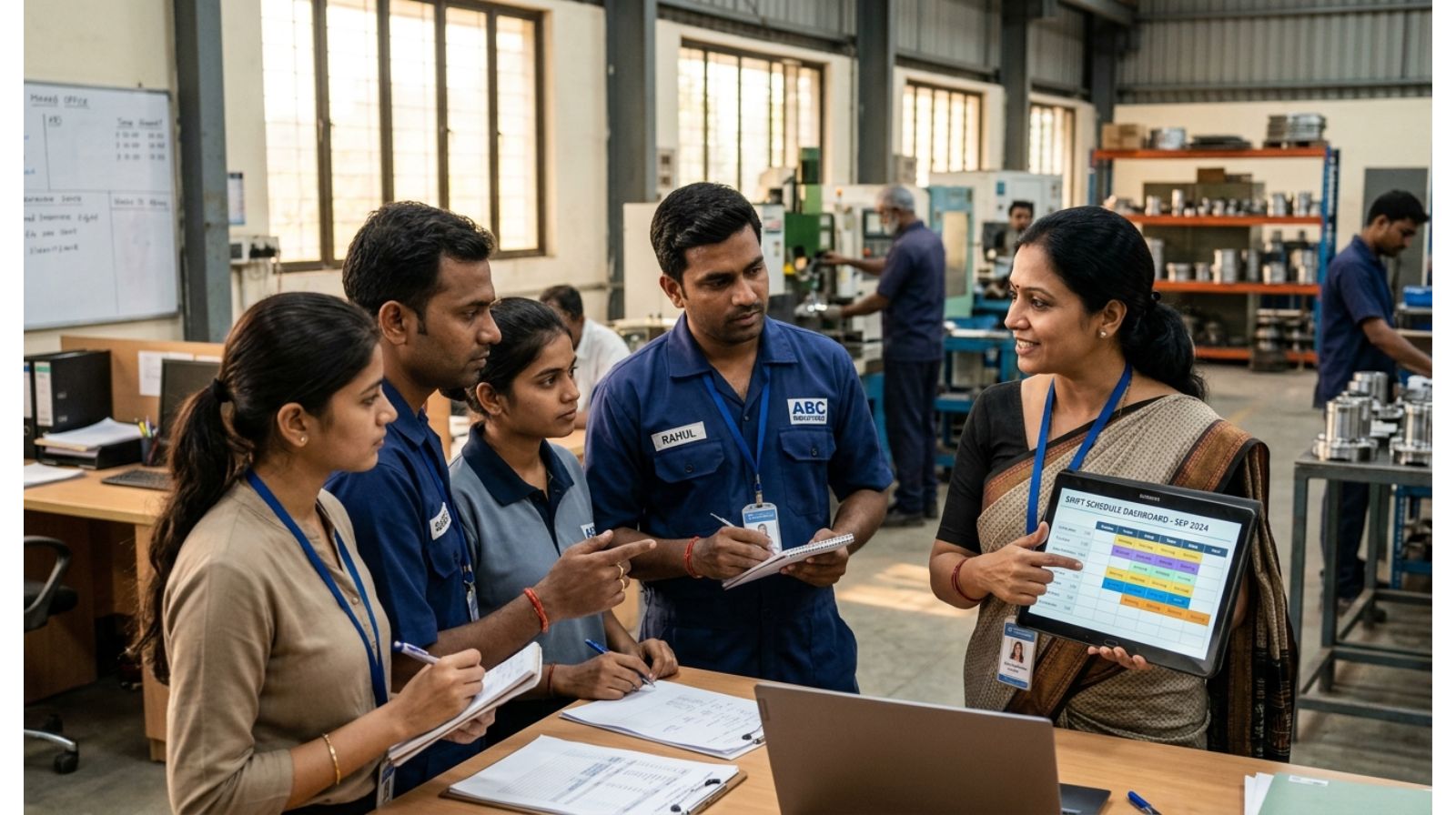
  • Excel vs Scheduling Software: Best Choice for Indian MSMEs

    Excel vs Scheduling Software: Best Choice for Indian MSMEs

    Excel vs Scheduling Software is becoming a key decision point for Indian MSMEs trying to improve workforce management. As businesses grow, managing employee shifts manually becomes time-consuming and prone to errors. From retail stores and manufacturing units to service businesses, managing employee shifts and work schedules has become a daily operational challenge. For years, many small businesses have relied on Excel spreadsheets to create and manage schedules. Excel is familiar, affordable, and available on almost every office computer. However, as businesses grow, scheduling tasks becomes more complicated. Tracking shifts, managing last-minute changes, and ensuring proper workforce planning become difficult with manual systems. But the big question remains: Should MSMEs continue using Excel or switch to automated scheduling software? In this article, we will explore the differences, limitations, and benefits of both approaches to help Indian business owners make the right decision.

    However, with increasing workforce complexity, many businesses are now exploring automated solutions like QR Staff to simplify scheduling and improve efficiency.

    Excel vs Scheduling Software: Understanding the Basics

    Before comparing both options, it is important to understand how each scheduling method works and why businesses use them.

    What is Excel-Based Scheduling?
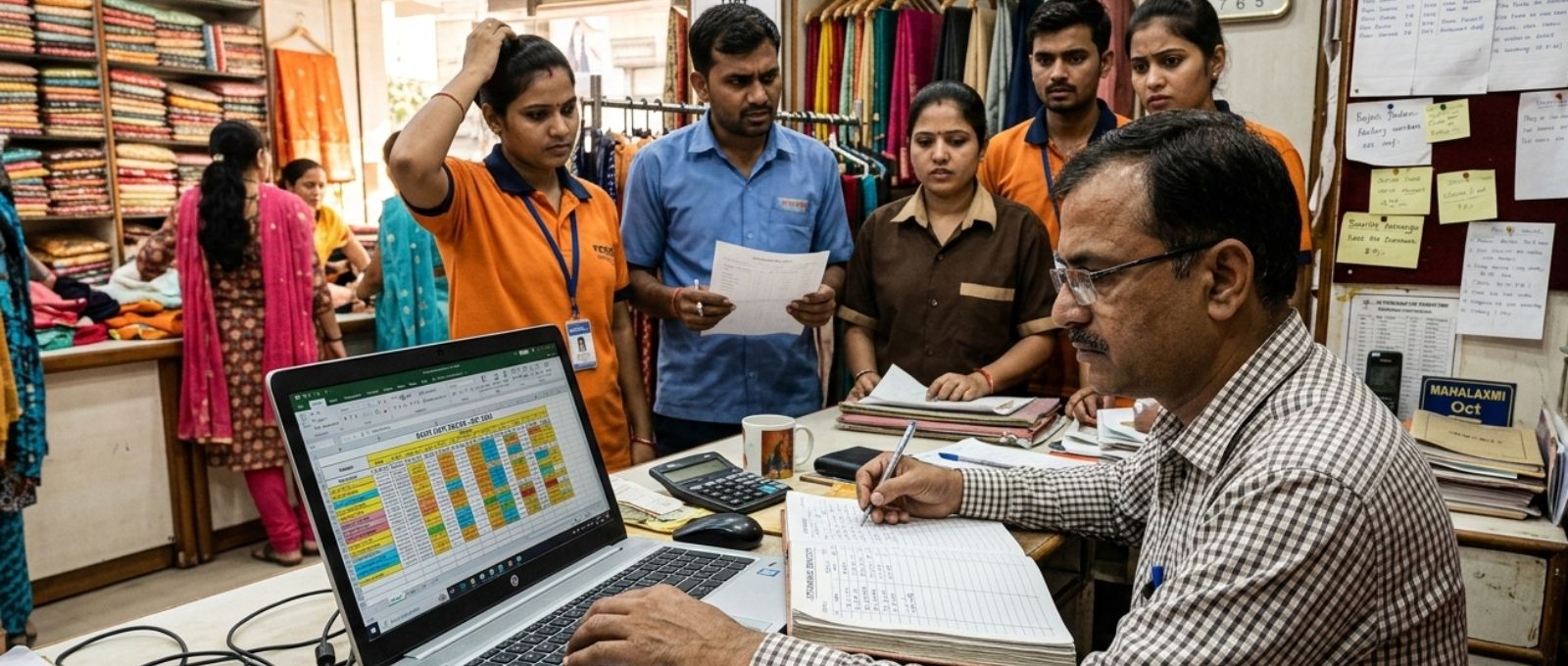
    Excel scheduling for Indian MSMEs showing employee shift planning in spreadsheet
    Manual employee scheduling using Excel in small and medium businesses in India

    Managers create employee schedules using Microsoft Excel spreadsheets. In this method, managers manually create rows and columns representing employees, dates, shifts, and working hours. For example, a restaurant manager might create a weekly schedule in Excel by entering employee names on one side and assigning shifts manually for each day. This system works reasonably well for small teams where scheduling is simple and changes are minimal. However, Managers must update schedules manually. If an employee requests leave or swaps shifts, the manager must manually edit the sheet and ensure everyone receives the updated schedule. As the workforce grows, this process becomes more time-consuming and error-prone.

    What is Scheduling Software?

    Scheduling software is a digital tool designed specifically for small-business workforce scheduling. Instead of manually creating schedules, these systems automatically generate schedules based on employee availability, shift requirements, and business needs. Many employee scheduling tools in India also offer features such as mobile apps, real-time notifications, leave management, and attendance tracking. This means employees can view their schedules instantly, and managers can adjust shifts without editing spreadsheets. In simple terms, automated scheduling replaces manual work with smart automation, helping businesses save time and improve efficiency.

    Why Many Indian MSMEs Still Use Excel

    Despite the rise of modern software, many MSMEs in India still prefer Excel for scheduling. One of the biggest reasons is familiarity. Most business owners and managers already know how to use Excel, so they feel comfortable using it for operational tasks like scheduling. Another reason is cost. Excel is often already included in office software packages, which means businesses don’t have to invest in new tools. For very small teams, Excel may appear to be a practical solution. Additionally, some MSMEs feel that scheduling software for small businesses in India might be complex to implement. They assume that software requires training, technical knowledge, or expensive subscriptions. However, as businesses grow and teams expand, the hidden limitations of Excel begin to surface.

    Limitations of Excel Scheduling for Growing Businesses

    While Excel can work for small teams, it often struggles to keep up with growing operational needs. One of the most common Excel scheduling limitations is the lack of automation. Managers must manually create schedules, update changes, and share files with employees. Another major issue is error management. A small mistake in a spreadsheet formula or shift entry can easily confuse. Employees might show up at the wrong time, or two people might be assigned the same shift by mistake. Communication is another challenge. When managers store schedules in spreadsheets, they often need to send updates through emails or messaging apps. This can lead to outdated schedules circulating among employees.

    Finally, Excel does not provide insights or analytics. Businesses cannot easily track patterns such as overtime hours, shift distribution, or employee workload. Without this data, optimizing workforce management becomes difficult.

    Benefits of Scheduling Software for MSMEs

    The benefits of automated scheduling become clear as businesses handle larger teams or complex shift patterns. One of the biggest advantages is time savings. Automated tools can generate schedules within minutes based on predefined rules and employee availability. This eliminates hours of manual spreadsheet work every week. Another important benefit is accuracy. Since the system automatically assigns shifts, the chances of scheduling errors are significantly reduced. Managers can easily see conflicts, overlapping shifts, or employee availability issues before publishing the schedule. Communication also becomes much easier with scheduling software. Employees receive notifications whenever schedules are updated, and they can access their shifts directly through mobile apps. This ensures everyone stays informed without constant manual updates. Additionally, many employee scheduling tools in India provide features like leave management, attendance tracking, and workforce analytics. These insights help business owners make better decisions about staffing and productivity.

    Excel vs Scheduling Software: Key Differences

    When comparing Excel vs scheduling software, the differences become quite clear once businesses look at automation, scalability, and usability. This comparison highlights why many growing businesses eventually move from manual to automated scheduling systems.

    When Should an MSME Switch?

    The transition from Excel to scheduling software usually happens when businesses start facing operational complexity. If managers spend several hours every week updating schedules, it is a sign that manual systems are slowing down operations. Similarly, frequent scheduling conflicts, miscommunication, or last-minute adjustments can indicate that Excel is no longer sufficient. Another indicator is workforce growth. When businesses expand beyond 20–30 employees or operate multiple shifts, manual scheduling becomes difficult to manage. At this stage, switching to automated scheduling software for MSMEs can significantly improve efficiency and reduce administrative workload. At this stage, automation becomes essential. As your business grows, having a structured HR system becomes equally important.
    Also explore: HR Management for Startups vs Established Companies

    Best Use Cases of Scheduling Software in India

    Automated scheduling software is particularly useful for industries where shift management is essential. For example, retail businesses often deal with varying customer demand throughout the day. Automated scheduling helps ensure the right number of employees are available during peak hours. Restaurants and hospitality businesses also benefit greatly from scheduling software. Staff availability, weekend rush hours, and shift changes can be managed easily through automated systems. Manufacturing units and service businesses also use scheduling software to coordinate teams, manage production shifts, and maintain operational efficiency. As digital adoption grows, more scheduling software for small business India solutions are becoming accessible and affordable for MSMEs.

    Final Verdict: Excel vs Automated Scheduling for Indian MSMEs

    When evaluating Excel vs. scheduling software for Indian MSMEs, the best choice depends largely on the size and complexity of the business. For very small teams with simple schedules, Excel may still work as a temporary solution. It is familiar, inexpensive, and easy to use. However, for growing businesses that manage multiple employees, shifts, and operational demands, automated scheduling offers significant advantages. It reduces manual work, minimizes errors, improves communication, and provides valuable workforce insights. In the long run, automated scheduling software for MSMEs helps businesses save time, improve productivity, and focus more on growth rather than administrative tasks.

    FAQs

    Is Excel good for employee scheduling?

    Excel can work for small teams with simple schedules. However, as businesses grow, manual scheduling becomes difficult to manage and increases the chances of errors.

    What is the best scheduling method for MSMEs?

    For growing businesses, automated scheduling software is usually the best option because it saves time, reduces errors, and improves workforce management.

    Why do businesses switch to automated scheduling?

    Businesses switch because manual scheduling becomes time-consuming. Automated tools simplify shift planning, improve communication, and reduce operational mistakes.

    Is scheduling software expensive for small businesses in India?

    Many modern employee scheduling tools in India offer affordable subscription plans designed specifically for small businesses and startups.

    Can Excel handle large workforce scheduling?

    Excel can technically handle large data sets, but managing complex schedules manually becomes inefficient and increases the risk of errors.

    What industries benefit the most from scheduling software?

    Industries such as retail, hospitality, healthcare, manufacturing, and service businesses benefit the most because they rely heavily on shift-based workforce management.

    Is automated scheduling difficult to implement?

    Most modern scheduling tools are designed to be user-friendly. Businesses can usually implement them within a few days with minimal training.

  • Workforce Planning in India: Why Indian Businesses Fail

    Workforce Planning in India: Why Indian Businesses Fail

    If you observe closely, many Indian businesses don’t really have a workforce strategy—they have a hiring habit. This is the harsh reality of Workforce Planning in India. Someone resigns, they hire. A new project comes in, and they hire. Work increases suddenly, and they panic-hire. And when business slows down, they’re left wondering why costs are rising, but productivity isn’t. Across startups, MSMEs, and even established companies, workforce decisions are often reactive rather than strategic. It’s not that business owners don’t care about planning—it’s that workforce planning has never been treated as a core business function. Instead, it sits somewhere between HR paperwork and daily operations.

    Understanding Workforce Planning in the Indian Context

    In simple terms, workforce planning means preparing your team for the future—before the need becomes urgent. It involves understanding how many people you need, what skills they should have, and when you’ll need them. But in India, the challenge is deeper. Businesses operate in a fast-changing environment where demand fluctuates, employee expectations evolve, and competition intensifies. Despite this, many companies still rely on outdated practices, making workforce management challenges in India more complex than they should be.

    Why Workforce Planning in India Fails

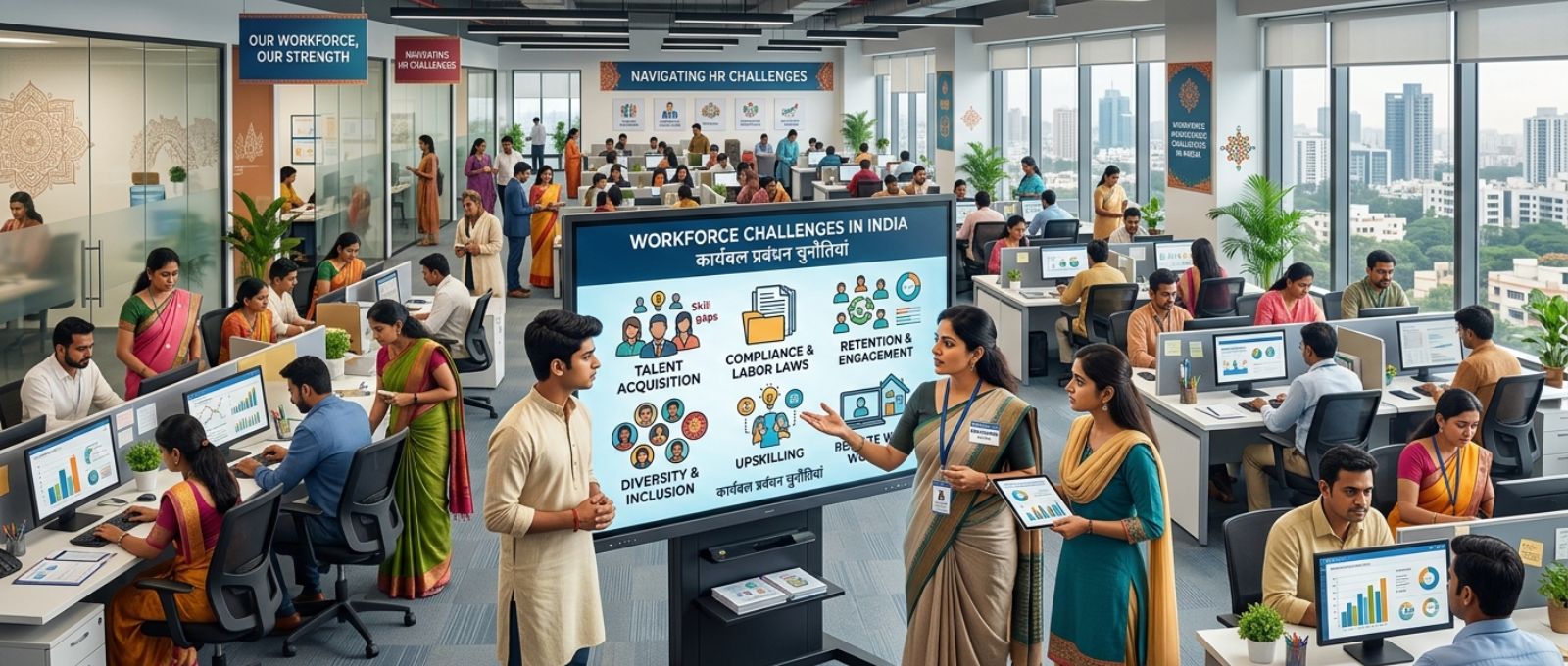
    workforce management challenges in India and HR issues
    Lack of structured planning creates major workforce challenges in Indian businesses.

    One of the biggest reasons workforce planning fails in India is the habit of reactive hiring. Most companies don’t plan for the next six months, let alone the next quarter. Hiring decisions are triggered by urgency rather than strategy. When a key employee leaves or a sudden workload spike happens, businesses rush to fill positions without evaluating long-term fit. This creates instability and often leads to poor hiring decisions. Another critical issue lies in the lack of data-driven thinking. While businesses today invest heavily in marketing analytics and financial tracking, HR still operates on assumptions in many organizations. Decisions about hiring, promotions, and team structure are often based on gut feeling rather than actual data. This disconnect makes it difficult to identify patterns like attrition trends or productivity gaps, which are essential for effective Workforce Planning in India. The skill gap in India further complicates the situation. On paper, India has one of the largest workforces in the world, but in reality, companies struggle to find candidates with the right skills.

    Another underlying issue is poor talent management in India. Hiring is treated as the most important step, but what happens after that is often ignored. Employees are rarely given clear growth paths, regular feedback, or opportunities to upgrade their skills. This leads to dissatisfaction and high attrition. When employees leave frequently, even the best workforce plans collapse. In fact, many modern businesses are now using smarter approaches like AI-driven hiring, which is explained in detail in this guide on AI in recruitment in India.

    The Real Impact on Businesses

    When Workforce Planning in India is not done properly, the consequences are visible across the organization. Teams become either overburdened or underutilized. Managers spend more time solving staffing issues than focusing on growth. Projects get delayed, customer experience suffers, and employees start feeling disconnected from their roles. Financially, the impact is even more damaging. Frequent hiring increases recruitment costs, while high attrition leads to repeated training expenses. Businesses end up spending more but achieving less. For growing companies, especially MSMEs, this imbalance can slow down expansion and reduce competitiveness in the market. There’s also a cultural impact. When workforce planning is weak, employees feel uncertain about their roles and future in the company. This affects morale, engagement, and overall productivity. Over time, it creates a workplace environment that struggles to retain talent.

    How Indian Businesses Can Improve Workforce Planning

    Improving Workforce Planning in India doesn’t require complex systems—it requires a shift in mindset. Businesses need to start looking at workforce planning as a long-term investment rather than a short-term task. The first step is to think ahead. Instead of waiting for problems to arise, companies should anticipate their workforce needs based on business goals. Whether it’s expansion, seasonal demand, or new projects, having a basic forecast can make a huge difference. Equally important is the use of data. Even simple tracking of employee performance, attendance, and attrition can provide valuable insights. Over time, this data helps businesses make smarter decisions and reduce uncertainty in planning. Technology also plays a key role. Digital tools for workforce management can simplify tasks like scheduling, attendance tracking, and performance monitoring. Many companies today are also adopting digital tools like employee scheduling software to simplify operations. Platforms such as QR STAFF APP help businesses manage attendance, shifts, and workforce planning more efficiently.

    Finally, businesses need to rethink their approach to talent management in India. Employees should not just be seen as resources but as long-term assets. Providing growth opportunities, recognizing performance, and maintaining clear communication can significantly improve retention and stability.

    The Future of Workforce Planning in India

    The future of Workforce Planning in India is moving towards flexibility and intelligence. With the rise of automation, AI, and remote work, businesses will need to adapt quickly to changing workforce dynamics. Organizations that embrace strategic workforce planning will have a clear advantage. They’ll be able to respond faster to market changes, manage talent more effectively, and scale their operations without chaos. At the same time, employee expectations are also evolving. People today are looking for more than just a job—they want growth, stability, and purpose. Workforce planning in the future will need to balance business needs with employee aspirations.

    Conclusion

    The failure of Workforce Planning in India is not due to lack of talent or resources—it’s due to lack of structured thinking. Businesses often focus on immediate problems without considering long-term impact. But in today’s competitive environment, this approach is no longer sustainable. Workforce planning needs to move from reactive hiring to a proactive strategy. Because at the end of the day, a business grows only as strong as the people behind it. And managing those people effectively is not just an HR responsibility—it’s a business necessity. There’s also a strong operational angle to the problem.

    FAQs

    1. What is Workforce Planning in India?

    Workforce Planning in India is the process of aligning employee roles, skills, and numbers with business goals to ensure smooth operations and future growth.

    2. Why do Indian businesses face workforce management challenges?

    Most challenges arise due to reactive hiring, lack of data usage, poor HR systems, and limited focus on employee development.

    3. How does the skill gap in India impact businesses?

    It creates a mismatch between job requirements and available talent, making hiring difficult and slowing down business growth.

    4. What are common employee planning issues in India?

    Common issues include poor shift management, uneven workload distribution, unclear roles, and inefficient attendance tracking.

    5. How can companies improve workforce planning?

    By planning, using data, investing in employee training, adopting digital tools, and aligning HR with business goals.

  • Shift Management in Indian MSMEs: Why 80% Still Struggle

    Shift Management in Indian MSMEs: Why 80% Still Struggle

    In India’s rapidly growing business ecosystem, Micro, Small, and Medium Enterprises (MSMEs) play a vital role in employment generation and economic development. From neighborhood retail stores and small manufacturing units to hospitals, restaurants, and logistics businesses, MSMEs operate across industries that rely heavily on people working in shifts. However, despite their importance, Shift Management in Indian MSMEs remains a persistent challenge. Many small business owners still rely on manual methods such as Excel sheets, WhatsApp messages, or handwritten registers to manage employee schedules. While this may work temporarily for a small team, the system begins to break down as the workforce grows. Employees miss shifts, managers struggle to track attendance, and scheduling conflicts become common. The reality is that shift management is more than just deciding who works when. It directly affects employee productivity, customer experience, and overall operational efficiency. Yet, according to workforce management experts, nearly 80% of Indian MSMEs continue to face serious challenges in managing employee shifts.

    Understanding why these issues exist and how businesses can solve them is crucial for MSME owners who want to scale operations smoothly. Let’s explore the real reasons behind this widespread problem.

    What is Shift Management in Indian MSMEs?

    Before discussing the challenges, it’s important to understand what Shift Management in Indian MSMEs actually involves. Shift management refers to the process of planning, assigning, and monitoring employee work schedules so that business operations run smoothly throughout the day or night. In industries like retail, manufacturing, healthcare, hospitality, and logistics, proper scheduling ensures that the right number of employees are present at the right time. However, for many MSME owners, shift management is often treated as a simple administrative task rather than a structured workforce management process. This mindset is one reason MSME workforce scheduling becomes complicated as businesses grow.

    Unlike large corporations that use sophisticated systems, small businesses usually depend on supervisors or HR staff to manage schedules manually. Over time, this creates confusion, miscommunication, and inefficiencies.

    Common Shift Management Problems in Indian MSMEs

    Excel scheduling for Indian MSMEs showing employee shift planning in spreadsheet
    Manual employee scheduling using Excel in small and medium businesses in India

    When we closely examine employee shift management challenges, several recurring issues appear across different industries. These problems may look small individually, but together they create serious operational disruptions.

    Manual scheduling methods: Many MSMEs still rely on paper registers or basic spreadsheets for staff scheduling. While these tools are familiar, they lack automation and real-time updates. When a shift change happens or an employee calls in sick, managers must manually update schedules and inform everyone individually.

    Last-minute shift changes: In sectors like retail and hospitality, sudden customer demand changes are common. Unfortunately, without proper systems, adjusting schedules becomes difficult. Managers often spend hours calling employees to fill shifts, which creates stress for both supervisors and staff.

    Poor communication with employees: Shift updates are frequently communicated through WhatsApp groups or verbal instructions. Employees may miss messages, misunderstand instructions, or forget their assigned shifts. This communication gap is a major reason why staff shift planning in India often fails to run smoothly.

    Difficulty tracking attendance: Another major challenge in workforce management for MSMEs is tracking whether employees actually worked their assigned shifts. Without digital attendance systems, verifying working hours becomes difficult, which eventually leads to payroll errors.

    Real-Life Scenarios from Indian MSMEs

    A small retail chain in Delhi operates three outlets with rotating shifts for sales staff. The store manager creates schedules using Excel sheets, but employees frequently swap shifts informally. By the end of the month, the manager struggles to track who actually worked which shift, resulting in payroll disputes. In a small manufacturing unit in Gujarat, machine operators work on day and night shifts. When one employee fails to show up, supervisors scramble to find replacements. Production slows down because there is no structured system for scheduling the MSMES workforce. Similarly, a mid-sized restaurant in Bengaluru experiences peak demand during evenings and weekends. Without proper staff shift planning in India, the restaurant often ends up understaffed during busy hours and overstaffed during slow periods.

    Business Impact of Poor Shift Management

    Poor Shift Management in Indian MSMEs doesn’t just create administrative inconvenience—it has serious business consequences.

    Reduced productivity: When shifts are poorly planned, employees may either be overworked or underutilized. Both situations lead to lower productivity and employee dissatisfaction.

    Higher employee turnover: Frequent scheduling conflicts frustrate employees, especially those who depend on predictable work hours. Over time, this dissatisfaction can push workers to leave for more organized employers.

    Operational inefficiencies: In industries such as manufacturing and healthcare, incorrect scheduling can slow production or reduce service quality.

    Customer experience problems: When businesses are understaffed during peak hours, customers face longer waiting times and poor service. This directly impacts brand reputation and sales.

    How Digital Tools Are Transforming Shift Scheduling

    Fortunately, technology is helping many MSMEs overcome these challenges. Modern shift scheduling software solutions in India are designed specifically for businesses that manage multiple employees and rotating shifts. Digital tools automate scheduling, simplify communication, and improve transparency across the workforce.

    Instead of calling employees individually, managers can update schedules through the system, and employees receive instant notifications. Businesses that adopt these tools often experience significant improvements in scheduling efficiency and employee accountability. Businesses looking to implement reliable workforce solutions can explore platforms like QR Staff App to understand how modern shift scheduling tools are transforming MSME operations in India.

    Practical Tips for Improving Shift Management in Indian MSMEs

    While technology plays an important role, improving Shift Management in Indian MSMEs also requires better planning and management practices.

    Create clear scheduling policies: Employees should clearly understand how shifts are assigned, when schedules are published, and how shift swaps are handled.

    Plan shifts based on business demand: Instead of assigning fixed schedules blindly, analyze customer demand patterns or production cycles.

    Use digital attendance tracking: Automated attendance systems help track working hours accurately and eliminate payroll disputes.

    Encourage transparent communication: Employees should have access to their schedules and the ability to request changes through structured processes.

    The Future of Workforce Scheduling for MSMEs

    As India’s MSME sector continues to grow, businesses will need more structured systems for managing employees. The days of relying solely on spreadsheets and manual registers are slowly fading.

    Modern shift scheduling software platforms in India offer powerful features such as automated shift creation, real-time attendance tracking, and workforce analytics.

    For MSMEs that want to scale operations and compete with larger companies, adopting these technologies is becoming increasingly important.

    Efficient MSME workforce scheduling not only improves operational efficiency but also enhances employee satisfaction and retention.

    Conclusion

    The reason why nearly 80% of businesses struggle with Shift Management in Indian MSMEs is not a lack of effort—it’s the reliance on outdated systems and informal scheduling methods. As businesses grow, manual processes simply cannot keep up with the complexity of workforce management.

    From retail stores and manufacturing units to restaurants and healthcare facilities, the challenges of scheduling employees are remarkably similar. Miscommunication, attendance tracking issues, and last-minute shift changes continue to disrupt operations across industries.

    However, the good news is that solutions are readily available. By adopting structured scheduling practices and using modern shift scheduling software in India, MSMEs can dramatically improve workforce efficiency.

    Better shift management leads to happier employees, smoother operations, and ultimately stronger business growth. For Indian MSME owners looking to scale sustainably, improving shift management is no longer optional—it’s essential.

    Frequently Asked Questions (FAQs)

    What is shift management in MSMEs?

    Shift management refers to the process of organizing employee work schedules so that business operations run smoothly across different time slots. In MSMEs, this often involves managing rotating shifts for retail staff, factory workers, or service employees.

    Why do Indian MSMEs struggle with workforce scheduling?

    Many MSMEs rely on manual scheduling methods like spreadsheets or registers. These systems lack automation and real-time updates, leading to communication gaps and scheduling errors.

    What industries in India face the most shift management challenges?

    Industries such as retail, manufacturing, hospitality, healthcare, logistics, and security services often face significant employee scheduling challenges due to rotating shifts and variable demand.

    How can shift scheduling software help MSMEs?

    Shift scheduling software automates employee scheduling, tracks attendance, and improves communication. It allows managers to assign shifts digitally and helps employees stay informed about their schedules.

    What are the benefits of better shift management?

    Improved shift management leads to higher productivity, fewer scheduling conflicts, accurate payroll processing, and better employee satisfaction.

    Also Read: How to Train Employees Faster with a Smart Tool

  • How to Maintain Employee Records Properly

    How to Maintain Employee Records Properly

    Every organization, whether a small startup or a large corporation, deals with employee information daily. Understanding how to maintain employee records properly is essential for keeping HR documentation organized, secure, and compliant with labor regulations. Poor employee record management can lead to missing documents, payroll errors, compliance risks, and operational inefficiencies. In today’s business environment, maintaining structured employee records is not just an administrative task—it is a critical part of HR compliance, workforce planning, and organizational transparency. This guide explains how to maintain employee records properly, the types of records every company should keep, and practical strategies HR teams can use to organize employee files efficiently.

    Why Employee Record Management is Important

    Effective employee record management plays a crucial role in running a professional and compliant organization. When employee information is stored properly, businesses can access important documents instantly, avoid legal issues, and make informed HR decisions. One of the most important reasons to maintain structured HR record-keeping is compliance. Another major benefit of organized employee file organization is operational efficiency. HR teams regularly need to retrieve documents for performance reviews, payroll processing, employee promotions, and compliance checks. Proper employee information management also strengthens workplace transparency. When employee records are maintained accurately, businesses can handle disputes, disciplinary actions, or promotion decisions based on documented facts rather than assumptions. Ultimately, learning how to maintain employee records properly helps businesses build a reliable HR foundation that supports both compliance and long-term growth.

    Types of Employee Records Every Company Should Maintain

    Every organization must maintain several categories of employee records as part of its employee documentation process. These documents help track an employee’s journey from recruitment to exit.

    Employment and Hiring Documents: Hiring documents are essential in any employee record management system. They typically include job applications, offer letters, employment contracts, background verification reports, and onboarding forms.

    Payroll and Compensation Records: Salary records, tax declarations, bank details, benefits information, and reimbursement documents fall under payroll documentation. Accurate employee data management ensures payroll processing remains error-free and compliant with tax regulations.

    Attendance and Leave Records: Employee attendance logs, leave applications, sick leave records, and vacation balances are essential parts of HR compliance records. These records help HR teams track employee working hours and leave policies effectively.

    Exit and Termination Documents: When employees leave an organization, companies must maintain resignation letters, exit interviews, clearance forms, and final settlement records. These documents are often required during audits or legal inquiries.

    Step-by-Step Guide on How to Maintain Employee Records Properly

    Businesses often struggle with the practical implementation of employee information management. The following structured approach can help organizations maintain employee records efficiently.

    Step 1: Create a Standard Employee Documentation Process: Every organization should define a standardized employee documentation process for collecting and storing employee data. HR teams must ensure that every employee’s file contains the same set of documents to maintain consistency across the organization.

    Step 2: Organize Employee Files for Proper Record Management: Proper employee file organization requires categorizing records into separate sections such as personal details, payroll information, performance reviews, and compliance records. This structure makes it easier to locate documents quickly when needed.

    Step 3: Keep Employee Records Accurate and Updated: One of the most important aspects of learning how to maintain employee records properly is keeping them updated. Whenever employees change their address, receive promotions, complete training, or update bank details, HR teams should immediately update the corresponding records.

    Step 4: Secure Employee Records and Protect Sensitive Data: Employee records contain sensitive personal and financial information. Companies must ensure secure storage systems to protect employee data. Access to these records should be limited only to authorized HR personnel.

    Step 5: Secure Employee Records and Protect Sensitive Data: Different types of HR compliance records must be retained for different time periods. Organizations should define clear retention policies for employee records based on legal and compliance requirements.

    Step 6: Conduct Regular Employee Record Audits: Periodic audits help HR teams identify missing documents, outdated information, or compliance gaps. Conducting regular audits is an effective way to ensure proper employee record management.

    Best Practices to Maintain Employee Records Properly

    Effective employee file organization can significantly improve HR efficiency and data security. One of the most effective strategies is maintaining structured employee files with clearly labeled sections.

    Use Standard File Naming Systems: A standardized naming format helps HR teams locate documents easily. For example, files may include the employee name, document type, and date.

    Separate Confidential Information: Sensitive documents such as medical records or disciplinary reports should be stored separately with restricted access. This practice improves both privacy and compliance.

    Implement Version Control for Documents: Many employee records change over time, such as contracts or salary structures. Maintaining version control ensures HR teams always refer to the latest document.

    These practices strengthen the overall employee information management process and reduce the risk of document misplacement.

    Digital vs Physical Methods to Maintain Employee Records

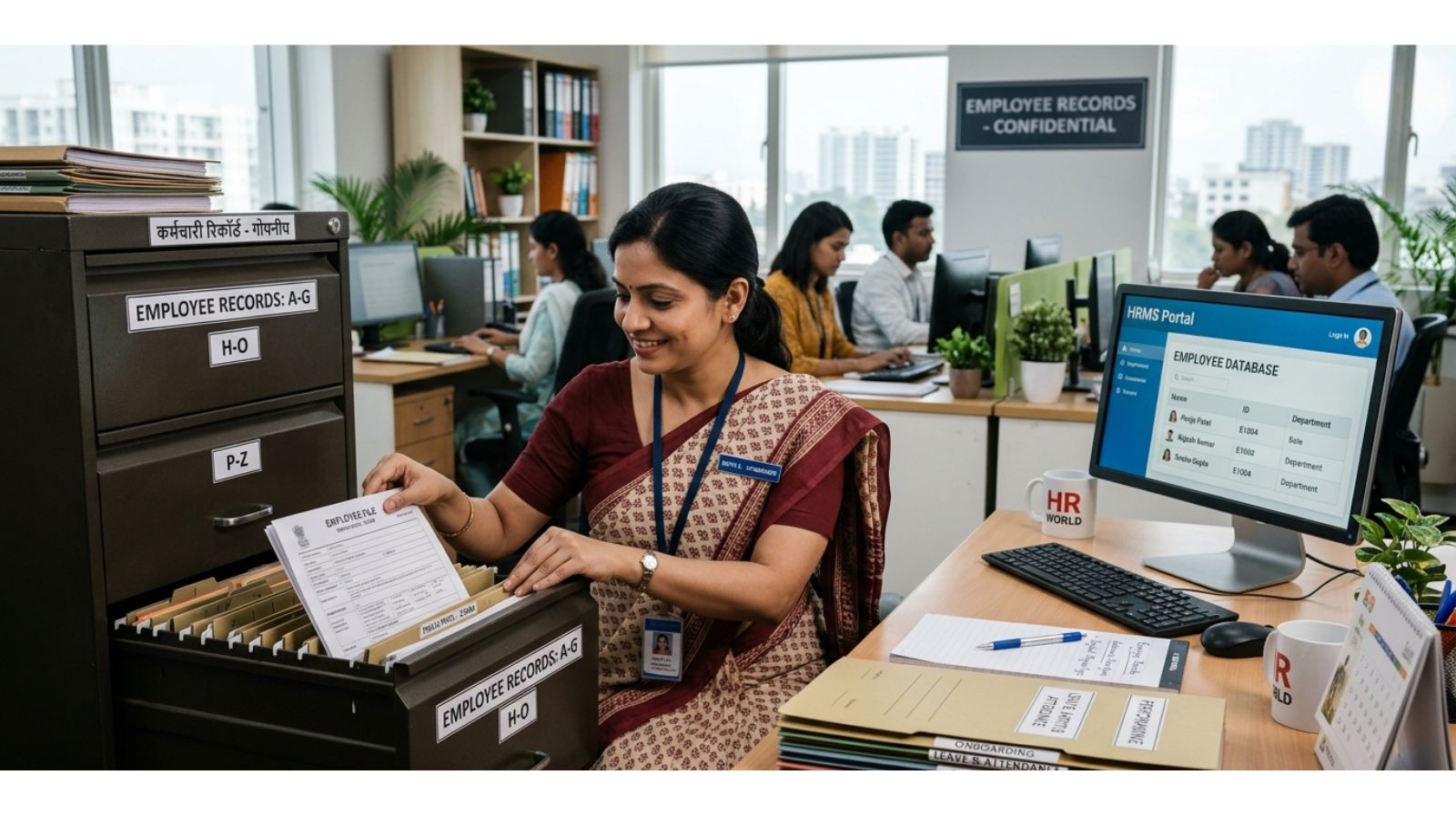
    Businesses often debate whether to maintain physical employee files or switch to digital record systems. Both methods have advantages and challenges. Traditional physical files offer a tangible documentation system that some organizations still prefer. However, physical records require storage space, manual organization, and strict protection against loss or damage. Digital employee data management systems, on the other hand, allow businesses to store employee records securely in centralized platforms. Digital systems make it easier to search documents, update records quickly, and maintain backups. For modern organizations, digital record systems often provide a more efficient solution for maintaining employee record management while improving security and accessibility. The QR Staff mobile app can help you maintain employee records digitally in an effective way.

    Legal Requirements for Maintaining Employee Records

    Maintaining proper HR compliance records is essential for meeting labor law requirements. Many countries require employers to maintain employee documents for specific time periods. For example, payroll records may need to be retained for several years to comply with tax regulations. Employment contracts and termination records may also be required during labor disputes or government inspections. A proper employee documentation process ensures organizations can respond quickly during compliance audits. Businesses that fail to maintain accurate records risk facing legal penalties, fines, or employee disputes. Understanding legal requirements is a key part of learning how to maintain employee records properly.

    Common Mistakes in Employee Record Management

    Many organizations struggle with employee information management because of simple but critical mistakes.

    Incomplete Employee Files: Some companies fail to collect all required documents during onboarding. Missing forms or incomplete contracts can create legal complications later.

    Poor Record Organization: Without proper employee file organization, HR teams waste time searching for documents and may lose important records.

    Failure to Update Employee Information: Employee data changes frequently. Businesses that fail to update records may face payroll errors or outdated documentation.

    Lack of Data Security: Employee records contain sensitive personal information. Weak security practices can lead to data breaches or privacy violations.

    Avoiding these mistakes significantly improves overall employee record management.

    Tools That Help Maintain Employee Records Properly

    Modern HR departments rely on digital tools to simplify employee data management. These systems help store, organize, and secure employee information more efficiently than traditional methods.

    HR Management Software: Comprehensive HR platforms allow businesses to maintain centralized employee records, track attendance, manage payroll, and store compliance documents.

    Document Management Systems: These systems help organize digital employee files using structured folders, tagging systems, and search capabilities.

    Employee Self-Service Portals: Some systems allow employees to update their own personal information, which improves the accuracy of employee information management.

    Conclusion

    Maintaining structured and accurate employee records is essential for every organization. Proper employee record management not only improves operational efficiency but also protects businesses from legal risks and compliance issues.

    By understanding how to maintain employee records properly, companies can create organized employee files, protect sensitive data, and ensure compliance with labor regulations. A strong employee documentation process allows HR teams to manage workforce information confidently and efficiently.

    As businesses continue to grow and regulations become more complex, investing time in better employee data management and structured HR record keeping becomes increasingly important. Organizations that build reliable systems for maintaining employee records today will find it much easier to manage their workforce tomorrow.

    FAQs About Maintaining Employee Records

    What is employee record management?

    Employee record management refers to the systematic process of collecting, organizing, storing, and maintaining employee information throughout the employee lifecycle. It ensures accurate documentation for HR operations and legal compliance.

    Why is it important to maintain employee records properly?

    Maintaining employee records properly helps businesses comply with labor laws, manage payroll accurately, track employee performance, and resolve workplace disputes using documented information.

    How long should companies keep employee records?

    The retention period for employee records varies depending on labor laws and document types. Payroll records, tax forms, and employment contracts often need to be stored for several years for compliance purposes.

    What documents should be included in an employee’s file?

    Employee files usually include personal information, employment contracts, payroll details, performance evaluations, attendance records, and termination documents as part of the employee documentation process.

    Are digital employee records better than physical files?

    Digital employee data management systems provide faster access, better security, and easier organization compared to physical files. Many modern businesses prefer digital systems for efficient employee record management.

    Who should have access to employee records?

    Access to employee records should be limited to authorized HR personnel or management to protect sensitive employee information and maintain confidentiality.

    Employee training tools: How to Train Employees Faster with Smart Tools

  • HR Management for Startups vs Established Companies

    HR Management for Startups vs Established Companies

    HR Management for Startups vs Established Companies plays a critical role in shaping how organizations hire, manage, and develop their workforce. When businesses grow, one of the first systems that needs structure is human resources. In a startup environment, HR is often flexible, experimental, and closely tied to the founder’s vision. The focus is usually on hiring fast, building a strong team culture, and solving immediate workforce challenges. In contrast, HR management in established companies tends to be structured, policy-driven, and supported by well-defined systems. Large organizations rely on mature HR processes, compliance frameworks, and structured talent management strategies. This article explores HR Management for Startups vs Established Companies, including recruitment strategies, HR policies, culture differences, and practical insights that influence workforce management.

    Understanding HR Management in Startups

    Startups operate in an environment defined by speed, innovation, and uncertainty. As a result, HR strategies for startups often prioritize flexibility over rigid policies. Unlike large corporations with specialized HR departments, startups frequently rely on founders or small teams to handle hiring, onboarding, payroll, and employee engagement. This dynamic environment creates unique opportunities but also introduces significant startup HR challenges.

    HR Strategies for Startups: Startups require HR strategies that can evolve quickly as the company grows. Instead of formal systems, many early-stage companies depend on agile processes and informal communication.

    Flexible Hiring Practices: Recruitment strategies for startups often focus on hiring versatile individuals who can perform multiple roles. Since resources are limited, startups prioritize talent with adaptability and entrepreneurial thinking.

    Culture-Driven Workforce Building: Startups usually build teams around a shared mission or vision. HR decisions often prioritize cultural fit because a small team must collaborate closely and maintain high levels of trust.

    Rapid HR Scalability: One of the biggest priorities for startups is HR scalability. As the company grows, HR systems must evolve quickly to handle larger teams, structured roles, and compliance requirements.

    HR Management in Established Companies

    In contrast, HR management in established companies focuses on stability, compliance, and structured workforce management. These organizations typically have dedicated HR teams responsible for recruitment, employee development, compliance, and policy enforcement. A well-defined, established company HR structure allows companies to manage large workforces efficiently. Established organizations often rely on detailed processes and formal HR frameworks to maintain consistency across departments and locations.

    Formal HR Policies and Procedures: Large organizations rely heavily on documented HR policies and procedures. These policies define hiring procedures, employee conduct, compensation structures, and performance management systems.

    Specialized HR Roles: Unlike startups, corporate HR departments often include specialized roles such as talent acquisition managers, HR business partners, training specialists, and compliance officers.

    Structured Talent Development: Established companies invest heavily in leadership development, training programs, and career progression plans to support long-term employee growth.

    Startup vs Established Company Culture in HR Management

    Culture plays a major role in shaping HR practices. The difference between startup and established company culture often determines how employees are managed and motivated.

    Entrepreneurial Work Environment: Startups thrive on innovation and experimentation. HR teams encourage creativity, risk-taking, and flexible working styles that support rapid business growth.

    Structured Culture in Established Companies: In established companies, the workplace culture tends to be more formal. Policies, reporting structures, and performance metrics guide employee behavior and organizational decision-making.

    The contrast in Startup vs Established Company Culture HR is often visible in everyday workplace dynamics—from communication styles to performance evaluations.

    Recruitment Strategies in HR Management for Startups vs Established Companies

    Hiring strategies vary significantly between startups and established companies. Recruitment approaches are shaped by company resources, brand reputation, and workforce needs.

    The following table highlights the key differences in HR Management for Startups vs Established Companies.

    Startup vs Established Company Recruitment Process

    Recruitment strategies in HR Management for Startups vs Established Companies showing startup hiring and corporate HR interview process
    The difference between HR management in startups and established companies
    FeatureStartupsEstablished Companies
    HR StructureFlexibleStructured
    HiringFast & adaptiveFormal process
    PoliciesInformalDocumented
    CultureEntrepreneurialProcess-driven

    Recruitment Strategies for Startups: Startups often rely on networks, referrals, and digital platforms to identify talent quickly. Since brand recognition may still be developing, startups frequently emphasize growth opportunities and innovative work environments to attract candidates.

    Recruitment Systems in Established Companies: Established companies use structured hiring processes supported by applicant tracking systems, HR analytics, and recruitment teams. These organizations often prioritize experience, specialization, and long-term workforce planning.

    The difference in recruitment approaches highlights one of the key aspects of HR Management for Startups vs Established Companies.

    Talent Management in Startups vs Large Organizations

    Managing employee growth and performance requires different strategies depending on organizational maturity.

    Talent Management in Startups: In startups, employee roles often evolve quickly. HR leaders focus on building versatile teams and encouraging continuous learning. Employees may take on multiple responsibilities as the company grows.

    As startups scale, efficient training becomes critical for employee productivity. Businesses can accelerate skill development by using modern digital tools. Read our guide on How to Train Employees Faster with Smart Tools to learn practical strategies for improving workforce training.

    Talent Development in Established Companies: Established organizations usually follow structured performance management systems. Annual reviews, leadership programs, and professional development initiatives play an important role in employee growth.

    These differences show how workforce development strategies evolve as companies move from startup stages to mature, established company environments.

    Startup HR Challenges and HR Complexities in Established Companies

    Both startups and established companies face unique HR challenges that influence their workforce strategies.

    Startup HR Challenges: Startups often struggle with limited budgets, unclear HR policies, and rapid hiring needs. Without structured systems, HR teams may find it difficult to maintain consistent employee documentation or compliance processes.

    HR complexities in established companies include bureaucracy, communication barriers, and managing large employee populations. Maintaining engagement and innovation within structured environments can be difficult. Understanding these challenges is critical when analyzing HR Management for Startups vs Established Companies.

    Best HR Practices for Startups and Established Companies

    Regardless of company size, effective HR management relies on strong foundational practices.

    Building Scalable HR Systems: Startups should invest early in scalable HR systems that can grow with the organization. Implementing structured documentation, payroll systems, and recruitment processes helps avoid operational issues later.

    Creating Transparent HR Policies: Clear HR policies improve fairness, transparency, and employee trust. Even startups benefit from documenting key policies related to leave, compensation, and workplace conduct.

    Investing in Employee Engagement: Both startups and established companies must prioritize employee engagement. Open communication, career development opportunities, and recognition programs improve retention and productivity.

    Future Trends in HR Management

    The future of HR management is being shaped by digital transformation, remote work, and evolving employee expectations.

    Businesses are increasingly adopting digital workforce management platforms to streamline HR operations, recruitment, and employee data management. Solutions like QR Staff help companies automate HR processes and improve workforce efficiency. Organizations are increasingly adopting HR technologies that automate employee data management, recruitment processes, and performance tracking. Digital tools also support HR scalability, allowing companies to manage larger workforces efficiently. Another emerging trend is the shift toward employee experience. Modern HR leaders focus on workplace culture, flexible work policies, and continuous learning opportunities to attract and retain talent. For startups, this means designing HR systems that grow with the organization. For large enterprises, it means modernizing traditional HR frameworks to remain competitive in a changing workforce landscape.

    Conclusion

    The differences between HR Management for Startups vs Established Companies highlight how workforce strategies evolve as organizations grow. Startups rely on agility, cultural alignment, and flexible hiring strategies to build their teams quickly. Established companies, on the other hand, focus on structured HR systems, compliance, and long-term talent development. While the approaches differ, the ultimate goal remains the same: building a motivated, productive workforce that supports business growth. By understanding these differences, HR leaders and business owners can design strategies that align with their company’s stage of development.

    Organizations that adapt their HR practices to their growth stage are better positioned to attract talent, maintain strong workplace cultures, and scale their operations successfully.

    Frequently Asked Questions (FAQs)

    What is HR management for startups?

    HR management for startups focuses on building flexible HR systems that support rapid hiring, team collaboration, and company growth. It often involves informal processes that evolve as the organization expands.

    How does HR management in established companies differ from startups?

    HR management in established companies relies on structured policies, compliance systems, and specialized HR roles. Startups, by contrast, typically use flexible processes and smaller HR teams.

    What are common startup HR challenges?

    Common startup HR challenges include limited resources, unclear HR policies, rapid recruitment needs, and maintaining company culture during growth.

    Why is HR scalability important for startups?

    HR scalability ensures that HR systems can support workforce growth without disrupting operations. Scalable HR processes help startups transition smoothly into larger organizations.

    How do recruitment strategies for startups differ from those of corporations?

    Recruitment strategies for startups often focus on adaptability and cultural fit, while large corporations prioritize experience, specialization, and structured hiring processes.

  • How to Train Employees Faster with Smart Tools

    How to Train Employees Faster with Smart Tools

    Every growing business eventually faces the same challenge: training employees quickly without sacrificing quality. Companies invest time and money hiring talented people, but the real productivity only begins after employees understand systems, processes, and expectations. Traditional training methods—long workshops, printed manuals, and shadowing senior employees—often slow down this process. That’s why many organizations today are searching for how to train employees faster with smart tools. Businesses no longer have the luxury of spending months training new hires. Markets move quickly, customer expectations evolve rapidly, and teams must stay productive from day one.

    Modern companies are addressing this challenge by adopting employee training toolsdigital training solutions, and HR technologies that streamline the entire learning process. When companies implement the right workplace training software, they not only reduce training time but also improve knowledge retention and employee engagement.

    Why Businesses Must Train Employees Faster with Smart Tools

    When companies adopt strategies to train employees faster with smart tools, they gain a competitive advantage. Faster training means employees become productive sooner, teams collaborate more effectively, and managers spend less time supervising routine tasks. Another reason fast training matters is employee experience. New hires often feel overwhelmed during their first few weeks. A structured smart employee onboarding process supported by digital tools can guide them step-by-step, reducing confusion and helping them gain confidence quickly. Faster training also improves retention. Employees who receive clear guidance and effective learning support are more likely to stay engaged with their company. By combining employee productivity tools with training systems, businesses can create an environment where learning becomes continuous rather than overwhelming.

    How to Train Employees Faster with Smart Tools

    Understanding how to train employees faster with smart tools begins with integrating technology into the learning process. Smart tools simplify training by delivering information in a structured, accessible, and engaging way.

    Instead of overwhelming employees with large volumes of information at once, modern tools break training into smaller modules. This approach allows employees to absorb knowledge gradually while applying it in real work scenarios.

    Digital Learning Platforms: Modern workplace training software offers centralized platforms where employees can access training videos, guides, and interactive modules. These platforms allow employees to learn at their own pace while managers track progress.

    Automated Training Workflows: One of the biggest advantages of HR technology tools is automation. Businesses can automate employee training by setting up predefined learning paths. When a new employee joins, the system automatically assigns the necessary training modules.

    Interactive Training Content: Smart training tools often include videos, quizzes, and simulations. These features make training more engaging and help employees retain information better than traditional lectures.

    Mobile Learning Access: Employees today prefer flexibility. Many employee training tools provide mobile-friendly platforms that allow workers to learn from their phones or tablets. This flexibility improves participation and speeds up learning.

    Challenges Businesses Face When Trying to Train Employees Faster

    Even though businesses recognize the importance of training, many still struggle with outdated systems and inefficient processes. These challenges often slow down employee development and reduce overall productivity.

    Outdated Training Methods: Many organizations still rely on classroom-style training sessions and lengthy manuals. While these methods can provide useful information, they often fail to engage employees effectively. Without interactive learning, employees may forget important details quickly.

    Lack of Structured Onboarding: Without proper onboarding systems, new employees spend their first weeks trying to figure things out on their own. This lack of structure slows down learning and creates frustration for both employees and managers.

    Limited Access to Training Resources: Traditional training programs often require employees to attend sessions at specific times. If employees miss those sessions, they may struggle to catch up. Modern digital training solutions solve this issue by allowing employees to learn anytime and anywhere.

    Manual HR Processes: Many HR departments still handle training documentation manually. Tracking progress, scheduling sessions, and updating training materials becomes time-consuming. By using HR technology tools, companies can automate these processes and improve efficiency.

    Best Smart Tools to Train Employees Faster

    Smart tools have transformed the way organizations approach workforce development. Businesses that adopt the right tools can streamline training processes and support continuous learning across teams.

    Learning Management Systems (LMS): A Learning Management System is one of the most widely used digital training solutions. These platforms organize training content, track employee progress, and allow managers to measure training performance. LMS platforms simplify training management and ensure every employee receives the right learning materials.

    Employee Onboarding Platforms: Onboarding tools play a critical role in smart employee onboarding. These systems guide new hires through structured training programs, company policies, and task workflows. As a result, employees feel more confident and ready to contribute quickly.

    Performance Tracking Software: Tracking employee progress is essential for effective modern workforce training. Performance tools allow managers to monitor training completion rates, identify skill gaps, and provide targeted support where needed.

    Businesses interested in improving workforce management can also explore insights on workforce optimization through resources like https://blogs.qrstaff.in/

    Benefits of Using Smart Tools to Train Employees Faster

    Organizations that adopt digital training technologies experience several long-term benefits. These tools not only accelerate training but also enhance overall workforce performance.

    Faster Employee Productivity:  One of the biggest advantages of employee productivity tools is speed. When employees receive structured and interactive training, they can start performing tasks faster and more confidently.

    Consistent Training Across Teams: Digital platforms ensure every employee receives the same training content. This consistency improves knowledge alignment across departments and reduces errors caused by inconsistent instructions.

    Cost Efficiency: Traditional training programs often require physical materials, trainers, and travel expenses. By implementing workplace training software, companies can reduce these costs while delivering scalable training programs.

    Improved Learning Retention: Interactive learning methods such as quizzes, videos, and simulations improve knowledge retention. Employees are more likely to remember information when training is engaging and practical. Businesses looking to modernize their HR strategies can find additional workforce management insights at https://blogs.qrstaff.in/

    Future of Training Employees Faster with Smart Tools

    The future of employee development will be heavily driven by technology. As organizations continue to adopt HR technology tools, training will become more personalized, automated, and data-driven. Companies will increasingly rely on automated employee training systems that adjust learning paths based on employee performance. Another major trend in modern workforce training is microlearning. Instead of long training sessions, employees will receive short, focused lessons that can be completed quickly. These bite-sized modules fit better into busy work schedules and improve learning retention. As technology continues to evolve, organizations that embrace digital training solutions will be better positioned to develop skilled and productive teams.

    Conclusion

    Training employees effectively has always been important, but in today’s fast-moving business world, speed matters just as much as quality. Understanding how to train employees faster with smart tools allows businesses to overcome these challenges. By implementing modern employee training tools, workplace training software, and HR technology tools, organizations can streamline onboarding, automate learning processes, and create a more engaging training experience. Smart training systems not only reduce training time but also empower employees to learn continuously and adapt to changing business environments. As companies invest in digital training solutions, they build stronger, more capable teams ready to meet future challenges.

    Frequently Asked Questions (FAQs)

    What are employee training tools?

    Employee training tools are digital platforms or software that help organizations deliver structured training programs. These tools provide learning modules, track employee progress, and simplify workforce development.

    How do smart tools improve employee training speed?

    Smart tools automate training processes, organize learning content, and provide interactive training methods. This reduces manual effort and allows employees to learn more efficiently.

    What is smart employee onboarding?

    Smart employee onboarding uses digital systems to guide new hires through structured learning paths. It helps employees understand company policies, processes, and tools faster.

    What are digital training solutions?

    Digital training solutions are online platforms that provide training materials such as videos, courses, and interactive modules. These solutions allow employees to learn at their own pace.

    Can small businesses use workplace training software?

    Yes. Many workplace training software platforms are designed for businesses of all sizes. Small businesses can benefit greatly by automating training and improving employee productivity.

    Why is modern workforce training important?

    Modern workforce training ensures employees stay updated with new technologies, processes, and skills. It helps businesses remain competitive and adapt to changing market demands.

    how-to-train-employees-faster-with-smart-tools

    Also Read: New Labour Law in India

    Try the QR Staff Mobile App today! Download App Now