When an employee has decided to move on from their current job, the first step in professionally leaving a job is through an employee’s resignation letter. Whether one has found a better opportunity, wants to switch industries, or just needs a break, submitting a clear, well-written resignation letter ensures a smooth, respectful exit and Fast forward, more digital ways of communicating at work, a resignation letter is still a formal record of your decision. Both the employee and employer are protected, as the transition remains organized and documented. In the detailed guide that follows, we will explain the importance, format, best practices, common mistakes, examples, and answers to frequently asked questions.
What is an Employee Resignation Letter?

A letter of resignation is a formal written document that an employee sends to the employer, stating his or her intention to leave the job. It includes your last working day, why you are leaving optional, and appreciation towards the company for the experience. This becomes part of your HR file and gives support in relieving letters, experience certificates, and final settlements. A resignation letter is more than a courtesy-it’s a professional requirement that provides clarity. Even if an employee informs HR verbally of their decision, they will still be asked to write a formal letter for the sake of proper documentation.
Why a Resignation Letter is Important
A resignation letter is important because it formally communicates your decision to leave a job in a clear and professional manner. It works as an official record that you go ahead and resign, and hence will help both you and your employer avoid confusion or misunderstandings. Companies rely on this written document for updating their HR records, processing your final salary calculation, notice period calculation, and planning the transition smoothly.
A good resignation letter also protects your professional reputation. It shows respect for the company and that you place a premium on professionalism. You want to go out on good terms, as this is highly important due to how your previous employer could be used for references someday. It makes sure that your relationship remains fine and that you leave the organization graciously.
Besides, it sets the tone for a smooth handover. When you clearly mention your last working day and willingness to help during the transition, it makes things easier for your team and managers. Overall, a resignation letter is important because it keeps the process transparent, organized, and respectful for both you and the employer.
Key Elements of a Professional Employee Resignation Letter
A professional resignation letter should be simple, clear, and respectful. It must include certain essential elements that help your employer understand your decision and process your exit smoothly. Below are the key elements every employee resignation letter should have:
1. Explicit Statement of Resignation
The letter of resignation should start with the statement of your intention to leave the current position. It will help to avoid confusion or misunderstanding about your intention. A direct sentence will make it clear for the employer from the very beginning for what purpose the letter has been written. It also sets a professional tone for the rest of the letter.
2. Your Position and Department
Including your designation and department makes it easier for HR to process your resignation. Many big companies have employees with the same name, so your designation would ensure that your identity is not mixed up with someone else’s. This little detail helps the HR find your records in no time. It also helps the managers plan for your replacement or adjust the workload.
3. Notice Period and Last Working Day
Clearly stating the last working day shows respect for the company’s policies. It will also help employers plan activities related to hiring a replacement, assigning duties to people at work, or arranging handovers. Mentioning your notice period means no confusion later in the exit process, and this will ensure a smooth transition for both you and the organization.
4. Reason for Leaving
You can include an option for a short explanation of why you are leaving; however, it must always be positive and professional to maintain goodwill, even in your absence. You are never obliged or necessitated to give personal or detailed explanations; a simple reason will do. Make sure it’s respectful to leave on good terms.
5. Appreciation and Gratitude
Showing appreciation shows maturity and keeps the relationships positive for future references. A few lines of thanks about the company for opportunities or experiences the candidate has got can do wonders. Even if your experience wasn’t perfect, gratitude leaves a good impression. It means your exit is considered respectful and professional.
6. Offer to Help with Transition
Offering transition support reflects responsibility and professionalism. That shows you will care for the organization, even in leaving. You can talk about assisting with handovers, training available replacements, or finishing pending tasks. This gesture strengthens your professional image and helps in a smooth exit.
7. Professional Closing and Signature
Ending your letter of resignation with a polite and formal closing is important. Use phrases such as “Sincerely, Regards, or Thank you” to give a positive finish. Adding your full name and signature-in either digital or handwriting form-completes the letter and makes it official. This finishing touch helps drive home professionalism with clarity.
Template OF Employee Resignation Letter

Download Resignation Letter Format In Word & PDF
| Formats | Files |
|---|---|
| Resignation Letter Sample in Word | Download Word File |
| Resignation Letter Sample in PDF | Download PDF File |
Step-By-Step Guide To Writing The Perfect Employee Resignation Letter
1. Opening Statement Should be Clear and Direct
Begin your letter with a statement that you are resigning from your position. This eliminates confusion and makes your intention immediately clear to your employer. Keeping the opening direct sets a professional tone for the entirety of the document. It depicts that one respects the formal process and wants to communicate responsibly.
2. Mention Your Job Title and Department
Include your official designation and name of the department for the quick identification by the HR about your records. This is very important in those companies that have a large number of employees with similar names. Adding these details makes the processing of your resignation faster and more accurate. It ensures that all internal documentation is handled smoothly.
3. Mention Your Notice Period and Last Working Day
Clearly, state the start and end dates of your notice period based on your employment contract. Mentioning your last working day would assist your employer in planning for the transition and distribution of workload. This would bring less confusion and allow the company to maintain a smooth flow of work. It also saves you from any disputes regarding the duration of notice.
4. Short and Professional Reason (Optional)
You might include a polite and succinct reason for resigning, but this is optional. If you do provide a reason, make it positive and professional-aiming for growth or personal commitments-and avoid unnecessary detail and negative comments about the company. This helps to preserve a respectful relationship, even as you exit.
5. Thank the Organization
A small paragraph of thanks shows emotional maturity and professionalism. Thank your employer for the opportunities, mentorship, or experiences you had in your position. Even if you had difficulties, showing gratitude leaves a positive impression. It helps keep your professional reputation intact for future references.
6. Offer to Support the Transition Process
Your willingness to help with the handovers or training of the replacement shows responsibility. It shows your employer that, although you are leaving, you take a keen interest in a smooth transition. Such a gesture enhances your professional image and minimizes operational disruption within the team. It also will help improve your relationship with your employer, even upon resignation.
7. Close the Letter Professionally
End your letter with a respectful closing statement like “Regards,” “Sincerely,” or “Thank you.” Add your full name, signature, and contact details if required by the organization. A professional closing reflects courtesy and leaves a strong final impression. It completes your letter in a polite and organized manner.
Types of Employee Resignation Letters With Samples
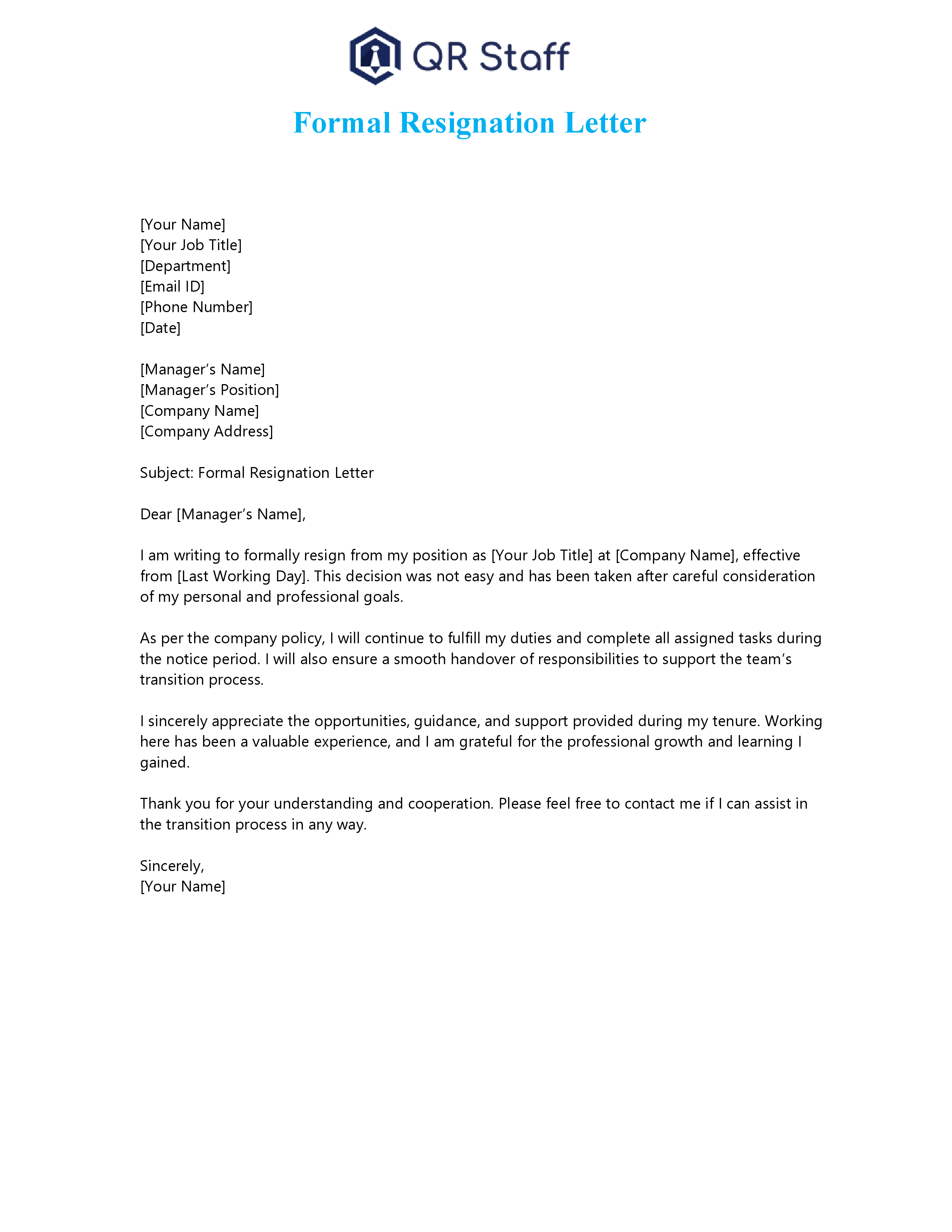
1. Formal Resignation Letter
A formal resignation letter includes a formal structure with a professional tone from the first word to the last. It would contain all of the essential information, such as notice period, last working day, and polite closing. This type is perfect for corporate workplaces where documentation has to be followed. It helps record your resignation clearly and respectfully.
Sample
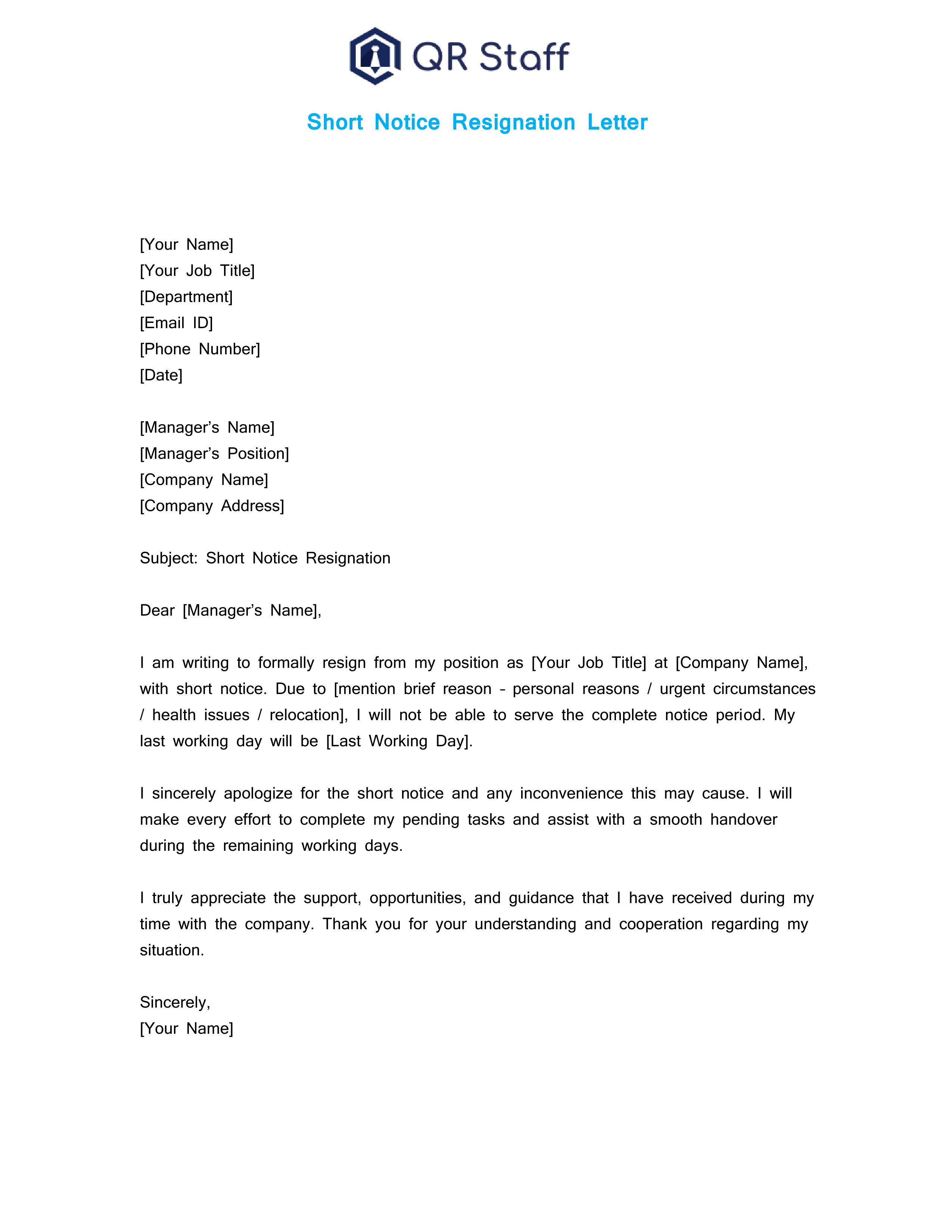
2. Short Notice Resignation Letter
This is the letter used when one needs to leave ahead of time, before the standard notice period required. Explain your reason for this sudden resignation comprehensively but still in a professional manner. The tone should essentially be apologetic but firm to show respect for the situation of the company. This helps the employer understand your urgency and plan accordingly.
Sample
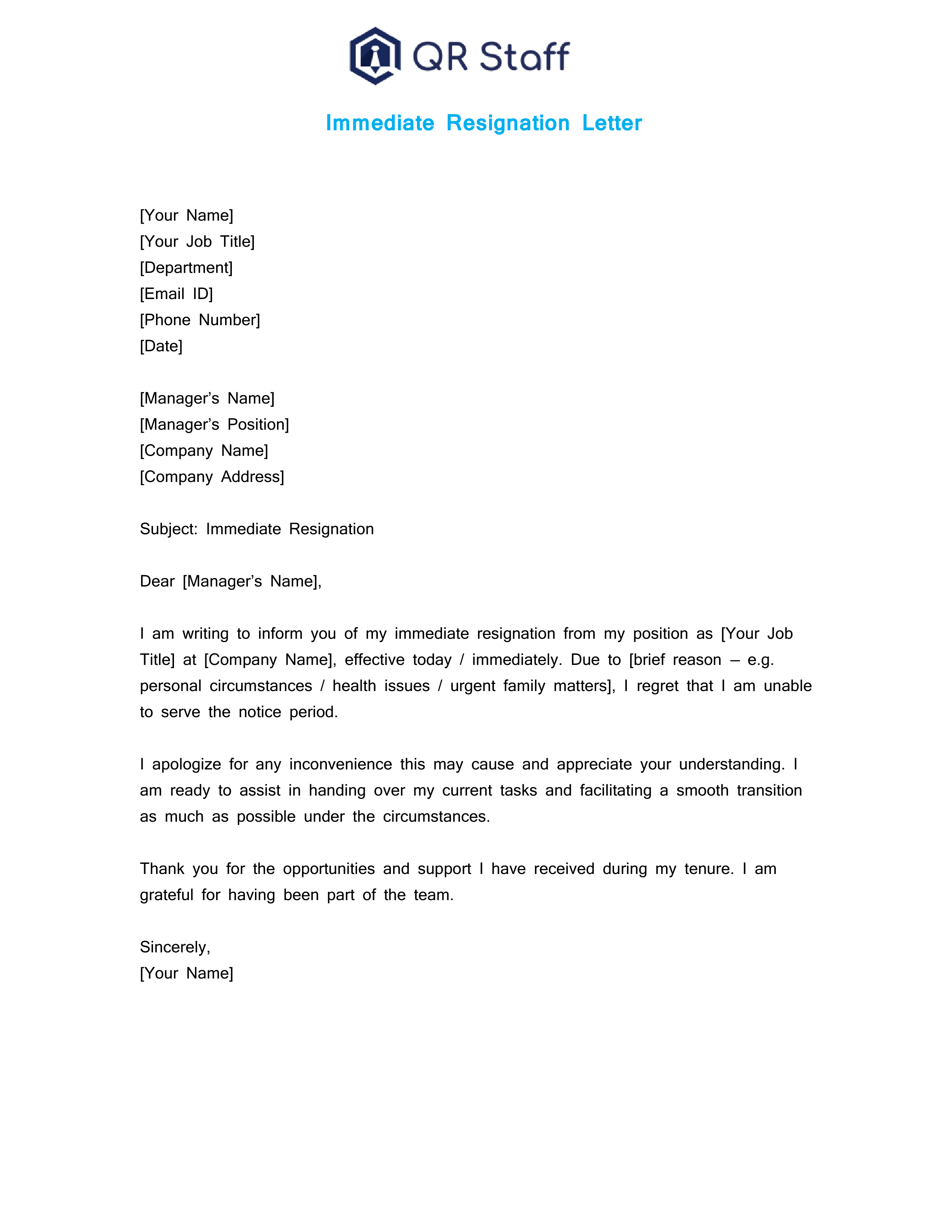
3. Immediate Resignation Letter
An immediate resignation letter is submitted when an employee has to vacate the job immediately on the spot, without any serving of notice. This could be due to emergencies, health problems, or unavoidable personal reasons. The letter should briefly explain the urgency of the situation, together with an expression of regret for not being in a position to serve the notice. It ensures transparency and avoids unnecessary conflict.
Sample
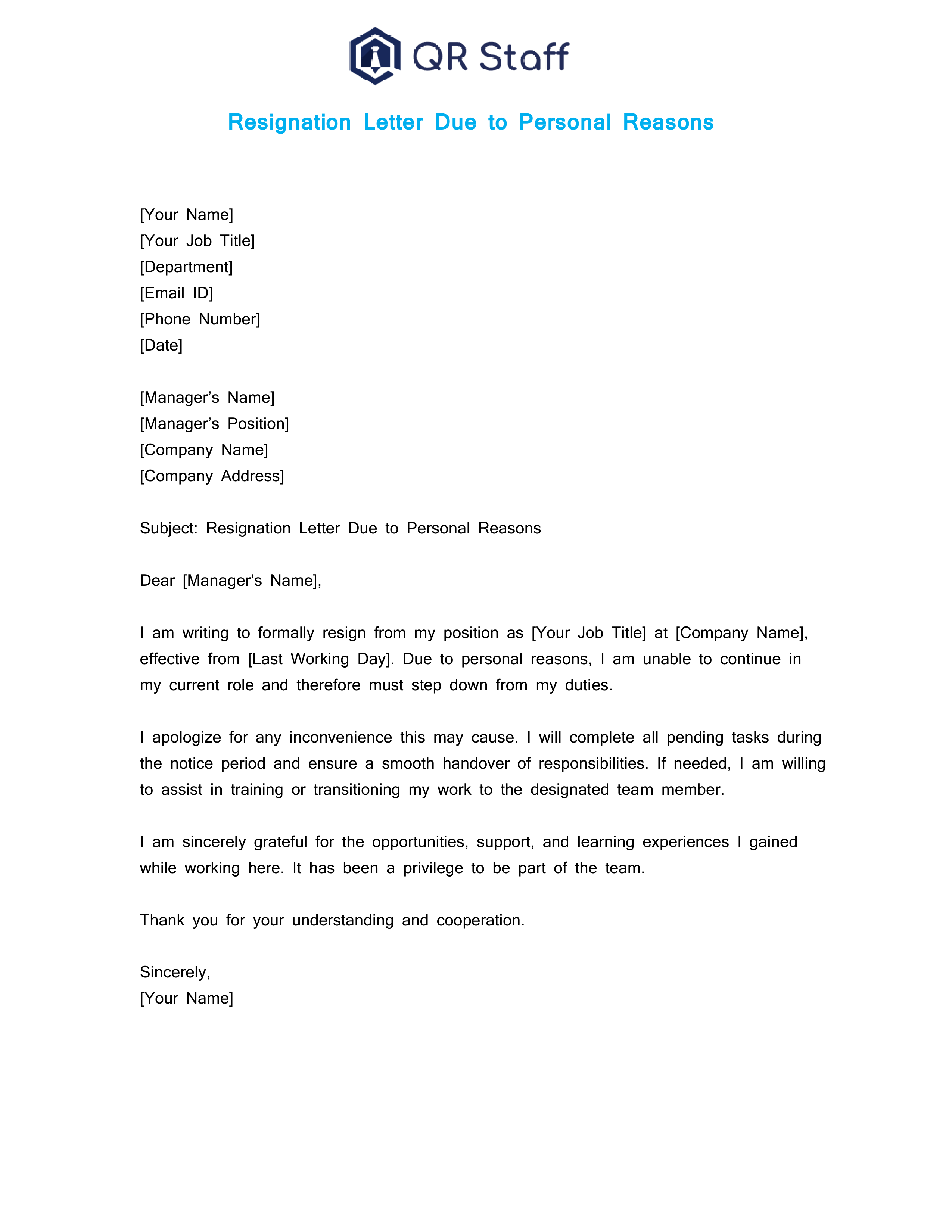
4. Resignation Letter Due to Personal Reasons
This is the type of resignation letter that just states one is leaving because of personal commitments or circumstances. It doesn’t require detailed explanations, but should express respect and gratitude. The tone, nevertheless, is polite and positive to maintain good relations. It also shows maturity by keeping the message honest and simple resignation letter.
Sample
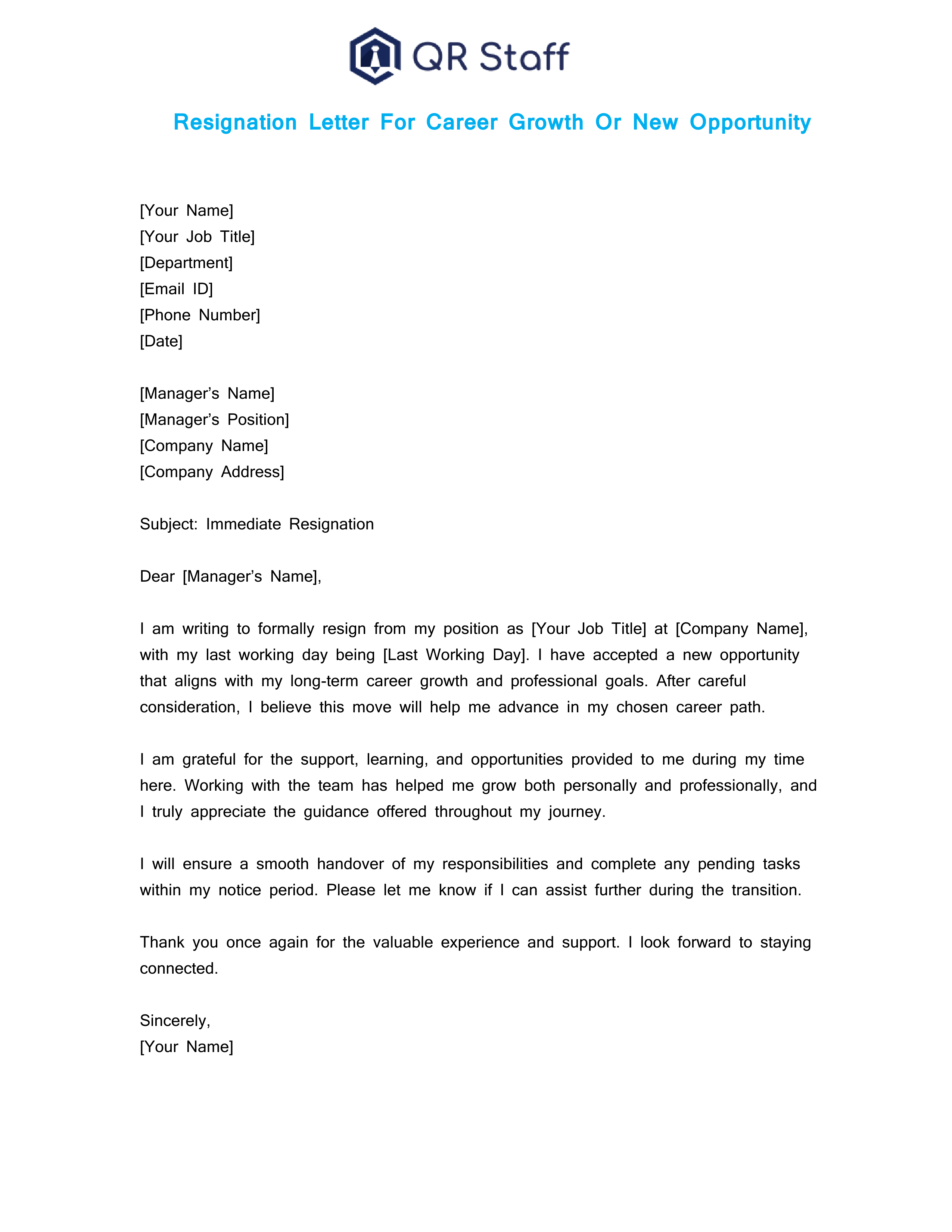
5. Resignation Letter for Career Growth or New Opportunity
Employees use this letter when they need to leave the job for the sake of higher studies, career advancement, or a new role. This letter shows appreciation for the current role while explaining the reason positively. The focus of the letter is on growth, nothing negative must come out. Helps in maintaining a solid professional network for further opportunities.
Sample
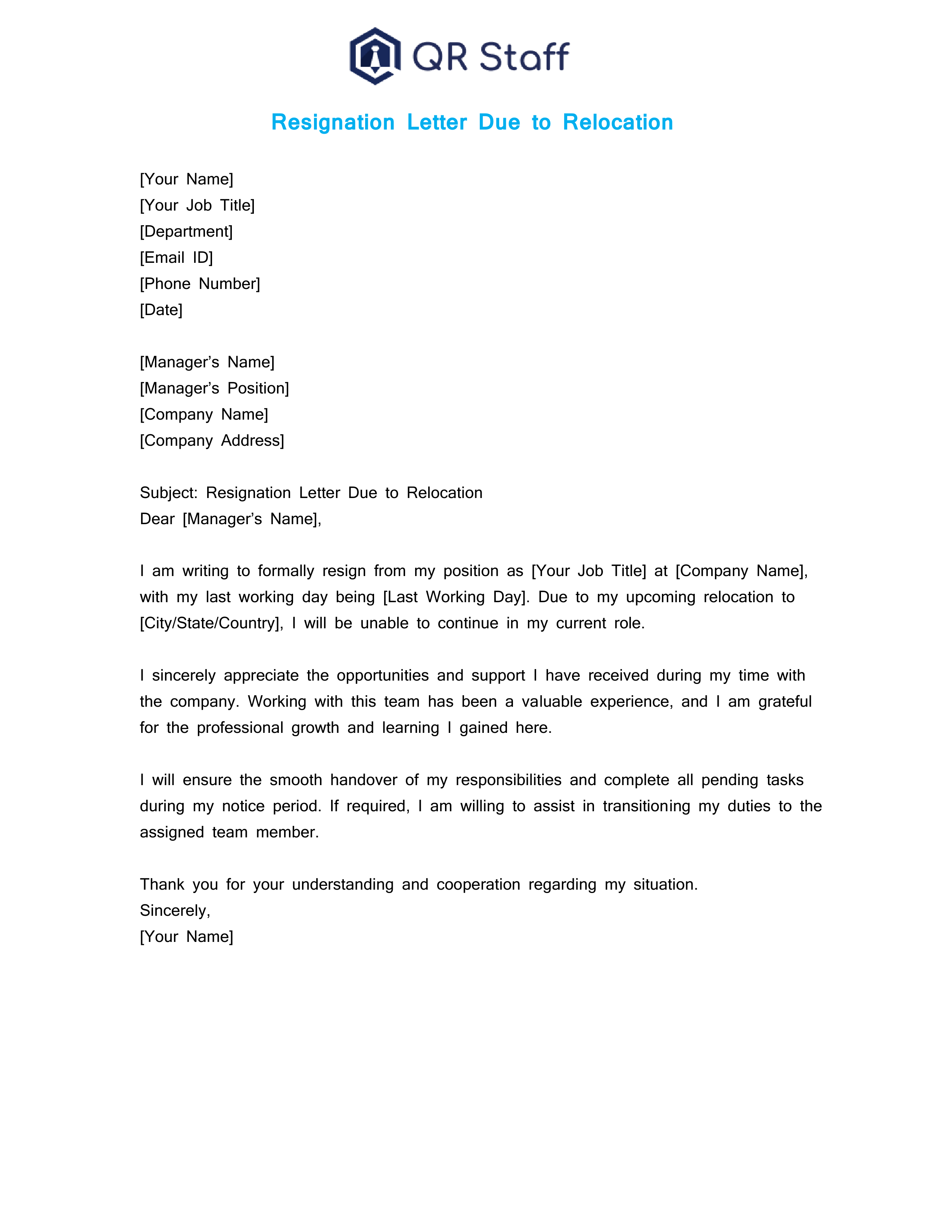
6. Resignation Letter Due to Relocation
This is to state that the relocation to another city or country is the reason for leaving. It is very courteous and acknowledges the company. It mentions that this move makes it difficult to continue in the current role often in the letter, which the employer can clearly comprehend.
Sample
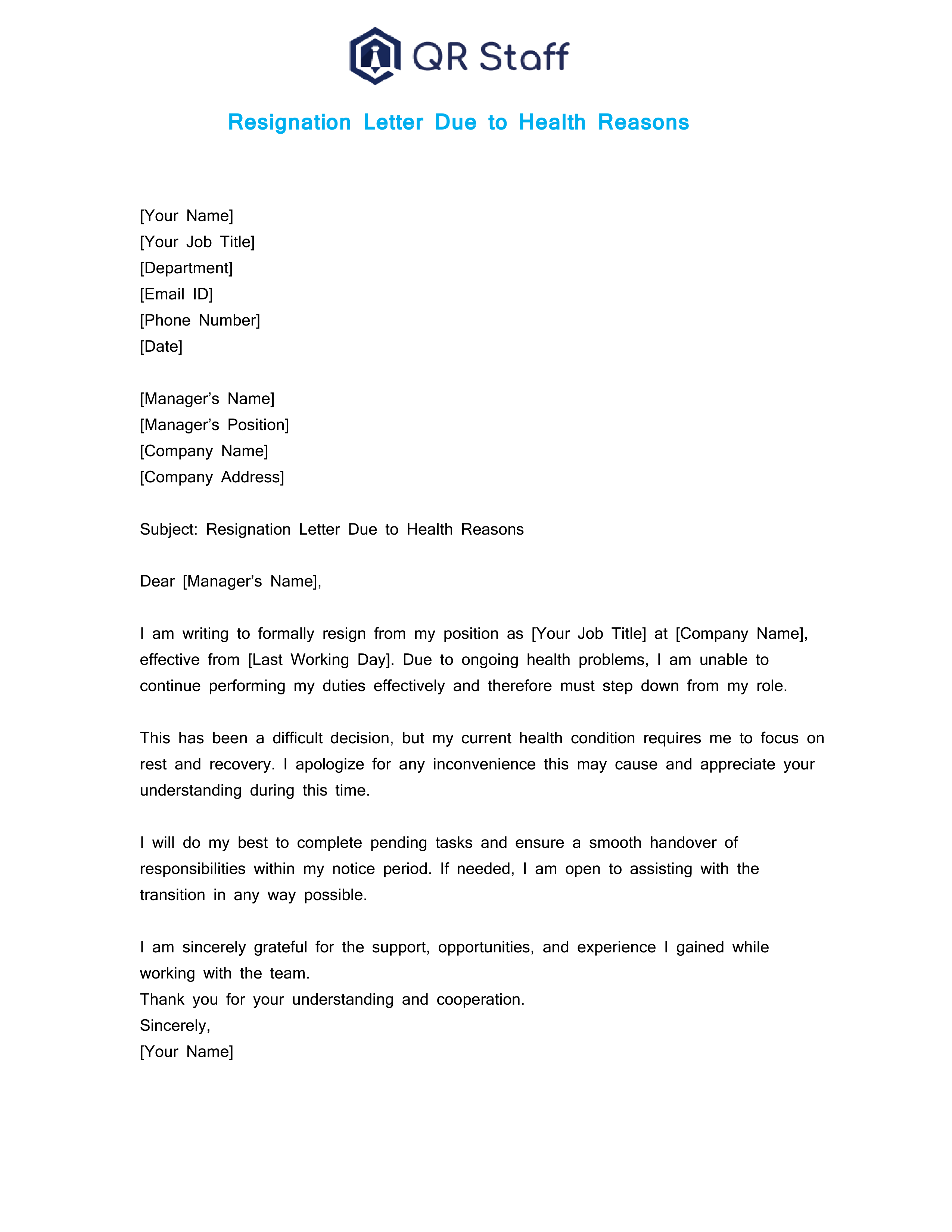
7. Resignation Letter Due to Health Reasons
This type is written when health issues make it impossible to continue with the job. The letter makes the explanation short and private but professional. It regrets leaving and thanks the company for support. This will ensure respect and understanding in the process of exit.
Sample
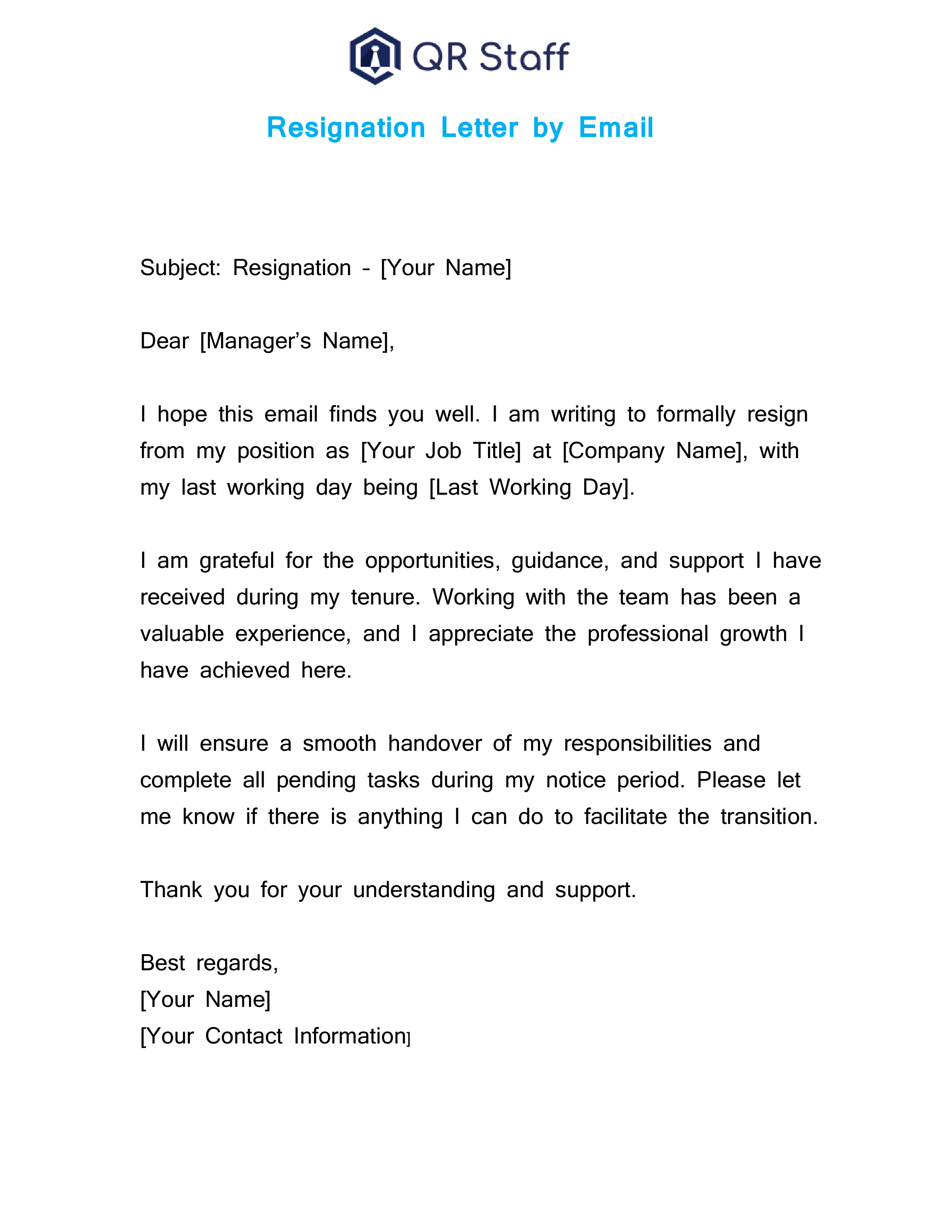
8. Resignation Letter by Email
Most modern workplaces accept resignation letters via email, especially in remote and hybrid environments. Even digital, this letter is short, direct, and professionally formatted. It contains all the essential details, just like a physical letter. The use of email will provide quick and official documentation of one’s resignation.
Sample
Common Mistakes to Avoid in Creating an Employee Resignation Letter
1. Using an Unprofessional Tone
One major mistake employees make is writing the letter in an emotional or informal tone. A resignation letter must be always polite, neutral, and professional, regardless of the reasons for leaving. It is advisable to not accuse, complain, or express anger in the document. Keeping the tone respectful also helps protect your reputation and future references.
2. Failure to Mention the Last Working Day
A few employees sometimes forget to mention their last working day, which creates a lot of confusion and delay in the whole HR process. Clearly mentioning your last working day helps your employer plan handovers, workload, and replacement hiring. It also means your notice period will be recorded correctly. This small detail makes the entire exit process very smooth.
3. Giving Too Much Personal Information
It would make the letter look unprofessional if it shared overly personal, emotional, or unnecessary details. Your reason for resigning should be short and positive; there’s no need for a long explanation. Convey the message briefly to protect your privacy and maintain professionalism. Avoid writing about conflicts or internal issues.
4. Negativity About the Company or Team
Writing negatively about coworkers, supervisors, or company policies is the biggest mistake. Those statements reflect badly on your professional character and possibly your reference in the future. This is not a letter of frustration or criticism; it is a resignation letter. Keeping the message positive ensures you leave on good terms.
5. Failure to Thank the Employer
Most employees omit expressing appreciation, making the letter seem abrupt or cold. A simple appreciation of the opportunities extended or learning experience goes a long way. It reflects maturity, professionalism, and appreciation. This little gesture will help you stay on good terms with them even after you are gone.
6. Not Providing Any Transition Support
While this is not necessary, making an offer to help during the handover is done out of responsibility and respect. Those employees who avoid doing this often seem less professional or uninterested. Leaving word that you are available to help makes a transition easier on your team. It also makes your professional reputation stronger for the next position.
7. Poor Formatting or Grammar Mistakes
A resignation letter with spelling errors, incoherent sentences, or disheveled formatting depicts a negative impression. It seems the paper is rushed or done without concern, which may just indicate to the employer how the exit will be. Always proofread your letter before submitting it. A well-structured and error-free document depicts professionalism to the last day.
The Shift from Traditional to Digital Resignation Management
As automation becomes more prevalent in workplaces, HR teams are leaning on software to manage the employee lifecycle. Digital platforms are used to store resignation letters, track notice periods, keep attendance records, and improve communication between employees and management. Tools like QR Staff make it easier for HR to ensure transparency and accuracy. By adopting digital resignation records, companies can reduce their reliance on paper and speed up back-office operations. For those businesses that frequently receive resignations, technology helps keep everything organized and reduces the workload while ensuring that records remain legally compliant.
Conclusion
Writing an employee resignation letter is an important formal process of leaving the workplace. A clearly written and well-structured resignation letter that is polite in tone sets the stage for an easy transition and helps in maintaining good relations with your employer. Whatever be the reason-be it a better opportunity or personal growth-a respectful exit raises your long-term career reputation. Fast-forwarding to 2025, in most organizations, HR systems have gone digital, and this has introduced quickness and organized record-keeping into the resignation management process.
QR Staff is here to provide an ideal solution for every business requirement: simplifying attendance, payroll, documents, and HR processes. Our smart staff attendance and payroll app helps companies to manage their employees quite effortlessly and professionally.
FAQs on Employee Resignation Letter
It is important that a letter of resignation be straightforward and professional, containing a full name and job title with the date of resignation. Mention your last working day and your gratitude for the opportunities you experienced at the company. Keep it polite and to the point without including any negative experiences you may have encountered. If appropriate, offer to help with the transition or training your replacement.
This generally means 2 to 4 weeks, though in many cases, it may be longer, depending on your employment contract or company policy. In this case, giving appropriate notice helps transition smoothly and allows you to stay on professional terms with your employer. Whenever possible, a longer notice is much appreciated by managers, especially for key positions.
The best way to quit is usually in person or over a video/phone call if remote. This is professional and respectful of the employer. You can certainly follow up from the discussion with a formal resignation email or letter for documentation purposes, but an in-person meeting-or over video/phone call-is optimal. If that’s not possible, it’s okay to email, but remain as pleasant and professional as possible.
If you need to resign on short notice, communicate as clearly and honestly as possible. Politely explain why you cannot give more notice, and apologize for the inconvenience. If possible, offer to help remotely or to perform the handover of your responsibilities to your colleagues. Even when it is short-notice, it is important that you remain professional to preserve your reputation.
It is possible to resign without notice, although it’s generally discouraged because this may damage your professional reputation; it may also contravene your employment contract. Some companies may withhold benefits or final settlement if notice is not given. If unavoidable, provide a brief explanation and apologize for the inconvenience.
A basic resignation letter must contain a statement of resignation, mentioning the last working day and a thank-you note. For example, “Dear [Manager’s Name], Please accept this letter as formal notice of my resignation from my position as [Job Title] at [Company Name], effective [Last Working Day]. I would like to thank you for all the support and opportunities I have received during this time. I’ll be glad to help with the transition. Keep it brief, courteous, and professional.

Leave a Reply