
Becoming a mother is one of the most beautiful and transformative experiences in a woman’s life. It’s a time filled with joy, anticipation, and a lot of emotional changes. During this period, getting enough rest and taking care of yourself becomes super important. Every expecting mother needs time to prepare her mind and body for childbirth, recover afterwards, and bond with her newborn. That’s why understanding the Maternity Leave Application Format in Word becomes essential for working women—it helps them apply for leave in a proper, professional manner. Maternity leave is crucial because it ensures they get the physical rest and mental peace they need during this sensitive stage of life.
To officially take maternity leave, it’s essential to follow your company’s HR policies and submit a well-written maternity leave application. A clear and professional application helps your employer understand how long you’ll be away, your expected delivery date, and how you plan to hand over your responsibilities. It also shows that you’re responsible and can make the approval process a lot smoother.
In this blog, you’ll find everything you need to know—from writing an effective maternity leave application to understanding the key components that employers expect. You’ll also get ready-to-use Word and PDF templates that make the process even easier. Whether you’re applying for six months.
What Is a Maternity Leave Application?
A maternity leave application is a formal request that a woman makes to her employer, asking for time off during her pregnancy, childbirth, and the recovery period that follows. This document serves as an official notice to the company, detailing how long she’ll need to be away, her expected delivery date, and any medical advice from her healthcare provider. It’s essential for the HR team to have this information to effectively plan work schedules, allocate tasks, and keep employee records up to date.
A well-written Application for Leave of Absence, especially for maternity leave, promotes transparency between the employee and management. It clearly states all the important details, including handover plans, emergency contact info, and the proposed return date. By documenting everything, the employee can avoid any potential confusion or last-minute issues with approval. Ultimately, a solid maternity leave application not only protects the employee’s rights but also helps the organization ensure a seamless workflow during her absence.
Why Writing a Maternity Leave Application Is Important
Submitting a maternity leave application is essential because it formally alerts your employer about your upcoming absence and promotes transparency right from the start. When you clearly state important details like your expected delivery date, the length of your leave, and any health considerations, it helps the company plan workflows and delegate tasks effectively. Additionally, a formal application aids HR in maintaining accurate attendance and leave records, which are crucial for payroll, benefits, and compliance with company policies.
It also serves as a safeguard for the employee against any potential misunderstandings or disputes, acting as documented proof of the leave request. Whether you’re looking for extended leave based on medical advice, want to mix paid and unpaid leave, or plan to work flexibly after your maternity leave, having everything in writing ensures that all the details are officially recognized. This written communication fosters professionalism, trust, and clarity between both parties, making the whole process much easier for the expectant mother.
How to Write a Maternity Leave Application (Step-by-Step Guide)
Writing a maternity leave application is much simpler when you follow a clear format and include all the key details. A well-structured application not only notifies your employer about your leave but also assists HR in managing work, maintaining records, and offering support throughout your pregnancy journey. Here’s a detailed, step-by-step guide that’s easy to follow.
1. Mention your expected date of delivery
Start your application by mentioning the expected date of delivery, as informed by your doctor. This is the most crucial information because it provides your employer with a possible date of leaving. Once you share this date, the HR team would start making preparations for your absence. This also helps the HR team add the maternity leave in the HR system correctly and at the right time so that all procedures for your salary, benefits, and medical entitlements can be continued without delay. Also, you make the approving process easier and avoid confusion later on in case you give a vague expected date.
2. Clearly indicate the leave duration
Next, specifically mention the duration for which you want to go on maternity leave. As per the Maternity Benefit Act of India, eligible working women are entitled to a maximum of 26 weeks of paid maternity leave. You must mention a specific start and end date of your leave so that there is no misunderstanding. This information allows your employer to distribute your workload, assign responsibilities to other team members, and plan ongoing projects effectively. A well-defined leave duration also depicts that you are organized and considerate about your company’s workflow.
3. Attach medical documents, if required
Some organizations ask for medical evidence regarding your pregnancy and expected date of delivery, such as a doctor’s certificate or sonography report. Attach these for reliability and professionalism in your application; this will help HR cross-check the details to process the leave in accordance with the company’s rules and government regulations. In case the doctor advises you about complete rest or limited physical activity, you can mention it briefly in your application and attach supporting documents for clarity.
4. Explain your work handover plan
A maternity leave application becomes stronger once you show responsibility towards your work. You may briefly describe how your tasks will be managed while you are away. You can mention colleagues who can be given a certain responsibility or can explain how you would be completing urgent work before going. A clear handover plan means that your team faces no difficulty in your absence and the workflow is never obstructed. This thoughtfulness creates a good impression and shows your dedication towards the organization.
5. Provide your contact information
Even as you will be on leave, it is important for the employer to know how to reach you when necessary. Provide a telephone number and email address through which urgent communication can be made. This gives your company confidence that they may get in touch with you in case of any updates or emergency approvals that are required. You appear professional and trusting by offering clear routes for communication, yet you still prioritize health and rest during maternity.
6. Add a polite closing statement
Always close your maternity leave application with a warm and polite closing sentence. Thank your employer or HR manager for understanding your situation and giving you support during this important phase of life. A positive closing will not only make your application more professional, but it will also create a respectful tone. It would show that you value the company’s support and are looking forward to returning after your maternity period with renewed energy.
Maternity Leave Application Format (General Template)

Samples of Maternity Leave Applications
Below are ready-to-use samples for different situations. You can copy, paste, and edit them as needed.
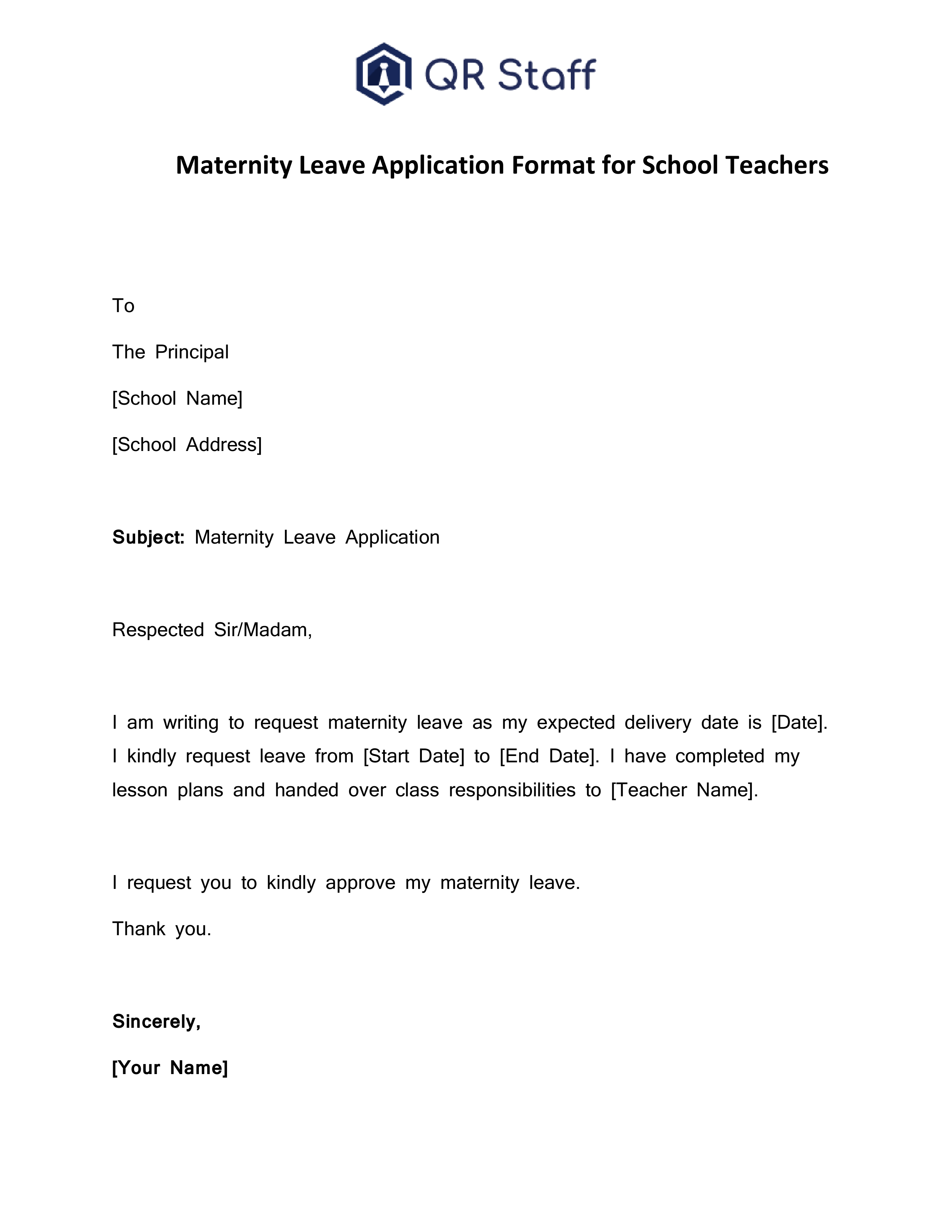
Maternity Leave Application for School Teachers
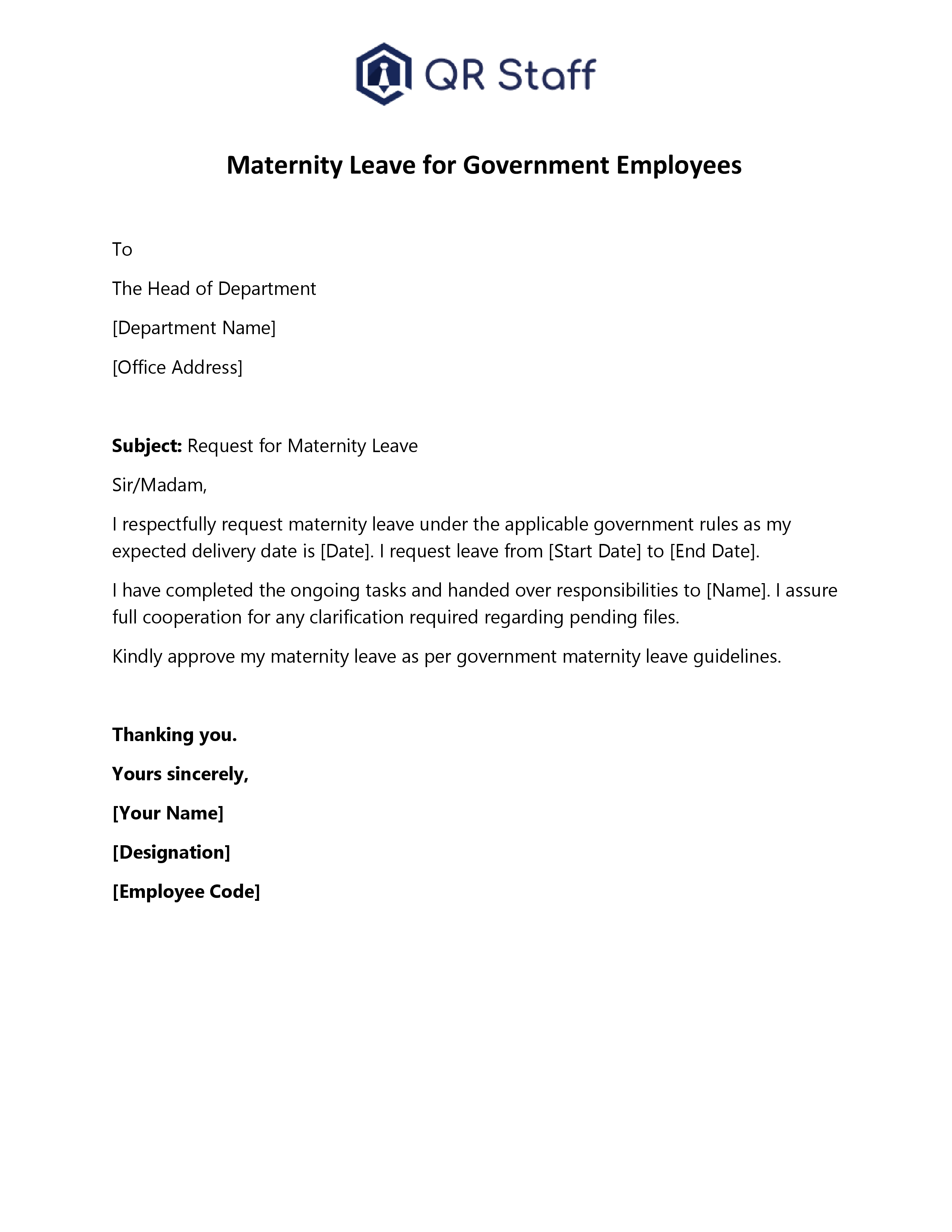
Maternity Leave for Government Employees
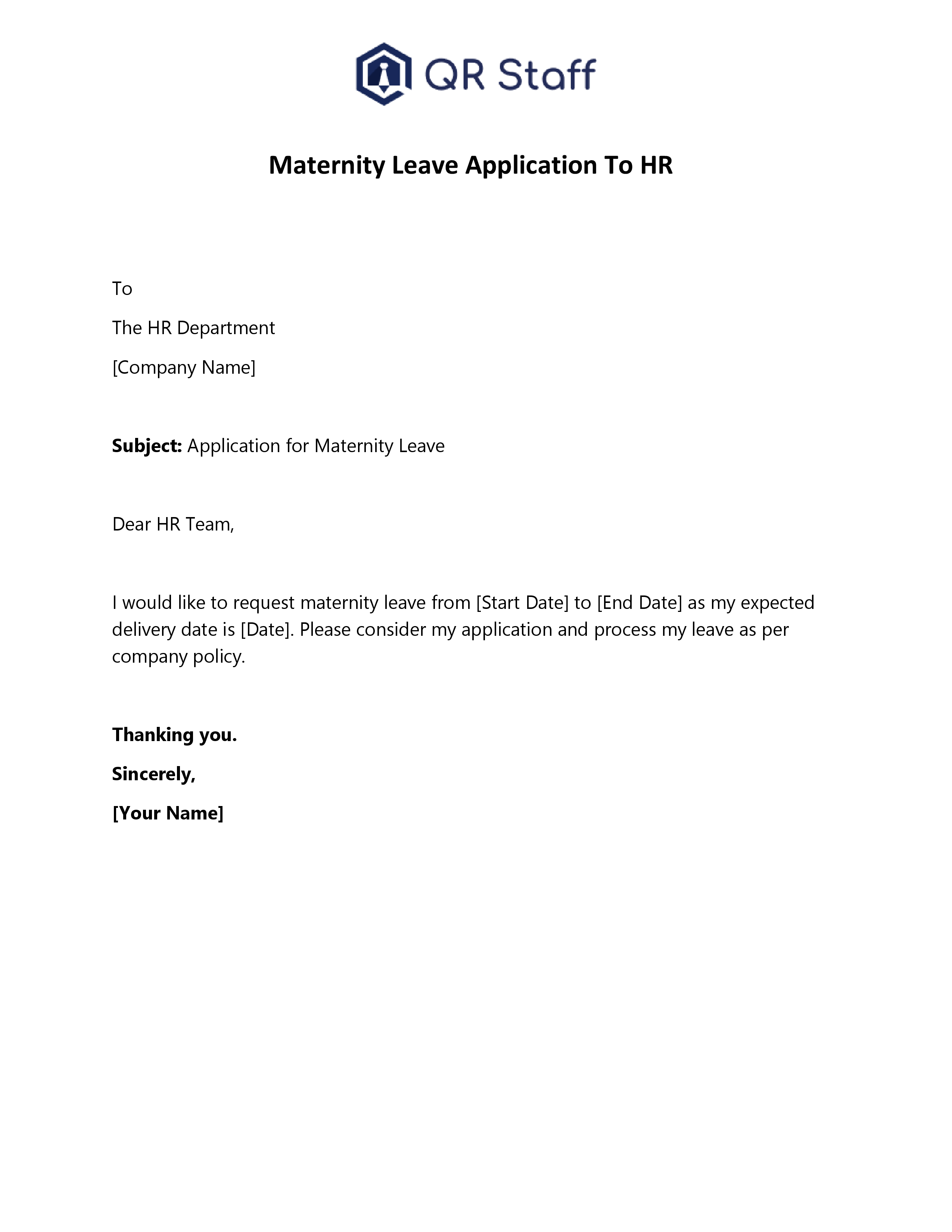
Maternity Leave Application To HR
Maternity Leave Application For Email

Download Maternity Leave Application Templates (Word & PDF)
We want to make your maternity leave experience as smooth and stress-free as possible, so we’ve created some ready-to-use templates in Word (.docx) and PDF formats. Feel free to download, tweak, and utilize them right away for your office, school, or government job requirements.
These templates are designed with a clean, professional look and comply with the most recent maternity leave guidelines in India.
| Formats | Files |
|---|---|
| Maternity Leave Application Format in Word | Download Word File |
| Maternity Leave Application Format in PDF | Download Excel File |
Maternity Leave Rules in India (Simple Explanation)
In India, maternity leave regulations are put in place to safeguard working women during their pregnancy and after they have their babies. These rules guarantee job security, salary benefits, and sufficient time for recovery. The key provisions are outlined in the Maternity Benefit Act of 1961, which applies to a wide range of employers, including private companies, factories, shops, and any establishments that have 10 or more employees.
1. 26 Weeks of Paid Maternity Leave
Maternity leave for women employees in India for the first two children is a right entitled to a period of 26 weeks, completely paid, including both pre-delivery and post-delivery leaves. This enables mothers to rest, prepare, and recover before and after the birth of their babies. Most women take up to 8 weeks before childbirth and the remaining amount after delivery. The rule ultimately safeguards the well-being of the mother physically and emotionally during this critical time, while also ensuring the newborn receives proper care in the first months of life.
2. Leave for Third Child
If she already has two children, the law grants 12 weeks of paid maternity leave for a third or subsequent child. While this is a shorter length than for her first two children, this is still valuable recovery time. The leave may be divided between time off before delivery and after, as needed. This rule gives working mothers flexibility and support, while also making sure company policies remain consistent. This leave must be approved by an employer, just as standard maternity leave would be approved.
3. Miscarriage or Medical Termination Leave
For the cases of miscarriage or medical termination of pregnancy, women are entitled to 6 weeks paid leave. This leave is meant for physical recovery and emotional support at a sensitive period. Employers are legally bound to facilitate such leave after receiving medical evidence. The rule ensures that no woman has to face work stress along with health issues. Further, it endorses empathy and equitability in the workplace.
4. Adoption & Surrogacy Leave
Women who legally adopt a child under 3 months of age get 12 weeks of leave like maternity leave. Similarly, a commissioning mother in surrogacy is entitled to leave from the date of handing over the child. This is to enable her to develop bonding with the baby and get used to early childcare routines. It realizes motherhood would not mean birth of the child itself. It provides equal support during the initial months to adoptive mothers and surrogate mothers.
5. Option to Work from Home after Leave
After maternity leave, a woman may request a work-from-home arrangement if her job allows it. This option depends on company policies and the nature of her role. Many employers offer flexible hours or hybrid work to support new mothers. This helps women balance childcare responsibilities while continuing their career. Such flexibility reduces stress and thus makes the transition of coming back to work easier.
6. No Dismissal During Maternity Leave
The Maternity Benefit Act strictly forbids the employer from discharging or giving a lower designation to any woman on the pretext of pregnancy. Her salary, designation, and job security are fully protected during the leave period. This rule ensures that no female will be afraid of losing their job during maternity. It encourages a positive and safe work environment for expecting mothers. Any company violating this rule can face legal consequences.
7. Full Salary Payment During Leave
In the maternity leave period, a woman is entitled to get her full salary, including basic pay and regular allowances. In no way can an employer cut down wages or delay paying salaries. This provides financial stability during pregnancy and after childbirth when expenses are usually higher. The rule helps working mothers take proper rest without bothering about income. It ensures financial protection for women during this period.
8. Medical Bonus Provided by Employer
In addition to this, if the employer is not providing free medical care, a medical bonus up to ₹3,500 or more must be given to the woman. This will help in consultation, tests, medicines, and delivery-related expenses. This amount may be revised from time to time by the government. This norm provides at least partial financial relief to women during pregnancy. And it also encourages the employers to support maternal healthcare.
9. Crèche Facility for Establishments with 50+ Employees
All companies with more than 50 employees have to provide a crèche or day-care facility. A working mother is allowed to visit the crèche facility up to four times a day, which also includes visiting during lunchtime. This would keep the new mother close to her baby during work hours. It would facilitate breastfeeding and keep the child in a safe environment. The facility would also help women return to work without worrying about childcare.
10. Eligibility Requirement (80 Days Rule)
The eligibility to get maternity benefits requires a woman to have worked at least 80 days in the company within the last 12 months, so that authenticity of long-term employees is ascertained. The 80-day work includes weekends and approved leaves. It helps maintain equity in companies and stops abuse in the use of this benefit. Once eligibility is met, the employer must provide all maternity-related rights without delay.
Tips for Writing an Effective Maternity Leave Application
Tips for Writing an Effective Maternity Leave Application
1. Be Clear and Specific
Always be clear about your expected delivery date and the exact duration of leave you want. Never use words or phrases such as “a few weeks” or “around two months.” Clear information given to your employer helps in planning work schedules and also makes sure that your leave is processed in time without confusion. Specificity shows professionalism and avoids much back-and-forth with HR.
2. Keep a polite and professional tone.
Use polite words and keep the tone professional throughout the application. Address your manager or HR respectfully, and do not use casual phrases. A well-mannered tone will keep a good impression and ensure that your application is approved quickly. Remember, your goal is to inform, not to negotiate in the first instance.
3. Mention the Medical Details if Necessary
If your doctor has advised rest, restricted activity, or specific precautions, briefly include these details. Attach medical reports or certificates if that is required. Providing correct medical information makes your application credible and helps HR understand your situation better. It also ensures that the leave is in compliance with legal and company requirements.
4. Explain Your Work Handover Plan
Outline how your responsibilities will be managed during your absence, mentioning colleagues who will handle specific tasks or projects. A clear handover plan shows accountability and ensures the work gets done as smoothly as possible. Your employer is assured that your work will not suffer because of your absence, and it reflects well on your professionalism.
5. Include Contact Information
Although on leave, do share your contact number or email address for urgent matters. This reflects responsibility and allows the HR or managers to get in touch with you, if needed. You can, however, mention that you will be available only for critical issues so that your rest and recovery remain uninterrupted.
6. Be Brief yet Organized
Try to avoid long paragraphs and details that are not necessary. Applications for maternity leave should be short, organized, and to the point. For clarity, use either bullet points or separate paragraphs. This makes it easier to read through for HR as they process the request, thus reducing the chances of errors or delays.
7. Close with Appreciation
Always close the application by thanking your employer for their support and understanding. A polite closing statement creates a positive tone and strengthens your professional relationship by showing that you value their time and assistance, thus leaving a good impression before your leave commences.
Common Mistakes to Avoid
1. Not Specifying Exact Dates
One of the most common mistakes is failing to specify start and end dates for your leave. Inexact statements like “I will be on leave for a few weeks” cause confusion and may delay approval. Always state the expected delivery date and exact duration of leave. This helps HR plan work schedules and ensures proper payroll processing.
2. Forgetting to attach medical documents
Some employers request a doctor’s certificate or medical report as evidence of pregnancy. Failure to attach these documents can make the application incomplete or seem unprofessional. Always attach all necessary medical proof to avoid delays that will make your request credible and adhere to company policy.
3. Disregarding the Work Handover Scheme
Not mentioning how your tasks will be managed in your absence is a mistake. Who will take care of your responsibilities needs to be known by the employer. Lack of a handover plan may cause workflow problems and a loss of trust. Always clearly outline your handover, even briefly, to show accountability.
4. Writing in an unprofessional tone
Casual language or over-informal tone reflects badly upon you. For example, using lines like “I want to take leave” without salutations or politeness may sound insulting. One should always use professional, polite, and respectful language for a good impression.
5. Writing Too Long an Application
The details or explanations on various and unnecessary aspects make the application disorganized. Most human resources managers prefer letters that are concise, clear, and organized. Be concise by including only essential information: dates, duration, medical proof, and handover plan.
6. Forgetting Contact Information
Not including contact information is often overlooked. The employer might want to reach you for urgent issues. Provide a phone number or email address, but always mention that you will only be available in emergency situations.\
7. Not Following Company Policies
Every company follows a different procedure for leave and also requires different documents. Avoiding these procedures might lead to rejections or delays, so always check the HR guidelines before submission and follow the given format. This ensures your leave is correctly and timely processed.
8. Submitting the Application Too Late
Applying for maternity leave at the last minute can cause problems for both you and your employer. You should plan in advance and submit it as early as 8–10 weeks before your expected delivery date. Early submission allows time for proper workload planning and smooth approval.
Conclusion
Maternity leave is a most important phase for every working mom. A precisely written application for maternity leave ensures clarity, professionalism, and smooth processing of benefits. Any employee can draft just the perfect leave application by using the above-given templates within minutes. Understanding your rights, planning your leave, and submitting the proper documentation will make your maternity journey stress-free and comfortable.
For organizations needing to streamline handling employee leave, QR Staff provides an efficient and easy solution. It helps businesses to track attendance, approve leave requests, and automate payroll without paperwork. In cases of maternity leave or any other type of leave, it will be very helpful for a company to trust QR Staff with accurate record-keeping of attendance and salary payments. QR Staff makes managing staff easy, reliable, and fully digital.
Ans: A maternity leave application is a formal request submitted by an employee to their employer to take time off for the birth of an infant.
Ans:The Maternity Benefit Act in India grants female employees the right to 26 weeks of paid maternity leave for the first two children and up to 12 weeks for the third child.
Ans: A maternity leave application letter should include the employee’s details, dates of leave, a doctor’s certificate if needed, and the employee’s willingness to assist in the handover of responsibilities.
Ans: Greeting and stating clearly the days of one’s leave, attaching the doctor’s certificate, and offering to assist while away.
Ans: Yes, employees can apply for maternity leave in advance, usually starting a few weeks before the expected date of delivery.
Leave a Reply