
Resigning from a job is an important decision, and equally important is the way it is communicated. A resignation letter reflects professionalism, respect, and clarity—no matter whether you work in an office, shop, school, clinic, or hospital. It helps maintain a positive relationship with your employer and ensures a smooth transition for both you and the company. That’s why many employees look for a clear and Simple Resignation Letter that called the Employee Resignation Letter they can use instantly without confusion.
In today’s fast-moving work scenario, workers seek simplicity and ready-to-use formats that save them time. A simple resignation letter not only conveys your decision to the employer but also records your last working day, the notice period, and even the reason for leaving. It removes misunderstandings because everything is in a formal tone and shared officially.
In this blog, find simple explanations, step-by-step guidance, and several ready-to-use resignation letter templates in both Word & PDF formats. These templates are designed for all professionals, be it a fresher, teacher, private company employee, government staff, or retail and small business employees.
What Is A Simple Resignation Letter?
A letter of resignation is the employee’s formal, written message to the employer that he or she intends to quit. It is a formal way to express your stepping down from a position and secures professional documentation of the same. A resignation letter should contain, among other things, one’s date of last day of work, notice period, and, briefly, the reason for resignation. In case these factors are stated in a letter, both the employee and the employer can avoid misunderstandings and be able to plan the transition well in advance.
The main goal of the preserve professionalism, show respect, and leave the company on good terms. The employer is provided with sufficient time to arrange replacements, handovers, or workload adjustments. Companies also keep a resignation letter on record in their HR for future reference, compliance, and staff management purposes. That way, the whole process becomes transparent and organized for both parties.
The sample of a Simple Resignation Letter is particularly helpful for the employees who are not sure either about the format or wording. It gives a ready structure so that no important detail gets omitted, be it mentioning the notice period, showing gratitude, or stating the date of resignation. Using a sample, anyone can prepare a neat and clean, error-free, and professional resignation letter in minutes.
Why a Simple Resignation Letter Matters
A simple resignation letter matters because it helps communicate the decision without confusing anyone or creating misunderstandings. When the message is clear and courteous, the employer can understand your intention and start the transition process for you smoothly. It will also reflect your professionalism, where respect for the company’s policies and the value of a proper exit procedure is shown and helps to keep up a good relationship with your employer, as it may be useful for future references or other career opportunities. Also, resignation letters are kept in HR records by companies, so writing a simple and correct letter helps ensure proper documentation. This is why a well-written resignation letter becomes an important part of leaving any job responsibly and professionally.
How to Write a Simple Resignation Letter (Step-by-Step Guide)
Writing a simple resignation letter becomes very easy when you follow a proper structure. A well-organized letter helps you express your decision respectfully and ensures that no important information is missed. Below is a step-by-step guide to help you write a professional, clear, and polite resignation letter that works for any job role.
1. Write a Clear Subject Line – Email Resignation
Start with a clear subject that identifies the intention of your correspondence immediately. Standard formats would be “Resignation Letter – Your Name” or “Resignation – Position Name.” This helps HR or management to spot your email quickly and process it with little or no delay.
2. Address the Letter to the Right Person
Always address your resignation letter to your reporting manager, HR, or concerned authority. You should use their correct name and designation for professionalism. Proper addressing of the letter ensures that it will reach the right department for approval and documentation.
3. State your intention in unequivocal terms.
State in the first line that you are resigning from your position. Simple and straightforward, so it would not mislead and your message would get across appropriately.
4. Mention Your Last Working Day
Your last working day is amongst the most prominent details. Clearly mention it, depending on the notice period or company policy, so that the employer will find it easy to plan the distribution of workload, replacement, and handover process.
5. Add a Brief Reason (Optional but Polite)
You can add a short and professional reason, such as personal growth, relocation, higher studies, or for a new opportunity. It’s not necessary, but the explanation usually leaves a positive impression of honesty.
6. Thank the Company
Showing appreciation forms a vital part of a formal resignation letter. Thank them for support, learning experiences, and opportunities provided by your employer. A grateful tone helps in leaving on good terms with your company and builds up long-lasting professional relationships.
7. Provide Support During the Transition
Mention your willingness to help with handovers or to train your replacement; this shows responsibility and presents a smooth exit from the company. Employers appreciate employees who complete their duties respectfully.
8. End with a Professional Closing
Close your letter with one of these phrases: “Sincerely,” “Regards,” or “Thank you,” followed by your name, contact number, and signature if printed. A clean closing gives an air of polish and completeness to your letter.
Simple Resignation Letter Sample
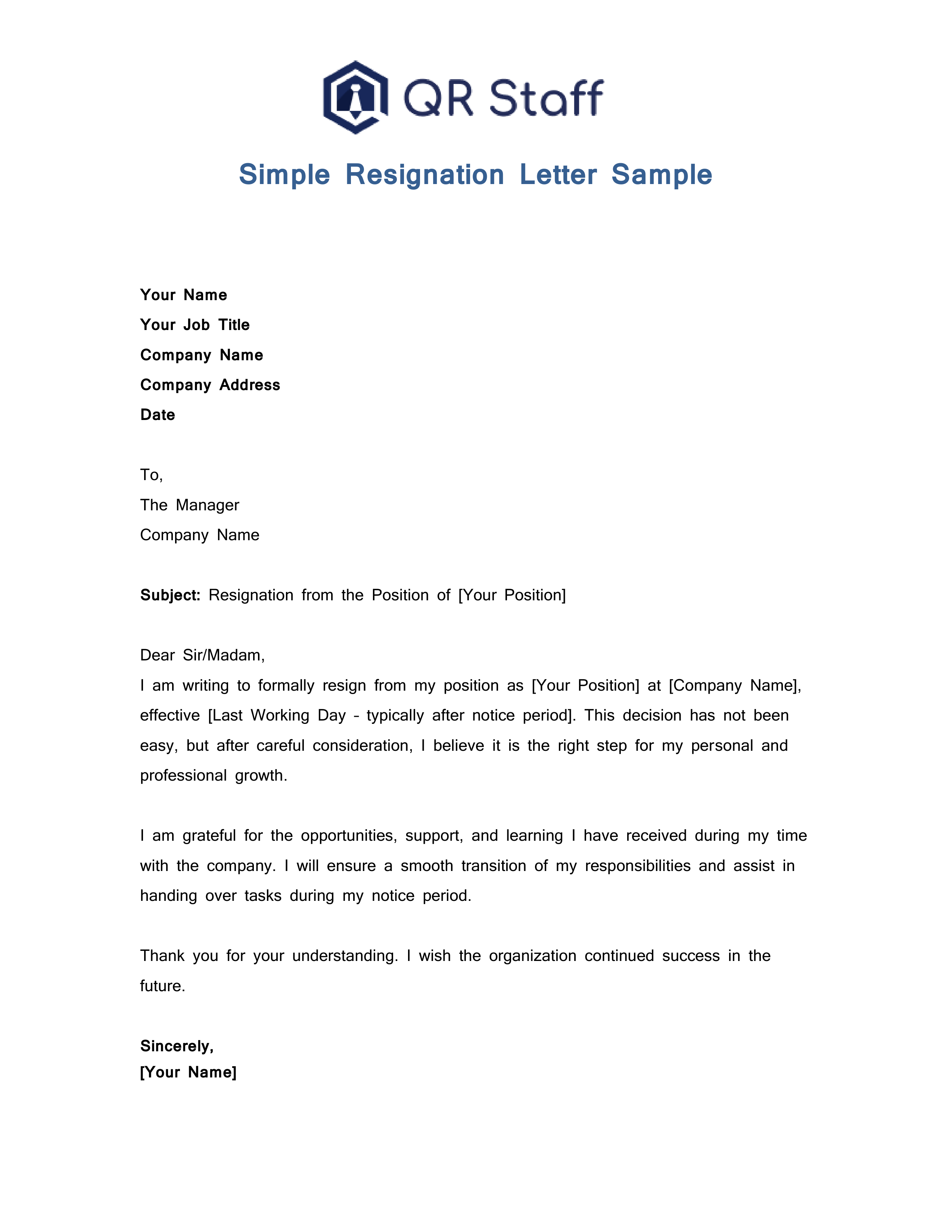
This Simple Resignation Letter Sample works for almost all job roles and companies because it is short, respectful, and professional. You can use it for email, print, or HR submission.
Simple Resignation Letter for Different Roles
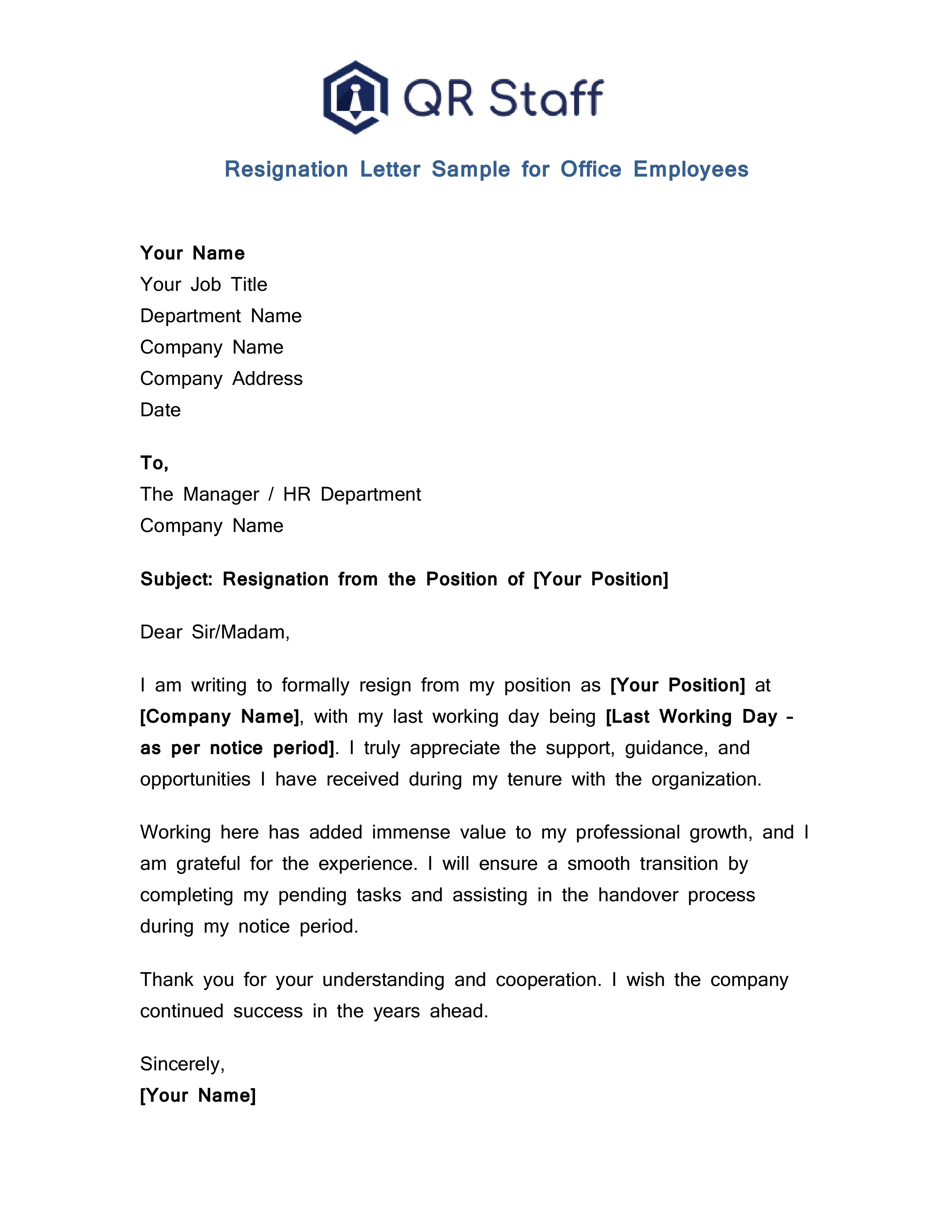
Simple Resignation Letter Sample for Office Employees
Employees in the office should be using a professional tone, as most companies keep their records, including HR records. Your letter must clearly mention your position, department, and last working day. Keeping the message polite and positive helps maintain good relations with your manager and HR. You may also offer help during the transition period to show responsibility. This Sample is the perfect template for corporate jobs and office settings.
Sample:
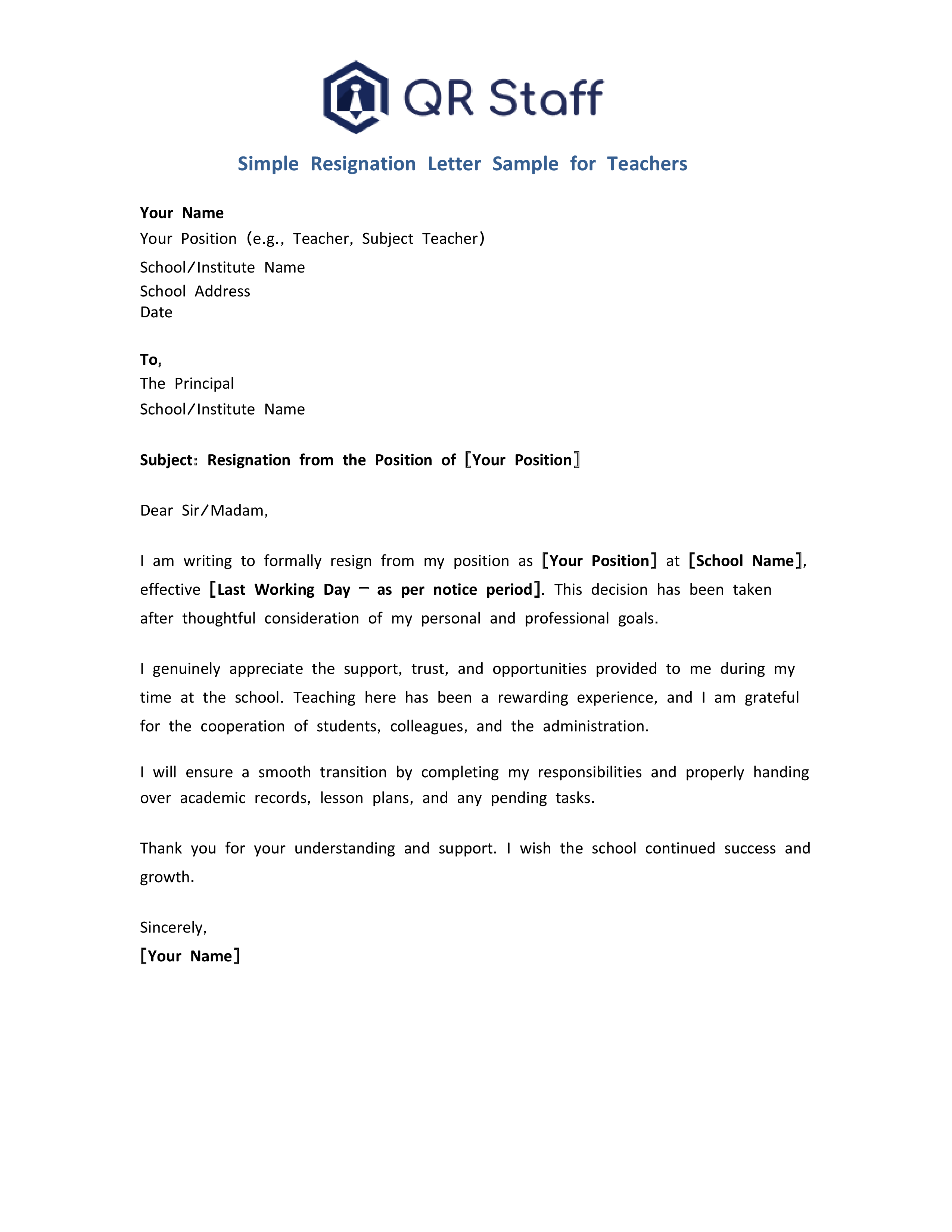
Simple Resignation Letter Sample for Teachers
Teachers require a relatively detailed resignation letter as their exit affects students, academic schedules, and subject planning. It’s very important to clearly mention your last working day so that the school administration can plan replacement arrangements. You can add one sentence about finishing the ongoing responsibilities before leaving. A polite tone is helpful to maintain respect and harmony in the educational atmosphere. This Simple Letter Sample is suitable for schools, colleges, and coaching institutes.
Sample:
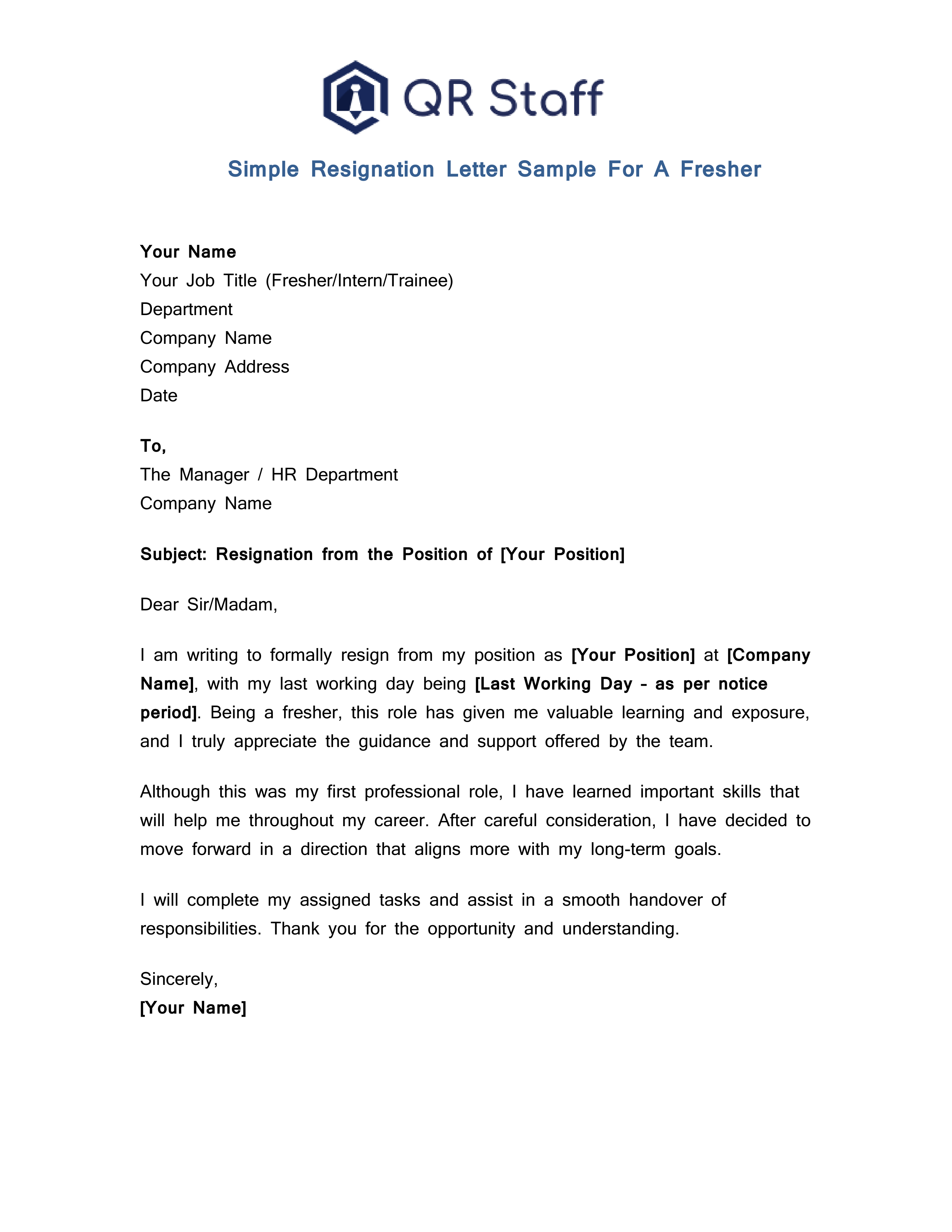
Simple Resignation Letter Sample for Freshers
Most freshers struggle while writing a resignation letter, as it is usually their first job. A simple and clean format is enough for them because they do not need to explain much. State your intention to resign, last working day, and a small note of thanks. That keeps it professional even if the experience was rather short. Using a Simple Resignation Letter Sample helps freshers learn the right corporate tone of communication.
Sample:
Best Tips to Write A Professional Resignation Letter
Writing a professional resignation letter can be easy provided you follow some important guidelines. These tips shall assist you in being respectful yet still saying everything that needs to be said clearly. Aside from making your exit easy, a well-written resignation letter also leaves a lasting impression on an employer. Here are some of the best tips that can assist you in writing a clean and professional resignation letter.
1. Keep Your Message Short and Direct
A letter of resignation should be simple and to the point. Avoid adding more details than necessary, or over-explaining reasons for leaving. A concise message shows clarity and confidence. When your letter is easy to read, it means your employer will process it quicker. Clear communication always reflects professionalism.
2. Keep the Tone Polite but Respectful
Even if you are dissatisfied or having problems at your place of employment, your resignation letter should always sound respectful. Use courteous language and absolutely no negative comments about the company or co-workers. A positive tone helps you leave in style. Remember, professional relationships can be a plus in years to come.
3. Mention Important Details Clearly
Your last working day, the notice period, and designation should not be confusing. These details help HR plan the handover process and update records accordingly. When everything is written clearly, it reduces back-and-forth communication. That reflects responsibility and being well-organized.
4. Be Thankful for the Opportunity
It is important in a professional letter of resignation to thank one’s employer. A short note of appreciation evidences maturity and acknowledges experience gained. It also leaves a positive impression that can be helpful if you ever need referrals or recommendations. Gratitude strengthens your professional network.
5. Avoid sharing unnecessary personal details.
You do not have to give very personal reasons for leaving the job. State only that which is professional and relevant. A short explanation protects your privacy and makes the content clean. Although honesty is valued by employers, too much information can sometimes make the letter appear unprofessional.
6. Offer Smooth Handover Support
A responsible employee always offers assistance during the transition period. Mention that you are ready to assist in training your replacement or handing over your tasks. This shows your commitment towards finishing your job properly. Such gestures strengthen your reputation even after you leave.
7. Employ a Simple and Professional Format
Use short paragraphs, clean language, and a standard structure. Avoid fancy fonts or overly emotional sentences. A properly formatted letter of resignation will give an organized appearance and be easy to read. This gives a powerful impression of professionalism and clarity.
Download Simple Resignation Letter Sample (Word & PDF)
Here are download-ready formats for your convenience:
| Formats | Files |
|---|---|
| Resignation Letter Sample in Word | Download Word File |
| Resignation Letter Sample in PDF | Download PDF File |
These files are suitable for email submissions, office printouts, or HR documentation.
Common Mistakes to Avoid While Writing a Resignation Letter
Many employees include small mistakes in their resignation letters that can easily cause confusion or create a misunderstanding in the minds of the reader. Avoiding these mistakes would keep your message clean, polite, and professional. A well-prepared resignation letter includes very smooth communication and does not leave any room for misunderstandings. Below are the most common mistakes you should avoid while writing your resignation letter.
1. Too Emotional or Negative
Anger, frustration, and disappointment-are just some of the biggest no-no’s in writing a resignation letter. No matter how bad the experience was, one should not write emotional statements in the letter. The resignation letter must contain or convey nothing but neutrality and professionalism. Negative comments may spoil relationships and affect future references. Always keep the tone polite and respectful.
2. Not Stating the Last Working Day Clearly
Many employees forget to clearly mention their last working date, which may cause much confusion for the HR and management. Your last day helps the company plan handovers and replacements. If this detail is missing or unclear, the exit process could be held up. Always mention the date as per your notice period.
3. Giving too much not needed information.
You will make your letter messy if you start oversharing personal reasons or explaining your decision in detail. Keep your reason short and professional. Employers only need essential information and not some long explanation of why. A short and clear message always looks more organized.
4. Using Casual or Unprofessional Language
Some employees write resignation letters the same way they would chat with colleagues or friends. Refrain from using slang or a casual tone, or informal language. Apply simple, clear, professional words. This shows your respect towards your employer and an understanding of proper workplace communication.
5. Forgetting to Express Gratitude
The most common mistake, yet the most important, is not thanking the company. Though your experience wasn’t perfect, a small note of appreciation shows maturity. Gratitude always leaves a positive impression and helps maintain a good professional relationship.
6. Not Offering Assistance During Transition
Not providing support for handovers seems irresponsible. Even just one line that you will be supportive of the transition shows your professionalism. Employers like their employees to do the right thing until the last day.
7. Sending the Letter Without Reviewing It
Spelling errors, wrong dates, and omitted information may make your letter of resignation appear unprofessional.
Always double-check your letter before sending it. A quick review should catch whether your message is clear, complete, and error-free.
Conclusion
Though it may be a small document, a letter of resignation can mean much in terms of professionalism and preserving relationships for the future. A well-written resignation letter creates a lasting impression on your employer and ensures your transition out of the organization is smooth and organized. Using a Simple Resignation Letter Sample helps employees write a clean, clear, and correct resignation letter without forgetting any salient details. Be it an office employee, teacher, fresher, or staff, the above-mentioned templates will make your resignation respectful, straightforward, and hassle-free.
It’s very important for those in staff management, HR, and attendance tracking to be organized during transitions in employment. QR Staff can help you streamline workforce management by automating attendance, accurately recording, and easily documenting. With QR Staff, handling resignations, notice periods, and updating your staff becomes quicker and much more efficient, thus giving more valuable time back to your HR teams and managers while ensuring compliance and smooth operations.
FAQs – Simple Resignation Letter Sample
Writing a simple resignation letter, besides mentioning your intention of resignation, needs to clearly spell out the date of your last day at work and your thanking statement. Retain the professional tone by avoiding unnecessary details. Add your contact information, and if feasible, include an offer to help during the transition. A short and respectful message is sufficient to make your resignation smooth.
A correct, simple resignation letter format includes:
1. Date
2. Employer/Manager’s Name
3. Resignation statement
4. Last working day
5. A short thank-you note
6. Signature
This structure keeps your letter clean, professional, and easy for HR to process.
To resign simply, one needs to keep the message short and clear, inform the employer of your resignation, indicate your last working date, and thank them for the opportunity. You needn’t explain the reason unless you want to. The key to a simple resignation is politeness and clarity.
You can send your resignation via email, too, especially if your company allows digital communication. Make sure that the subject line clearly mentions the word “Resignation” and that in the email, you mention your notice period and last working day. Keep the tone professional and send it to both your reporting manager and HR.
In case you need to quit immediately, inform the employer as soon as possible by calling or sending an email. State clearly that you cannot serve the notice period due to urgent reasons. Politely explain briefly and ask for acceptance of immediate resignation. Some companies may deduct salary for short notice, according to policy.
Professional ways of resigning include adhering to the notice period, writing a respectful resignation letter, and avoiding negative comments about your job or company. Offer help in transition, complete pending tasks, and hand over responsibilities smoothly. Professional resignation builds good relationships and helps you get positive references in the future.