
If you observe closely, many Indian businesses don’t really have a workforce strategy—they have a hiring habit. This is the harsh reality of Workforce Planning in India. Someone resigns, they hire. A new project comes in, and they hire. Work increases suddenly, and they panic-hire. And when business slows down, they’re left wondering why costs are rising, but productivity isn’t. Across startups, MSMEs, and even established companies, workforce decisions are often reactive rather than strategic. It’s not that business owners don’t care about planning—it’s that workforce planning has never been treated as a core business function. Instead, it sits somewhere between HR paperwork and daily operations.
Understanding Workforce Planning in the Indian Context
In simple terms, workforce planning means preparing your team for the future—before the need becomes urgent. It involves understanding how many people you need, what skills they should have, and when you’ll need them. But in India, the challenge is deeper. Businesses operate in a fast-changing environment where demand fluctuates, employee expectations evolve, and competition intensifies. Despite this, many companies still rely on outdated practices, making workforce management challenges in India more complex than they should be.
Why Workforce Planning in India Fails
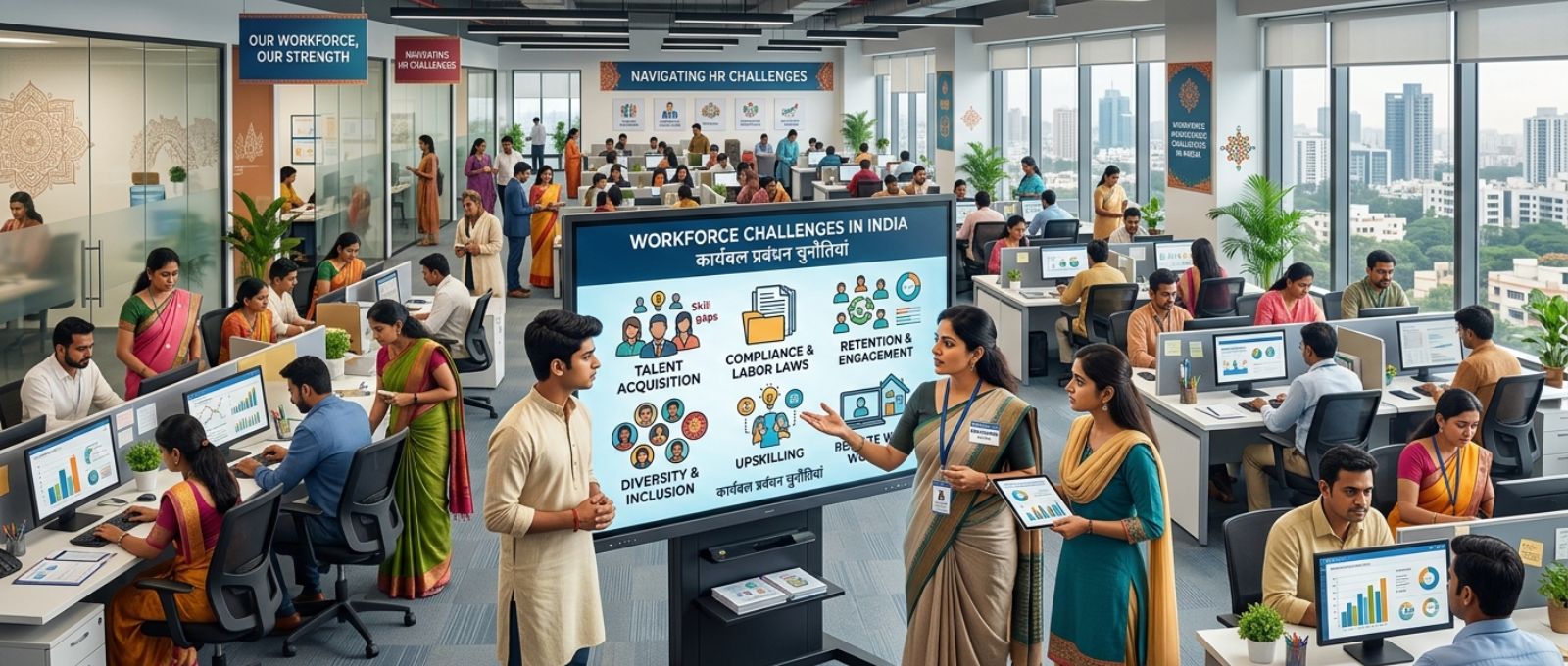
One of the biggest reasons workforce planning fails in India is the habit of reactive hiring. Most companies don’t plan for the next six months, let alone the next quarter. Hiring decisions are triggered by urgency rather than strategy. When a key employee leaves or a sudden workload spike happens, businesses rush to fill positions without evaluating long-term fit. This creates instability and often leads to poor hiring decisions. Another critical issue lies in the lack of data-driven thinking. While businesses today invest heavily in marketing analytics and financial tracking, HR still operates on assumptions in many organizations. Decisions about hiring, promotions, and team structure are often based on gut feeling rather than actual data. This disconnect makes it difficult to identify patterns like attrition trends or productivity gaps, which are essential for effective Workforce Planning in India. The skill gap in India further complicates the situation. On paper, India has one of the largest workforces in the world, but in reality, companies struggle to find candidates with the right skills.
Another underlying issue is poor talent management in India. Hiring is treated as the most important step, but what happens after that is often ignored. Employees are rarely given clear growth paths, regular feedback, or opportunities to upgrade their skills. This leads to dissatisfaction and high attrition. When employees leave frequently, even the best workforce plans collapse. In fact, many modern businesses are now using smarter approaches like AI-driven hiring, which is explained in detail in this guide on AI in recruitment in India.
The Real Impact on Businesses
When Workforce Planning in India is not done properly, the consequences are visible across the organization. Teams become either overburdened or underutilized. Managers spend more time solving staffing issues than focusing on growth. Projects get delayed, customer experience suffers, and employees start feeling disconnected from their roles. Financially, the impact is even more damaging. Frequent hiring increases recruitment costs, while high attrition leads to repeated training expenses. Businesses end up spending more but achieving less. For growing companies, especially MSMEs, this imbalance can slow down expansion and reduce competitiveness in the market. There’s also a cultural impact. When workforce planning is weak, employees feel uncertain about their roles and future in the company. This affects morale, engagement, and overall productivity. Over time, it creates a workplace environment that struggles to retain talent.
How Indian Businesses Can Improve Workforce Planning
Improving Workforce Planning in India doesn’t require complex systems—it requires a shift in mindset. Businesses need to start looking at workforce planning as a long-term investment rather than a short-term task. The first step is to think ahead. Instead of waiting for problems to arise, companies should anticipate their workforce needs based on business goals. Whether it’s expansion, seasonal demand, or new projects, having a basic forecast can make a huge difference. Equally important is the use of data. Even simple tracking of employee performance, attendance, and attrition can provide valuable insights. Over time, this data helps businesses make smarter decisions and reduce uncertainty in planning. Technology also plays a key role. Digital tools for workforce management can simplify tasks like scheduling, attendance tracking, and performance monitoring. Many companies today are also adopting digital tools like employee scheduling software to simplify operations. Platforms such as QR STAFF APP help businesses manage attendance, shifts, and workforce planning more efficiently.
Finally, businesses need to rethink their approach to talent management in India. Employees should not just be seen as resources but as long-term assets. Providing growth opportunities, recognizing performance, and maintaining clear communication can significantly improve retention and stability.
The Future of Workforce Planning in India
The future of Workforce Planning in India is moving towards flexibility and intelligence. With the rise of automation, AI, and remote work, businesses will need to adapt quickly to changing workforce dynamics. Organizations that embrace strategic workforce planning will have a clear advantage. They’ll be able to respond faster to market changes, manage talent more effectively, and scale their operations without chaos. At the same time, employee expectations are also evolving. People today are looking for more than just a job—they want growth, stability, and purpose. Workforce planning in the future will need to balance business needs with employee aspirations.
Conclusion
The failure of Workforce Planning in India is not due to lack of talent or resources—it’s due to lack of structured thinking. Businesses often focus on immediate problems without considering long-term impact. But in today’s competitive environment, this approach is no longer sustainable. Workforce planning needs to move from reactive hiring to a proactive strategy. Because at the end of the day, a business grows only as strong as the people behind it. And managing those people effectively is not just an HR responsibility—it’s a business necessity. There’s also a strong operational angle to the problem.
FAQs
1. What is Workforce Planning in India?
Workforce Planning in India is the process of aligning employee roles, skills, and numbers with business goals to ensure smooth operations and future growth.
2. Why do Indian businesses face workforce management challenges?
Most challenges arise due to reactive hiring, lack of data usage, poor HR systems, and limited focus on employee development.
3. How does the skill gap in India impact businesses?
It creates a mismatch between job requirements and available talent, making hiring difficult and slowing down business growth.
4. What are common employee planning issues in India?
Common issues include poor shift management, uneven workload distribution, unclear roles, and inefficient attendance tracking.
5. How can companies improve workforce planning?
By planning, using data, investing in employee training, adopting digital tools, and aligning HR with business goals.
Leave a Reply