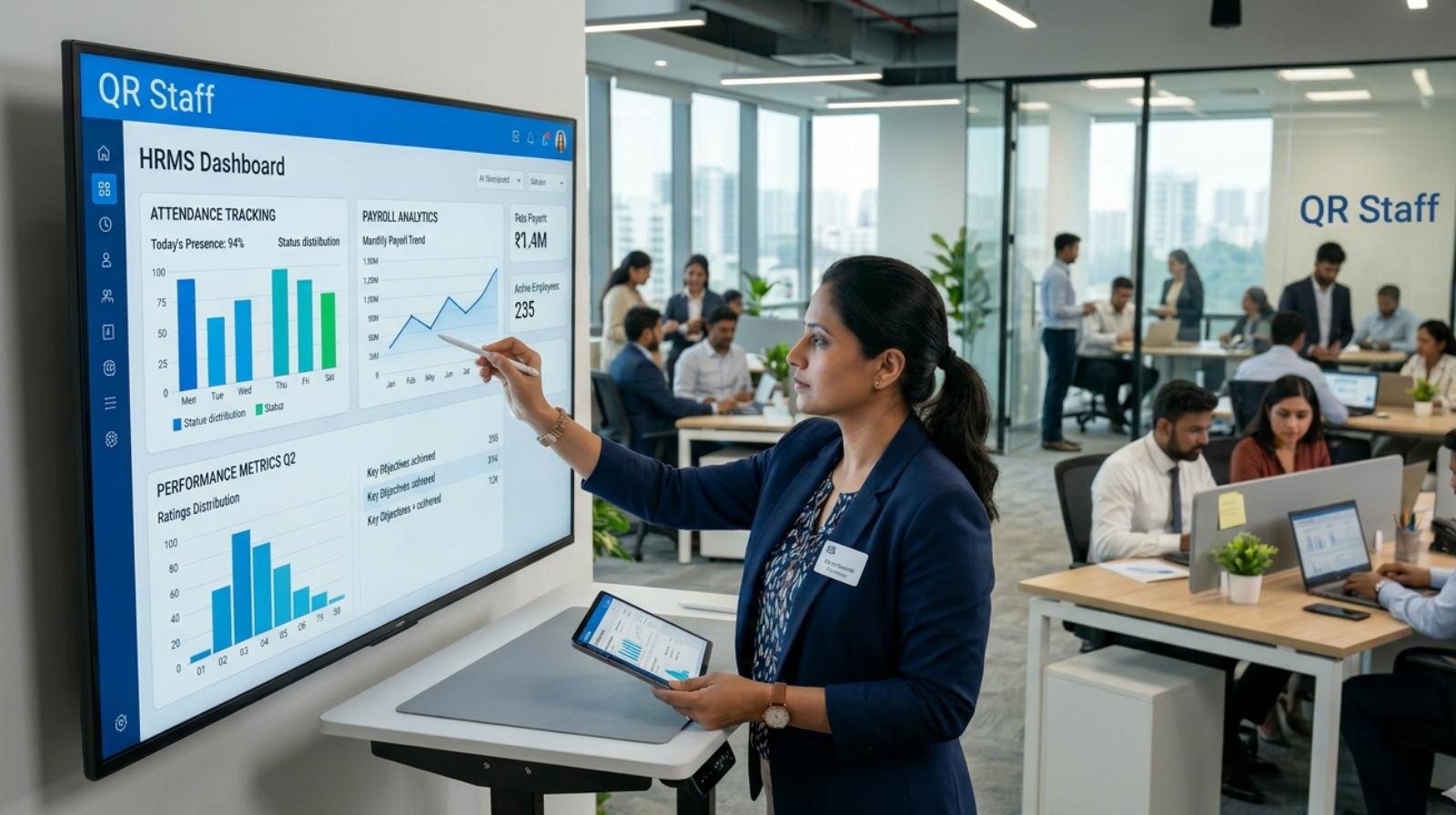
Employee management system challenges often start small—missed attendance entries, payroll confusion, or poor communication—but quickly grow into serious operational issues. Many businesses don’t realize how much time and money they lose due to inefficient workforce handling until it begins affecting performance, compliance, and employee satisfaction.
If you’re still relying on spreadsheets, WhatsApp messages, or manual registers to manage your workforce, you’re not alone. But here’s the reality: as your business grows, these methods stop working. They create gaps, errors, and delays that impact productivity and decision-making.
Modern companies—especially those scaling fast—are turning to employee management software and HR automation tools to stay organized, efficient, and competitive. So how do you know it’s time for a change?
Here are 10 clear signs your business needs a better system in place.
1. Employee Management System Helps Eliminate Attendance Errors
Manual attendance tracking often leads to mistakes—missed entries, duplicate records, or even buddy punching.
In many companies, HR teams spend hours verifying attendance data at the end of each month. This not only wastes time but also creates trust issues among employees.
An employee management system eliminates these problems with automated attendance tracking, biometric or QR-based check-ins, and real-time data syncing. The result? Accurate records without daily follow-ups.
2. Employee Management System Reduces Payroll Mistakes and Delays
Payroll errors are more common than most businesses admit. Incorrect salary calculations, delayed payments, or missing overtime entries can frustrate employees and damage your company’s credibility.
For example, a small manufacturing unit managing payroll manually may struggle to calculate shifts, leaves, and overtime accurately.
A workforce management system integrates attendance directly with payroll, ensuring calculations are automatic and error-free. This improves transparency and builds employee trust.
3. Employee Management System Provides Real-Time Employee Tracking
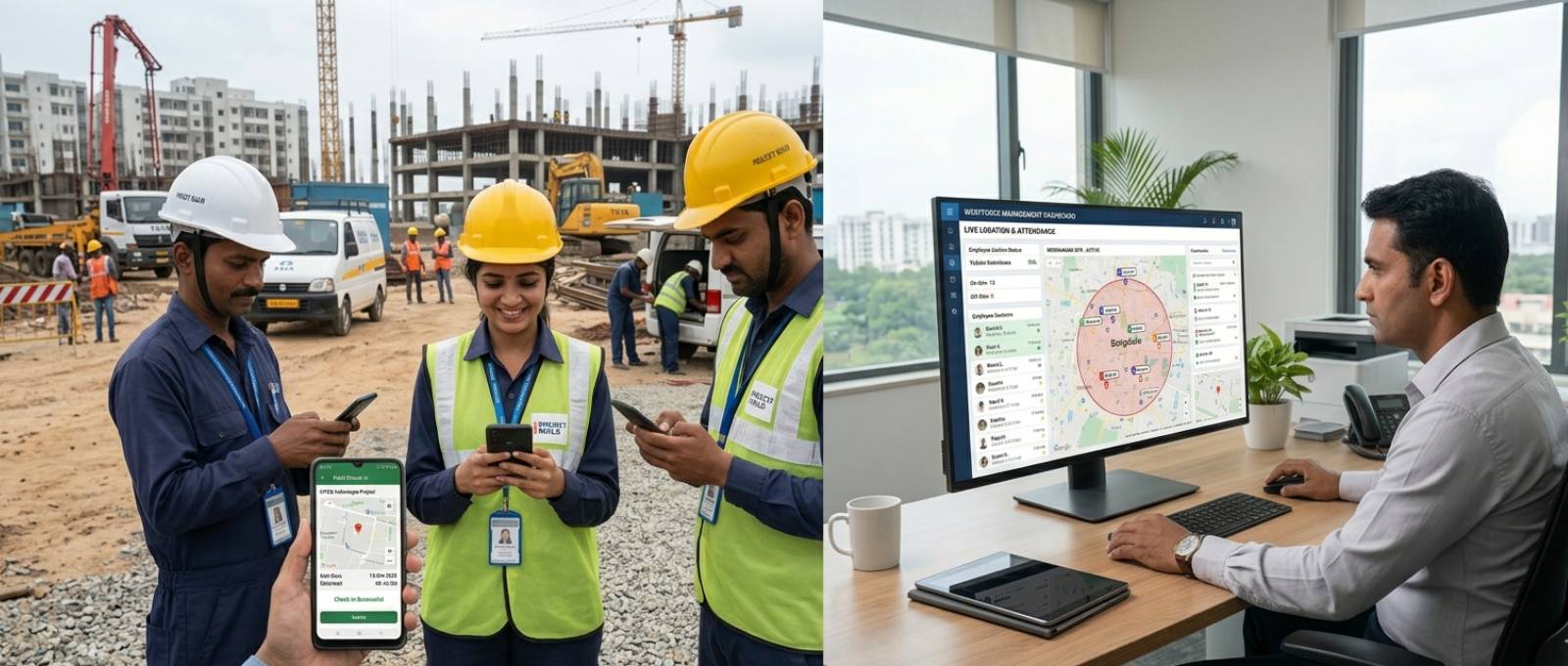
If you manage field staff, sales teams, or remote employees, visibility becomes a major challenge.
You might often ask:
Where are my employees right now?
Are they actually on-site?
How productive are they during working hours?
Without an employee tracking system, you’re essentially guessing.
Modern staff management software uses GPS tracking, geo-fencing, and mobile check-ins to provide real-time visibility. Businesses that manage mobile teams should also understand how to track field employees without invading privacy while maintaining transparency, compliance, and employee trust. Managers can track movement, verify locations, and ensure accountability without micromanaging.
4. Employee Management Software Improves Team Communication
Miscommunication is one of the biggest productivity killers in any organization.
Missed shift updates, unclear instructions, or last-minute changes often lead to confusion—especially in industries like construction, facility management, or logistics.
An employee management system centralizes communication. Notifications, updates, and task assignments are shared in one place, ensuring everyone stays aligned.
No more relying on scattered messages or phone calls.
5. Employee Management System Simplifies Remote Workforce Management
Managing in-office employees is one thing. Handling remote or field teams is a completely different challenge.
Attendance Becomes Unreliable
Without a proper system, tracking attendance for remote or field employees becomes inconsistent. This leads to confusion in records and creates dependency on manual verification, which is both time-consuming and error-prone.
Task Tracking Becomes Inconsistent
When tasks are assigned informally through calls or messages, there is no clear record of completion or accountability. This often results in missed deadlines and reduced efficiency across teams.
Performance Becomes Hard to Measure
Without structured tracking, managers struggle to evaluate employee output accurately. This makes it difficult to identify top performers or address underperformance effectively.
For instance, a facility management company with multiple sites may struggle to verify whether staff actually reported to work.
With HR automation tools, businesses can track attendance remotely, assign tasks digitally, and monitor performance in real time—no matter where employees are located.
6. Employee Management System Supports Compliance and Legal Requirements
Labour laws, attendance policies, and payroll regulations are becoming stricter. Non-compliance can lead to penalties, legal trouble, and reputational damage.
Incorrect Salary Records
Manual payroll handling increases the chances of miscalculations in wages, overtime, and deductions. Even small errors can lead to employee dissatisfaction and compliance issues.
Missing Compliance Documentation
Maintaining proper documentation manually is challenging and often leads to missing or incomplete records. This becomes risky during audits or legal inspections.
Inaccurate Work-Hour Tracking
Without automated tracking, recording exact working hours becomes unreliable. This can result in violations of labor laws and disputes with employees.
An employee management system maintains proper records, generates compliance reports, and ensures all processes follow legal requirements.
This is especially critical for businesses with large or distributed workforces.
7. Employee Management Software Improves Employee Productivity
When employees aren’t monitored effectively, productivity naturally declines.
This doesn’t always mean employees are not working—it often means there’s no system to measure or optimize their output.
For example, without performance tracking, managers cannot identify:
High-Performing Employees
Without proper data, recognizing top performers becomes difficult. This can impact motivation and prevent businesses from rewarding the right talent.
Bottlenecks in Workflows
Inefficiencies in processes often go unnoticed without structured tracking. Identifying these bottlenecks is essential for improving overall productivity.
Areas Needing Improvement
A lack of performance insights makes it hard to understand where employees need support or training. This slows down growth at both the individual and organizational levels.
A structured workforce management system provides insights into performance metrics, helping businesses make data-driven decisions and improve efficiency.
8. Employee Management System Centralizes Employee Data
If your HR data is scattered across Excel sheets, notebooks, emails, and multiple tools, you’re dealing with data chaos.
This leads to:
Lost Information
Important employee records can easily go missing when stored across multiple platforms. This creates confusion and delays when accessing critical data.
Duplicate Entries
Manual data entry often results in repeated or inconsistent records. This not only wastes time but also affects data accuracy.
Time-Consuming Data Retrieval
Searching for specific information across different sources can take hours. This reduces efficiency and slows down decision-making.
An employee management system centralizes all employee data—attendance, payroll, documents, and performance—in one secure platform.
This not only saves time but also improves accuracy and accessibility.
9. Employee Management System Enables Performance Tracking
Without a proper system, employee performance reviews often become subjective and inconsistent.
Managers may rely on memory or incomplete data, leading to unfair evaluations.
For instance, a sales team without proper tracking might struggle to identify top performers or underperformers.
Employee management software allows businesses to set KPIs, track progress, and evaluate performance objectively. This creates a fair and transparent work environment.
10. Scaling Issues with a Growing Workforce
What works for a team of 10 won’t work for a team of 100.
As your business grows:
Managing Attendance Becomes Complex
Tracking attendance manually for a large workforce becomes overwhelming. Errors increase, and maintaining accuracy becomes difficult.
Payroll Processing Becomes Time-Consuming
As employee numbers grow, payroll calculations become more complicated and time-intensive. Manual systems simply cannot keep up.
Communication Gaps Increase
With more employees, maintaining clear and consistent communication becomes challenging. This leads to confusion and operational inefficiencies.
Many businesses hit a growth ceiling simply because their internal systems cannot handle expansion.
A scalable employee management system grows with your business. It automates repetitive tasks, reduces manual workload, and ensures smooth operations—even as your workforce expands.
For organizations operating round-the-clock, managing shift workers efficiently in growing teams is equally important to maintaining productivity, workforce visibility, and operational continuity.
How an Employee Management System Transforms Your Business
Implementing the right system doesn’t just solve problems—it changes how your business operates.
Improved Accuracy
Automated processes reduce human errors in attendance and payroll. This ensures consistent, reliable data and minimizes disputes or corrections.
Time Savings
HR teams spend significantly less time on repetitive administrative tasks. This allows them to focus on strategic initiatives that drive business growth.
Better Productivity
Real-time tracking and insights enable managers to optimize employee performance. This leads to more efficient workflows and better output.
Enhanced Transparency
Employees gain visibility into their attendance, salaries, and tasks. This builds trust and reduces dependency on HR for basic information.
Stronger Compliance
Proper record-keeping ensures adherence to labor laws and regulations. This protects the business from legal risks and penalties.
Scalability
The system adapts as your workforce grows, ensuring operations remain smooth without additional complexity or manual effort.
Cost Efficiency
Reducing errors and improving operational efficiency directly impacts profitability. Over time, the system delivers a strong return on investment.
In short, it shifts your business from reactive management to proactive control.
Choosing the Right Employee Management System
When selecting an employee management system, businesses should look for features such as attendance tracking, payroll automation, GPS-based employee tracking, shift management, and real-time reporting. Platforms like QR Staff offer these capabilities in a user-friendly interface, helping organizations improve workforce visibility, productivity, and compliance as they scale.
Conclusion
Every growing business reaches a point where manual processes start slowing things down. What once felt manageable becomes chaotic, inefficient, and error-prone.
If you’ve noticed even a few of the signs mentioned above—attendance issues, payroll errors, lack of visibility, or communication gaps—it’s a strong indication that your current system isn’t sustainable anymore.
An employee management system is no longer a luxury—it’s a necessity for businesses that want to scale efficiently, maintain control, and stay competitive.
The good news? Adopting the right solution doesn’t have to be complicated. Modern tools are designed to be simple, scalable, and cost-effective. Whether you choose a solution like QR-based attendance systems or a full-featured workforce management platform, the key is to take that first step toward automation.
Because the sooner you fix your processes, the faster your business can grow.
Employee Management System FAQs
1. What is an employee management system?
An employee management system is a digital platform that helps businesses manage attendance, payroll, performance, and employee data in one place.
2. How does employee management software improve productivity?
It automates routine tasks, provides real-time tracking, and offers performance insights, allowing managers to optimize workflows and reduce inefficiencies.
3. Is it suitable for small businesses?
Yes, small businesses benefit significantly as it reduces manual workload, improves accuracy, and prepares them for future growth.
4. What features should I look for?
Look for attendance tracking, payroll integration, GPS tracking, reporting, mobile access, and compliance management.
5. How much does it cost?
Costs vary depending on features and scale, but most modern systems offer affordable plans suitable for startups and growing businesses.
Leave a Reply