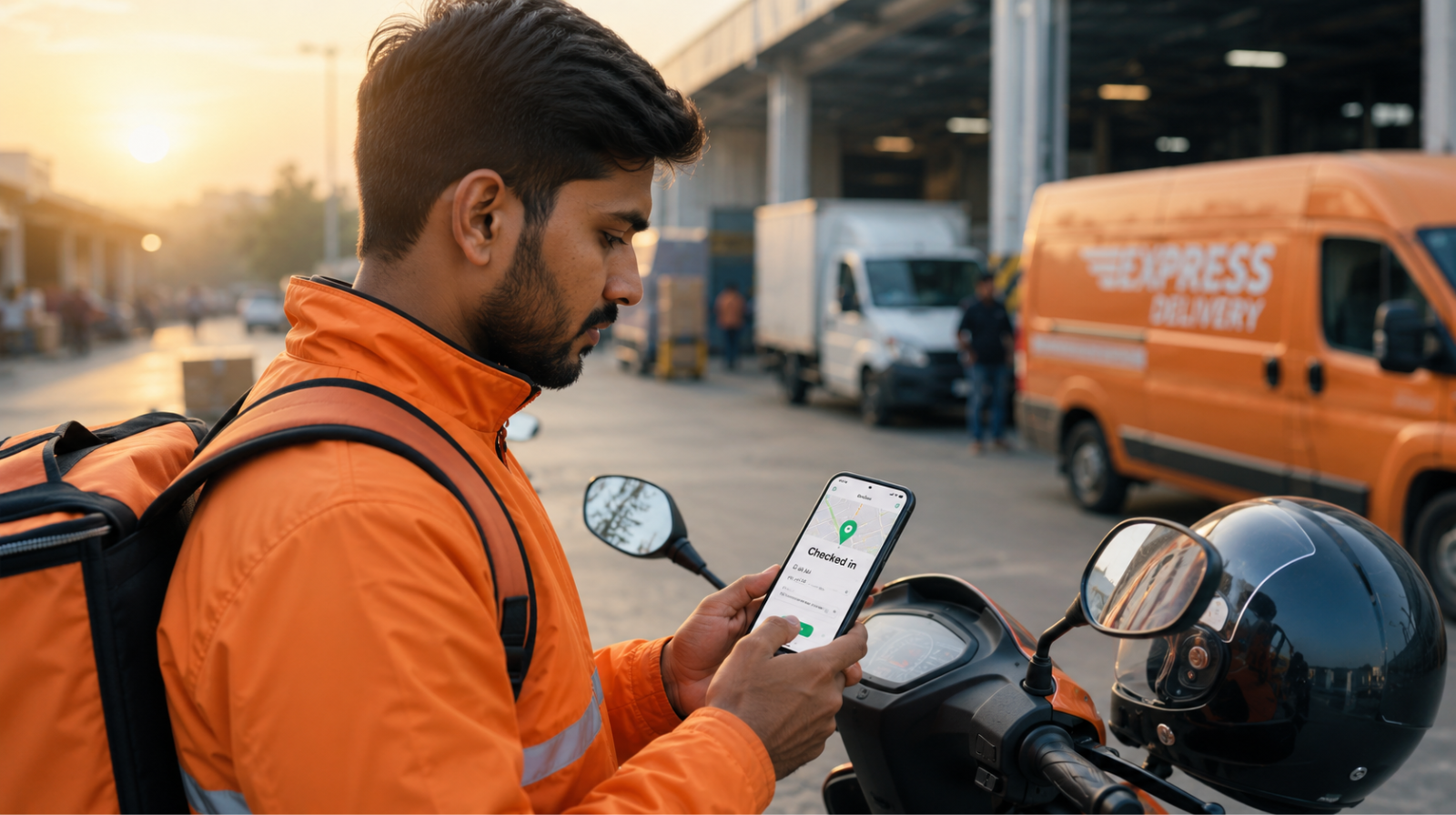
Courier delivery attendance software has become one of the most important investments a logistics business can make in 2026. The old habit of tracking riders and drivers on paper registers or shared spreadsheets simply doesn’t work for a workforce that never stays in one place. Courier and delivery operations differ from typical office-based businesses because employees rarely sit at a single desk. They ride through city traffic, wait at pickup hubs, or stand at a customer’s doorstep. This constant movement makes conventional biometric attendance machines almost useless for the job.
When a business depends on dozens or even hundreds of delivery executives spread across different zones, manual attendance tracking quickly turns into a source of payroll disputes and poor accountability. It also inflates working hours on paper. This is exactly the gap that modern attendance software closes. It gives operations managers a real-time, accurate, and tamper-proof view of who is working, where they are, and for how long.
Why Traditional Attendance Systems Fail Courier and Delivery Teams
Traditional biometric or punch-card systems were built for a workforce that reports to one physical location every morning and leaves from the same spot every evening. Courier and delivery companies don’t operate this way. A rider might start their shift from a warehouse, move between drop points all day, and end the day somewhere else entirely. Expecting this kind of workforce to swipe a fingerprint machine at a fixed office wastes productive working hours.
Many delivery businesses also mix full-time staff, contract riders, and gig workers, each following different shift patterns. A single rigid attendance process can’t fairly manage this variety. These operational realities explain why logistics companies are shifting to mobile-first, GPS-enabled attendance software. It fits the actual nature of delivery work instead of forcing delivery work to fit an outdated system.
Key Challenges Delivery Companies Face Without Proper Attendance Tracking
Without a dedicated attendance solution, courier companies often face buddy punching. One employee marks attendance for another who never shows up. Dispatch managers waste time cross-checking who has logged in before they can even assign delivery routes, and this delays the entire fulfilment cycle.
Payroll teams frequently deal with disputes too, because paper-recorded hours rarely match what actually happened on the road. This friction damages trust between management and staff. The biggest challenge, though, is visibility. A business owner sitting in the head office has no reliable way to confirm whether riders reported on time at their hubs unless a digital system captures that data automatically. These problems aren’t unique to logistics — similar visibility problems in shift-based industries like manufacturing show how quickly attendance gaps multiply once a workforce operates across shifts and locations. That’s exactly why courier delivery attendance software is now a core operational tool rather than an optional extra.
How Courier Delivery Attendance Software Actually Works
A well-designed courier attendance system relies on mobile check-ins instead of fixed machines. Riders mark their attendance directly from a smartphone app the moment they start their shift. Most solutions use GPS geofencing to confirm the employee is physically present at the designated hub or delivery zone at check-in time. This removes any chance of someone marking attendance from home.
Selfie-based verification adds another layer of security. The app captures a live photo alongside the location and timestamp, creating a record that no one can fake the way they could fake a paper register. Once the system captures this data, it flows automatically into a centralized dashboard. Operations managers see in real time how many riders have reported, who is late, and who is missing. Route assignments and shift planning can then start without delay. A process that once took hours of phone calls now runs on a live, self-updating screen that any authorized manager can check from anywhere. This shift reflects a broader trend — read more about how businesses are moving away from biometric hardware altogether, using mobile-first tools built for field and hybrid teams.
Core Features to Look for in Delivery Attendance Software
GPS-Based Check-In and Geofencing
Location-based check-in is the single most important feature in any courier and delivery attendance system because it solves the mobility problem unique to this industry. Geofencing lets a business draw virtual boundaries around warehouses, hubs, or client sites. Solutions like QR Staff combine QR-code scanning with live GPS capture, so riders can check in from any location without needing dedicated biometric hardware at every hub. The software only accepts an attendance entry when the employee’s device sits physically inside that boundary. This one feature eliminates most attendance fraud, since riders can no longer mark themselves present while still at home or in transit.
Real-Time Dashboard and Reporting
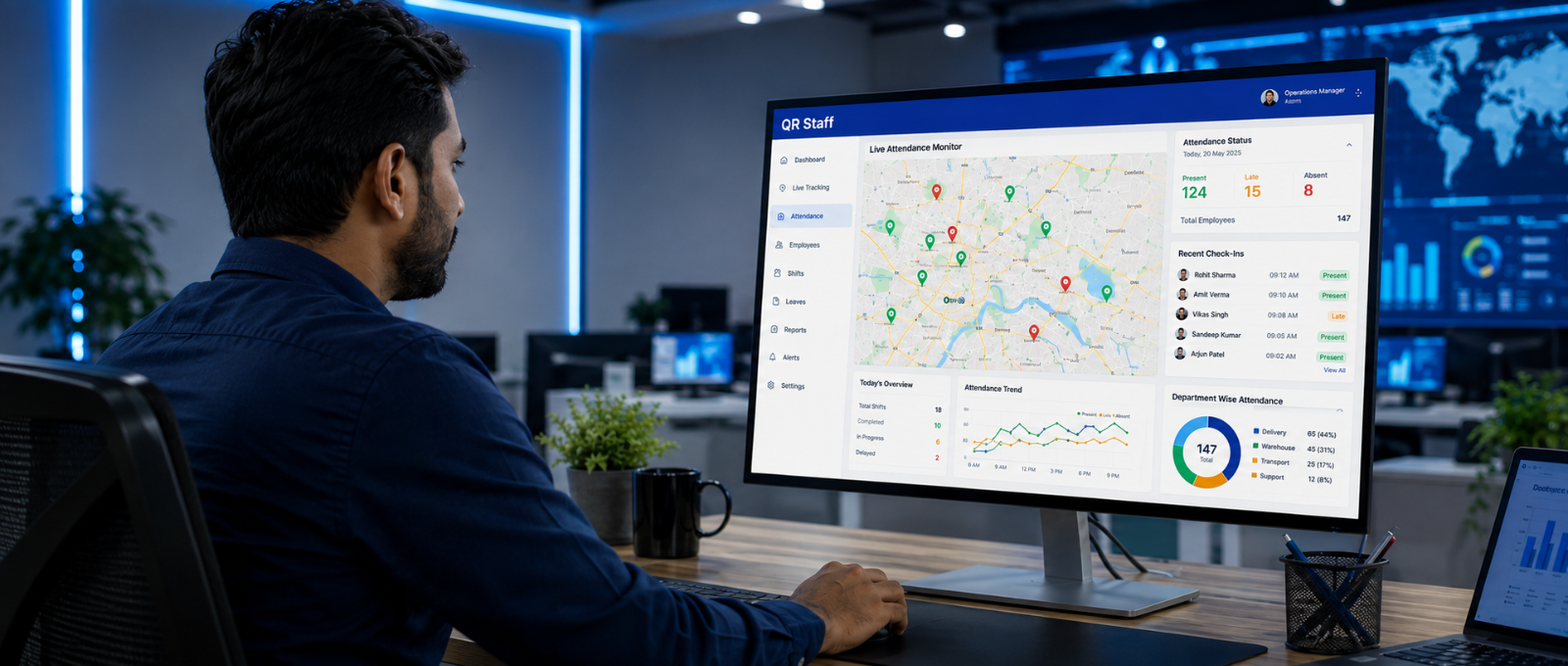
A logistics business generates attendance data all day long, as riders start shifts, take breaks, and clock out after their last delivery. The software needs a dashboard that updates this information live rather than at day’s end. Strong reporting tools also break down attendance trends by hub, shift, or individual rider. Managers can then spot patterns like chronic late arrivals or high absenteeism in a specific zone before these issues start hurting delivery performance.
Automated Payroll Integration
Delivery staff are often paid by hours worked, shifts completed, or a mix of fixed pay and incentives. Attendance software that connects directly to payroll removes manual data entry and cuts calculation errors sharply. GPS-based check-in and check-out times flow straight into salary computation, giving both the business and the employee full transparency over how pay gets calculated.
Shift and Roster Management
Courier operations rarely run on a single fixed shift. Attendance software built for this industry needs to support multiple overlapping shifts, rotational rosters, and last-minute schedule changes without creating confusion. A strong roster module lets supervisors plan staffing around expected order volume. This becomes especially useful during peak seasons, such as festive sales or major e-commerce promotions, when delivery demand spikes sharply.
Leave and Absence Management
Delivery businesses also need a structured way to handle leave requests, sick days, and last-minute unavailability. A rider who fails to show up unannounced can disrupt an entire delivery route. Digital leave management, tied into the same attendance platform, lets riders apply for time off through the app itself. Managers can approve or reject requests instantly and see the impact on that day’s staffing right away.
Benefits of Courier Delivery Attendance Software
Implementing dedicated attendance software improves almost every part of a delivery business. Payroll disputes drop sharply because the system captures working hours objectively through GPS timestamps rather than relying on memory or a handwritten log. Operational efficiency also rises. Dispatch managers no longer waste the first hour of every shift confirming who actually turned up, so route planning can begin the moment attendance data appears on the dashboard.
Accountability tends to improve naturally, too. If any of this sounds familiar, it may be worth reviewing the signs it’s time to upgrade your workforce tools before inefficiencies start affecting delivery performance. Customer experience benefits as well, since faster shift confirmation and better route planning lead to more predictable delivery windows. Predictable delivery windows remain one of the strongest drivers of customer retention in this industry. Business owners also gain visibility into field operations that manual systems never offered, enabling data-driven decisions about hub staffing, rider performance, and resource allocation across city zones.
Choosing the Right Attendance Software for Your Delivery Business
Selecting the right courier delivery attendance software depends on matching the platform’s capabilities to your business structure. A small local courier service with twenty riders needs something very different from a national logistics company managing thousands of delivery executives across multiple cities. Prioritize platforms that offer offline functionality, since delivery riders often work in areas with poor network connectivity. An attendance system that fails without internet access defeats its own purpose.
Scalability matters too. A solution that works well for a hundred employees should expand smoothly as the business grows, without forcing a complete platform migration later. Check integration capability with your existing HR, payroll, and route optimization software as well. A standalone attendance tool that can’t talk to the rest of your software stack ends up creating more manual work rather than less. Finally, pay close attention to data security and compliance, particularly around how the platform stores location and biometric data, since this information faces increasing regulatory scrutiny in many regions.
Conclusion
Courier delivery attendance software has moved from a nice-to-have convenience to a genuine operational necessity. The logistics industry keeps growing more competitive, and customer expectations around delivery speed keep rising alongside it. A business that still depends on manual registers or fixed biometric machines loses valuable time every single day. It also exposes itself to payroll disputes, poor route planning, and a lack of accountability that eventually affects customer trust.
By adopting GPS-enabled, mobile-first attendance software with real-time dashboards, automated payroll integration, and proper leave management, courier and delivery businesses can build a workforce management system that reflects how their teams actually operate on the ground. The result is fewer disputes, faster dispatch decisions, and a measurably more efficient delivery operation.
Frequently Asked Questions
What is courier delivery attendance software?
Courier delivery attendance software is a mobile-based system that lets riders and drivers mark their attendance using GPS location and, often, a live selfie. It replaces the fixed biometric machine or paper register used at a single office location.
How does GPS-based attendance tracking prevent fraud in delivery teams?
GPS tracking, combined with geofencing, confirms an employee’s physical presence at the designated hub or delivery zone at the moment of check-in. This makes it very difficult for someone to mark attendance from an unauthorized location or on behalf of another person.
Can attendance software work for delivery riders without a stable internet connection?
Yes. Many modern solutions include offline check-in functionality. The app stores the attendance record locally on the device and syncs it automatically once the rider’s phone reconnects to the internet or mobile data network.
Does attendance software integrate with payroll for delivery staff?
Most platforms built for courier and delivery businesses offer direct payroll integration. They convert recorded check-in and check-out times into working hours that feed straight into salary and incentive calculations, without manual data entry.
Is attendance software suitable for small courier businesses as well as large logistics companies?
Yes. Attendance software scales well. A small courier business with a handful of riders can use the same core features, like GPS check-in and shift tracking, that a large logistics company relies on across thousands of delivery executives in multiple cities.
How does attendance software improve delivery efficiency?
It gives dispatch managers a real-time view of who has reported for duty. This removes the delays caused by manual verification, so route assignments and delivery schedules can be finalized much faster at the start of every shift.
Leave a Reply