
The Payroll Compliance Checklist in India is one of the most important aspects of workforce management for businesses of all sizes. Whether you run a startup, SME, or large enterprise, ensuring payroll compliance is essential to avoid legal penalties, maintain employee trust, and streamline HR operations. With evolving labour laws, tax regulations, and statutory requirements, organisations must regularly review their payroll processes to remain compliant.
A structured payroll compliance approach helps businesses accurately manage employee salaries, deductions, contributions, taxes, and government filings. This guide explains everything employers need to know about maintaining payroll compliance in India and provides a practical checklist to ensure error-free payroll management.
What is Payroll Compliance in India?
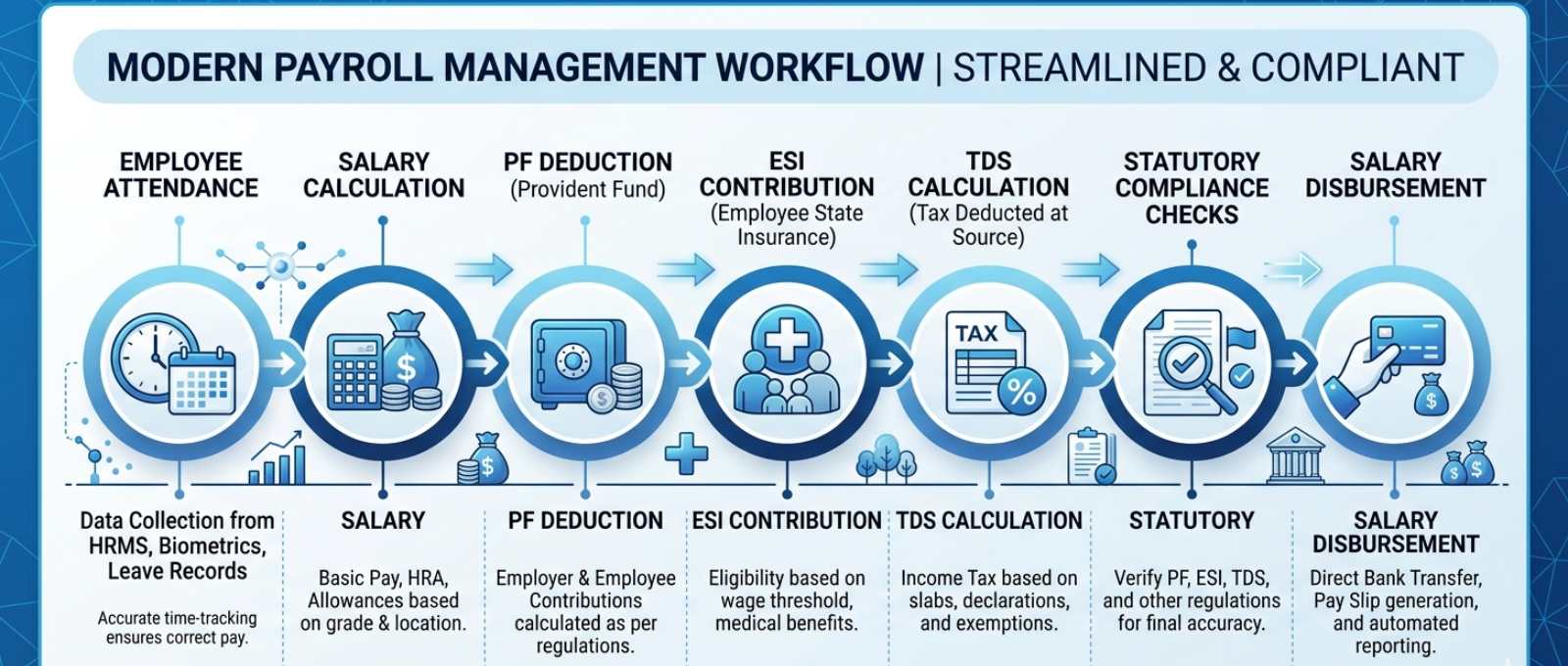
Payroll compliance refers to adhering to all statutory regulations, labour laws, tax provisions, and employee benefit requirements while processing employee salaries. It ensures that employers calculate wages correctly, deduct applicable taxes and contributions, deposit them within prescribed timelines, and maintain accurate records.
Payroll compliance is not limited to salary processing. It includes Provident Fund contributions, Employee State Insurance, Tax Deducted at Source, Professional Tax, labour welfare obligations, minimum wage compliance, bonus payments, and various employee-related filings mandated by the central and state governments.
Organisations that fail to comply with payroll regulations may face financial penalties, legal notices, audits, and reputational damage.
Why the Payroll Compliance Checklist in India is Important
A well-defined Payroll Compliance Checklist in India helps businesses stay aligned with legal requirements while reducing payroll errors. Compliance not only protects employers from penalties but also ensures employees receive their rightful benefits and deductions.
Accurate payroll compliance improves organisational transparency and strengthens employee confidence. It also simplifies audits and enables HR and finance teams to maintain proper documentation throughout the year.
As government regulations continue to evolve, businesses that proactively monitor compliance requirements can avoid disruptions and focus on growth.
Payroll Compliance Checklist in India for Employers

Every organisation should establish a payroll framework that covers all mandatory statutory requirements. The following areas require continuous monitoring throughout the financial year.
Employee Classification Compliance
The first step in payroll compliance is correctly classifying workers. Employers must clearly distinguish between permanent employees, contractual staff, consultants, interns, and freelancers.
Incorrect classification can lead to disputes regarding benefits, tax liabilities, and statutory contributions. Proper employment agreements and payroll records help organisations remain compliant with labour regulations.
Minimum Wage Compliance
Minimum wage regulations vary across states, industries, skill categories, and employee classifications. Employers must ensure that employee salaries meet or exceed the applicable minimum wage rates prescribed by state governments.
Regular updates should be monitored because revisions are announced periodically. Paying wages below prescribed rates can result in legal action and penalties.
Provident Fund Compliance
Provident Fund compliance is a crucial part of the Payroll Compliance Checklist in India. Businesses covered under the Employees’ Provident Funds and Miscellaneous Provisions Act must deduct employee contributions and deposit employer contributions within specified deadlines.
Organisations must generate UAN numbers, maintain contribution records, file electronic returns, and ensure timely PF payments. Delayed contributions may attract interest and penalties.
Employee State Insurance Compliance
Employee State Insurance provides social security benefits to eligible employees. Employers covered under the ESI Act must register employees, calculate contributions accurately, and deposit payments within the prescribed timelines.
Compliance also includes maintaining employee records and submitting required returns to authorities. Proper ESI administration ensures employees can access healthcare and insurance benefits.
Tax Deducted at Source Compliance
TDS compliance is another critical element of the Payroll Compliance Checklist in India. Employers are responsible for calculating income tax liabilities based on employee declarations, applicable tax regimes, exemptions, and deductions.
Accurate tax deduction, timely deposit of TDS, quarterly return filing, and issuance of Form 16 are mandatory obligations. Errors in TDS calculations can lead to notices from tax authorities and employee grievances.
Professional Tax Compliance
Several Indian states levy Professional Tax on salaried employees. Employers must deduct applicable tax amounts from employee salaries and deposit them with state authorities.
Since Professional Tax regulations vary by state, businesses operating across multiple locations must ensure compliance with respective state-specific requirements.
Labour Welfare Fund Compliance
Certain states require contributions towards Labour Welfare Funds. Employers must identify whether their workforce falls under applicable state regulations and ensure timely deductions and deposits.
Although contribution amounts are generally small, non-compliance can still result in penalties and legal complications.
Payment of Bonus Compliance
Organisations covered under the Payment of Bonus Act must calculate and distribute bonuses according to statutory requirements. Eligibility, salary limits, and bonus percentages should be reviewed carefully before processing payments.
Maintaining transparent bonus records helps organisations avoid disputes and demonstrate compliance during inspections.
Gratuity Compliance
Employers must comply with gratuity provisions for eligible employees who complete the required period of continuous service. Proper record maintenance and accurate gratuity calculations are essential for statutory compliance.
Organisations should periodically review gratuity liabilities to ensure financial readiness for employee settlements.
Payroll Compliance Checklist in India for Monthly Activities
Monthly payroll compliance requires consistency and attention to detail. Employers should verify employee attendance, leaves, overtime, salary revisions, and reimbursement claims before processing payroll.
Salary calculations should accurately reflect deductions related to Provident Fund, Employee State Insurance, Professional Tax, and Tax Deducted at Source. Many employers use a QR code attendance system to maintain accurate attendance records that support error-free payroll processing. Statutory payments must be deposited before the prescribed due dates to avoid penalties.
Payroll records should be securely maintained and reconciled regularly with accounting systems to ensure financial accuracy.
Payroll Compliance Checklist in India for Annual Activities
Annual payroll compliance involves several important responsibilities. Organisations must issue Form 16 to employees, reconcile payroll records, prepare annual tax reports, and review statutory filings.
Annual audits should be conducted to identify discrepancies in salary calculations, tax deductions, and statutory contributions. Reviewing compliance processes at the end of each financial year helps organisations strengthen payroll governance and prepare for regulatory changes.
Common Payroll Compliance Mistakes Businesses Should Avoid
Many organisations face compliance challenges due to delayed statutory deposits, incorrect employee classifications, inaccurate tax calculations, and poor record management.
Another common issue is relying on outdated wage rates or ignoring state-specific compliance requirements. Businesses operating in multiple locations often encounter difficulties when managing different labour regulations and tax structures.
Implementing a structured payroll review process significantly reduces compliance risks and improves operational efficiency.
How Technology Improves Payroll Compliance in India
Modern payroll software has transformed compliance management by automating calculations, statutory deductions, return generation, and reporting. Automation minimises human error and helps organisations meet filing deadlines consistently.
Integrated payroll systems can automatically update compliance rules, generate statutory reports, and maintain digital records for audits. This enables HR and finance teams to focus on strategic workforce management rather than manual administrative tasks. Organisations with distributed workforces can improve payroll accuracy by adopting HR software for facility management companies that integrates attendance, payroll, and compliance workflows.
Modern workforce management solutions such as QR Staff help organisations automate attendance tracking, payroll processing, and statutory compliance, reducing administrative effort while improving payroll accuracy.
Businesses that adopt payroll automation often experience greater accuracy, improved transparency, and stronger compliance outcomes.
Future of Payroll Compliance in India
As India continues to embrace digital transformation, payroll compliance is becoming more technology-driven. Government initiatives promoting digitisation, electronic filings, and online compliance reporting are encouraging businesses to modernise payroll operations.
Organisations must remain proactive in monitoring regulatory changes and adopting systems that support real-time compliance management. Businesses that invest in compliance-ready payroll processes will be better positioned to manage growth and avoid regulatory risks.
Conclusion
A comprehensive Payroll Compliance Checklist in India is essential for every organisation seeking to manage employee compensation legally and efficiently. From Provident Fund and Employee State Insurance to TDS, Professional Tax, and labour law requirements, payroll compliance involves multiple responsibilities that require ongoing attention.
By implementing structured payroll processes, maintaining accurate records, and leveraging modern payroll technology, businesses can reduce compliance risks, improve employee satisfaction, and ensure long-term operational stability. Regular reviews and proactive compliance management will help organisations stay ahead of regulatory changes and build a strong foundation for sustainable growth. In addition to payroll compliance, businesses can benefit from workforce management software that improves attendance tracking, employee productivity, and workforce planning.
Frequently Asked Questions (FAQs)
What exactly does payroll compliance mean for a business in India?
Payroll compliance simply means making sure your company follows all the rules related to employee salaries and statutory deductions. This includes things like PF, ESI, TDS, Professional Tax, minimum wages, bonus payments, and other legal requirements. If payroll is handled correctly, employees get paid accurately, and the business stays on the right side of the law.
Is payroll compliance only important for large companies?
Not at all. Even small businesses need to pay attention to payroll compliance. Many startups and growing companies assume compliance is only a concern for large organisations, but penalties can apply regardless of business size. Having a proper payroll process from the beginning can save a lot of trouble later.
What are the most common payroll compliance mistakes employers make?
One of the biggest mistakes is missing statutory payment deadlines. Some businesses also calculate deductions incorrectly or fail to keep proper employee records. These issues may seem minor at first, but they can create problems during audits or government inspections.
Can payroll software help with compliance management?
Yes, payroll software can make a significant difference. Instead of manually calculating deductions and tracking due dates, businesses can automate many of these tasks. This reduces errors, saves time, and helps ensure that compliance-related responsibilities are completed on schedule.
What could happen if payroll compliance is ignored?
Ignoring payroll compliance can lead to penalties, interest charges, and unnecessary legal complications. In some cases, it can also affect employee trust, especially if salary deductions or statutory contributions are not handled properly. Staying compliant is generally far less expensive than dealing with the consequences of non-compliance.
Leave a Reply