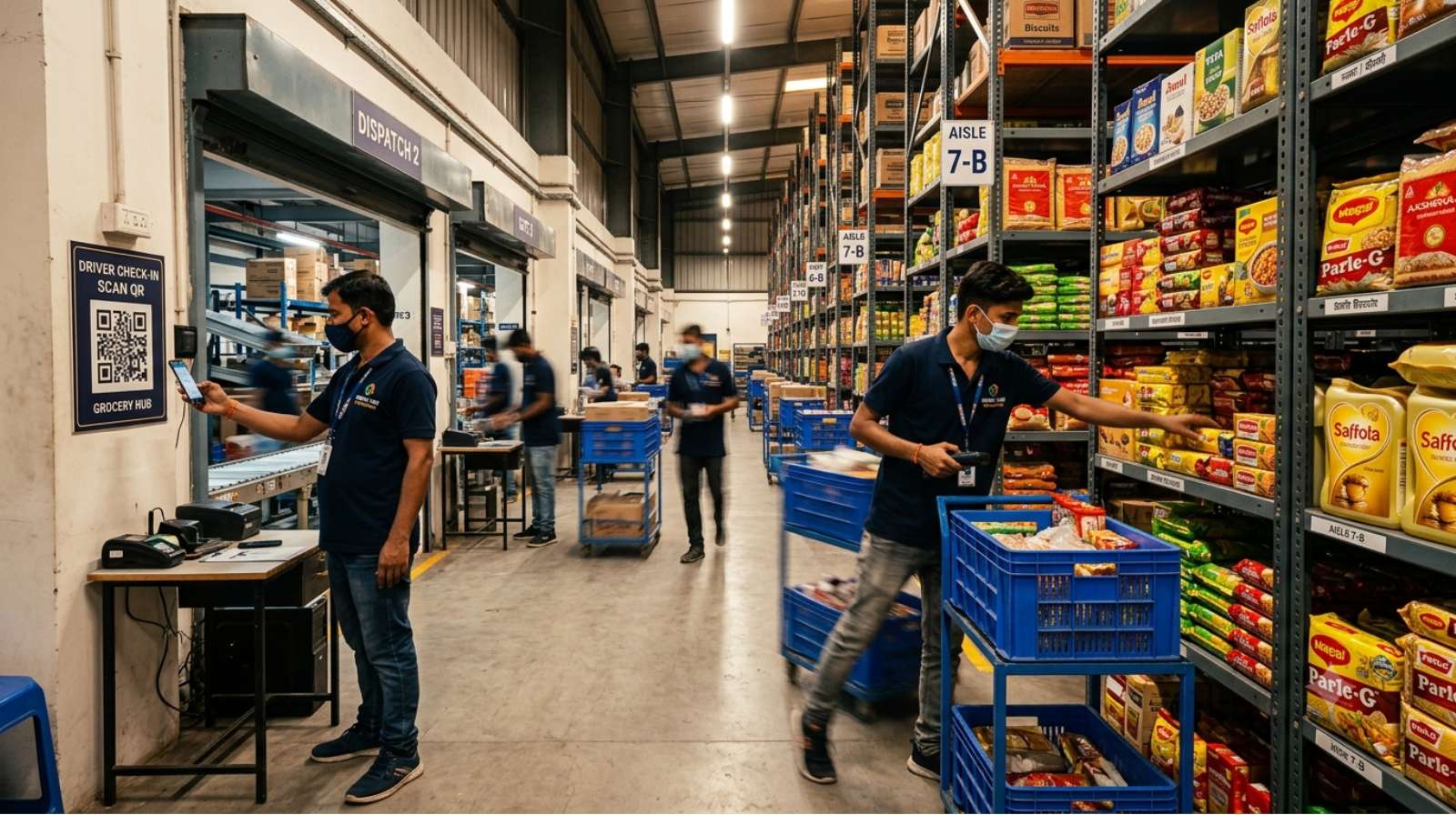
Dark store attendance challenges are the most underestimated risk in quick commerce today. Most operators only notice these problems once late deliveries and rising labor costs have already eaten into their margins. A dark store runs on a promise of speed. That promise depends entirely on having the right number of trained workers on the floor at the right moment. When attendance tracking breaks down, everything downstream breaks down too. Pick times slip. Delivery windows stretch. Customers quietly switch to a competitor’s app. This is not a minor operational footnote. It is the difference between a ten-minute delivery brand and a twenty-five-minute apology.
Why Dark Store Attendance Management Works Differently
Traditional retail attendance systems were built for predictable footfall and fixed shift patterns. Dark stores operate nothing like a traditional store. They run on unpredictable demand spikes, tight micro-shifts, and gig-style labor. Workers often rotate between multiple locations in the same city. A single dark store might rely on twenty to forty employees spread across staggered shifts that change daily based on order forecasts.
High employee turnover adds another layer of difficulty. Attendance stops being a simple clock-in exercise. It becomes a genuine operational risk. Dark stores are small, warehouse-style facilities tucked into dense urban neighborhoods. They rarely carry the administrative overhead of a large distribution center. There is usually no dedicated HR person on-site and no manager with spare time to manually verify who actually showed up. That gap is exactly where attendance problems start to multiply.
Common Dark Store Attendance Challenges Operators Report
Inconsistent Shift Patterns Make Manual Tracking Unreliable
Dark store staffing follows demand, not a calendar. Order volumes swing sharply between morning, lunch, evening rush, and late-night hours. Shift managers constantly adjust headcount in real time. When shifts change daily, spreadsheet-based registers cannot keep pace. Errors creep in. Shift overlaps go unnoticed. By the time payroll runs, nobody can confidently say who worked which hours.
Buddy Punching Inflates Labor Costs
In a facility where dozens of workers move quickly between picking, packing, and dispatch zones, one employee can easily clock in for another. This practice, known as buddy punching, ranks among the most persistent dark store attendance challenges because it inflates payroll without adding real labor capacity. A store can look fully staffed on paper while actually running shorthanded. That gap quietly damages both delivery speed and cost control. Smaller operators looking for a low-cost starting point can check this guide on how to automate attendance without expensive software, which covers simple QR-based fixes for exactly this problem.
High Attrition Turns Every New Hire Into an Attendance Risk
Quick commerce is known for elevated attrition, often driven by physically demanding work and gig-style contracts. Every new hire needs fast onboarding into the attendance system. Every departure needs equally fast offboarding. When this process lags, stores end up with ghost employees still appearing on rosters. Headcount forecasts become inaccurate, and shift planning confusion ripples straight into order fulfillment delays.
Geofencing Gaps Weaken Location Verification
Location-related dark store attendance challenges are especially common in dense cities. Dark stores sit inside mixed residential-commercial buildings across a city. Verifying that an employee is physically present at the correct site matters more here than in a typical warehouse. Without proper geofencing, staff can mark attendance from anywhere, opening the door to check-ins that have nothing to do with actual presence on the floor. Operators running multiple micro-fulfillment centers within a few kilometers feel this gap most acutely.
Real-Time Visibility Is Often Missing
Shift managers need to know, at any given moment, how many workers are present versus how many were scheduled. Many dark store operations still rely on end-of-day reconciliation. Understaffing only comes to light after delivery times have already suffered. This lag between what happens on the floor and what management can see remains one of the most damaging blind spots in quick commerce.
Compliance and Wage Disputes Trace Back to Weak Attendance Records
Labor compliance rules around minimum wage, overtime, and working hours keep getting stricter. Inaccurate attendance data does not just create operational headaches. It creates legal exposure too. Disputes over hours worked and overtime eligibility almost always trace back to weak record-keeping. Resolving these disputes after the fact costs far more than preventing them.
Payroll Disconnects Add to Dark Store Attendance Challenges
Even a functioning attendance system often sits isolated from payroll software and demand forecasting tools. Attendance data delivers real value only when it feeds directly into scheduling decisions and payroll processing. Without that integration, teams manually reconcile numbers across multiple systems, and errors creep in exactly where accuracy matters most.
How Leading Operators Are Solving These Dark Store Attendance Challenges
Biometric Verification Closes the Buddy-Punching Loophole
Forward-thinking dark store networks now use biometric or facial recognition attendance systems. These systems verify identity directly instead of relying on a card or shared login. This single change closes the biggest loophole in dark store labor tracking. Pairing biometric verification with geofenced mobile check-ins ensures attendance gets marked only when an employee stands within range of the actual store, which solves the location-verification problem for facilities without a dedicated security checkpoint. For a broader look at digital verification methods, this QR code attendance system guide breaks down how QR-based check-ins work across retail and multi-location
Real-Time Attendance Dashboards Turn Reaction Into Prevention
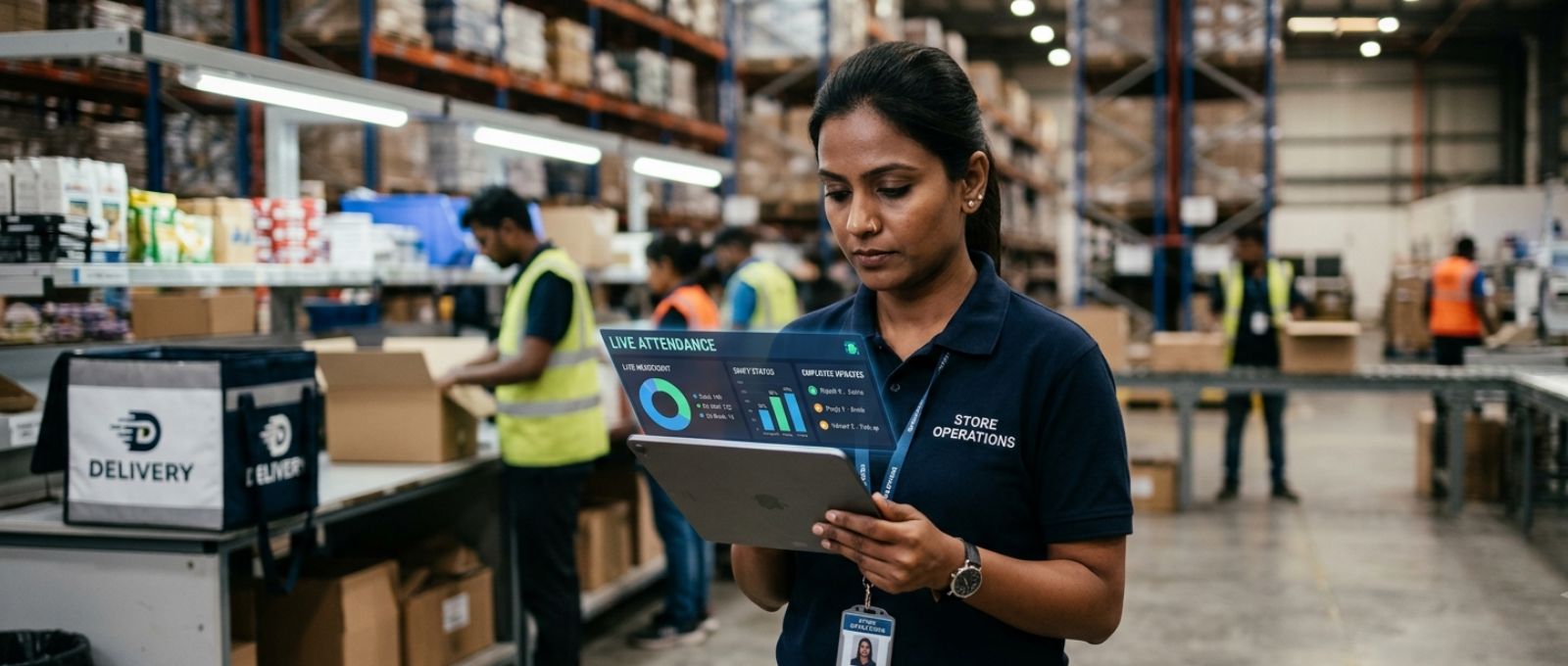
Live attendance dashboards have become a standard expectation rather than a luxury. Shift managers who see real-time data, cross-referenced against forecasted order volume, can call in backup staff before a delivery delay actually happens. This shift from reactive to proactive staffing delivers one of the clearest returns on investment that attendance technology offers in a dark store.
Automated Onboarding Keeps Rosters Clean
Automated onboarding and offboarding workflows solve the attrition-driven data lag. A new hire’s biometric profile and shift eligibility can activate within minutes instead of days. A departing employee’s access gets revoked just as fast. Rosters stay clean, and headcount numbers stay trustworthy, which matters enormously in a sector where monthly attrition can reach double digits.
Integrated Payroll Ends the Reconciliation Headache
The strongest results come from operators who connect attendance data directly to payroll and workforce management systems. When hours worked flow automatically into wage calculations, disputes drop sharply, and compliance reporting becomes far less painful. Finance teams stop spending hours reconciling numbers that should have matched from the start. Platforms like QR Staff and similar workforce management tools now offer this kind of integration out of the box for retail and logistics teams.
Dark Store Attendance Challenges Are a Delivery Speed Problem, Not Just an HR Task
Attendance deserves a bigger seat at the strategy table inside dark store operations. It is not simply a background HR function. It directly drives delivery speed, customer satisfaction, and unit economics. A dark store that cannot answer “who is actually on the floor right now” cannot reliably promise a ten-or fifteen-minute delivery window, no matter how good its picking algorithm or route optimization software is. Solving dark store attendance challenges effectively solves a core piece of the quick commerce speed equation.
Competition in quick commerce keeps intensifying, and margins remain thin. Operators who treat attendance management as a strategic priority, rather than an administrative afterthought, build a durable operational edge. This technology is now affordable even for smaller regional players, so the gap between operators who fix this problem and those who ignore it will only widen.
Frequently Asked Questions
What is the biggest attendance challenge in dark store operations?
Buddy punching ranks as the most damaging issue. It inflates reported headcount while leaving the store genuinely understaffed, which hurts both labor costs and delivery speed.
How does high attrition affect attendance tracking in dark stores?
High attrition forces constant roster updates. Without automated onboarding and offboarding, stores end up with inaccurate headcount data, which leads to poor shift planning.
Can biometric attendance systems work in small dark store facilities?
Yes. Biometric and facial recognition systems now fit compact, high-throughput environments like dark stores, and they often cost less at this scale than manual verification.
Why does geofencing matter for dark store attendance?
Geofencing confirms an employee’s physical presence at the correct micro-fulfillment center before allowing a check-in. This matters most for operators running several dark stores close together in one city.
How does attendance data affect payroll accuracy in dark stores?
Attendance data that skips payroll integration forces manual reconciliation, which raises the risk of errors, wage disputes, and compliance issues around overtime.
Does better attendance management actually improve delivery times?
Yes. Accurate real-time attendance data lets shift managers spot understaffing immediately and redeploy workers before delays hit the picking and dispatch process.
Leave a Reply