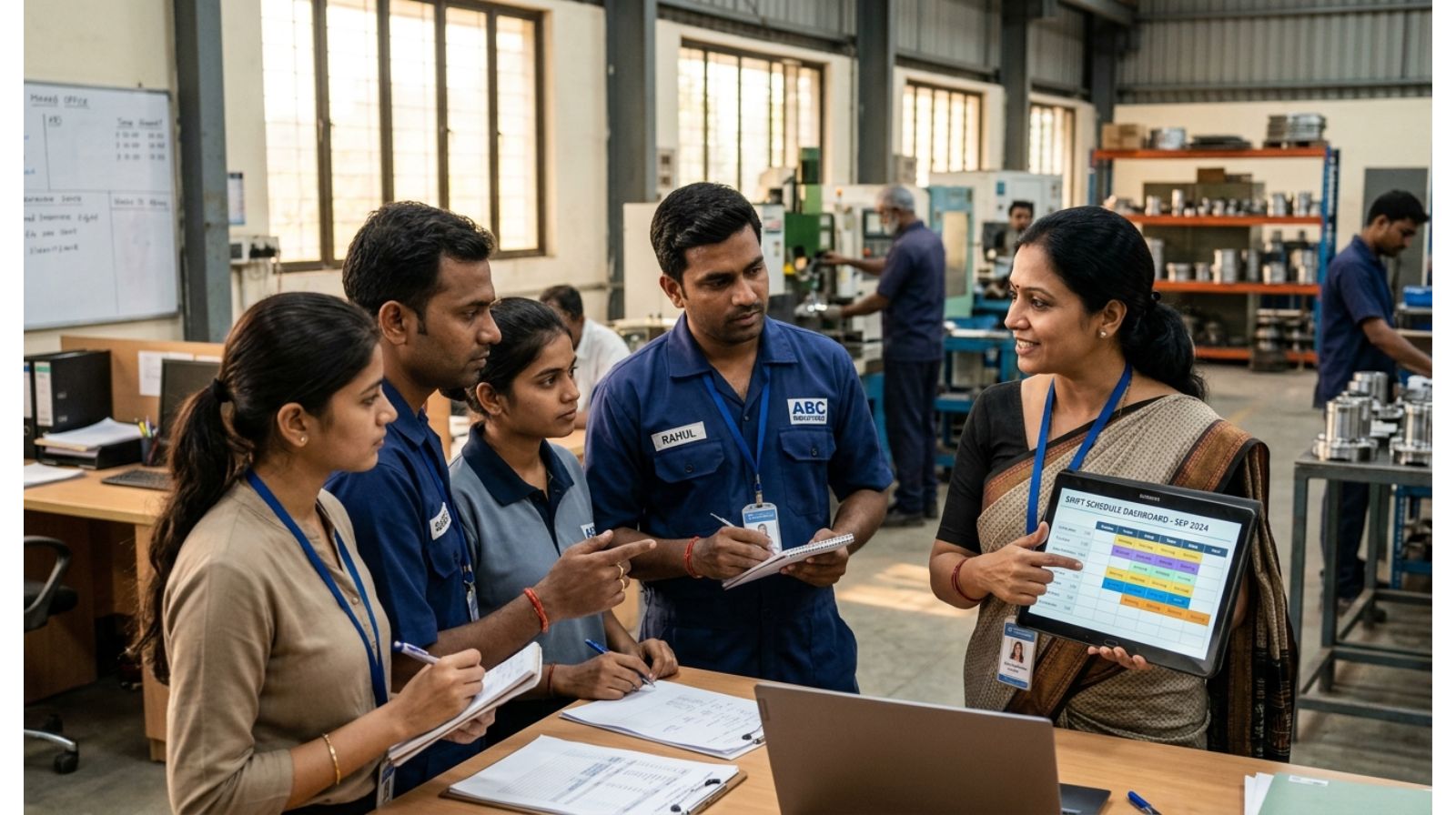
In India’s rapidly growing business ecosystem, Micro, Small, and Medium Enterprises (MSMEs) play a vital role in employment generation and economic development. From neighborhood retail stores and small manufacturing units to hospitals, restaurants, and logistics businesses, MSMEs operate across industries that rely heavily on people working in shifts. However, despite their importance, Shift Management in Indian MSMEs remains a persistent challenge. Many small business owners still rely on manual methods such as Excel sheets, WhatsApp messages, or handwritten registers to manage employee schedules. While this may work temporarily for a small team, the system begins to break down as the workforce grows. Employees miss shifts, managers struggle to track attendance, and scheduling conflicts become common. The reality is that shift management is more than just deciding who works when. It directly affects employee productivity, customer experience, and overall operational efficiency. Yet, according to workforce management experts, nearly 80% of Indian MSMEs continue to face serious challenges in managing employee shifts.
Understanding why these issues exist and how businesses can solve them is crucial for MSME owners who want to scale operations smoothly. Let’s explore the real reasons behind this widespread problem.
What is Shift Management in Indian MSMEs?
Before discussing the challenges, it’s important to understand what Shift Management in Indian MSMEs actually involves. Shift management refers to the process of planning, assigning, and monitoring employee work schedules so that business operations run smoothly throughout the day or night. In industries like retail, manufacturing, healthcare, hospitality, and logistics, proper scheduling ensures that the right number of employees are present at the right time. However, for many MSME owners, shift management is often treated as a simple administrative task rather than a structured workforce management process. This mindset is one reason MSME workforce scheduling becomes complicated as businesses grow.
Unlike large corporations that use sophisticated systems, small businesses usually depend on supervisors or HR staff to manage schedules manually. Over time, this creates confusion, miscommunication, and inefficiencies.
Common Shift Management Problems in Indian MSMEs
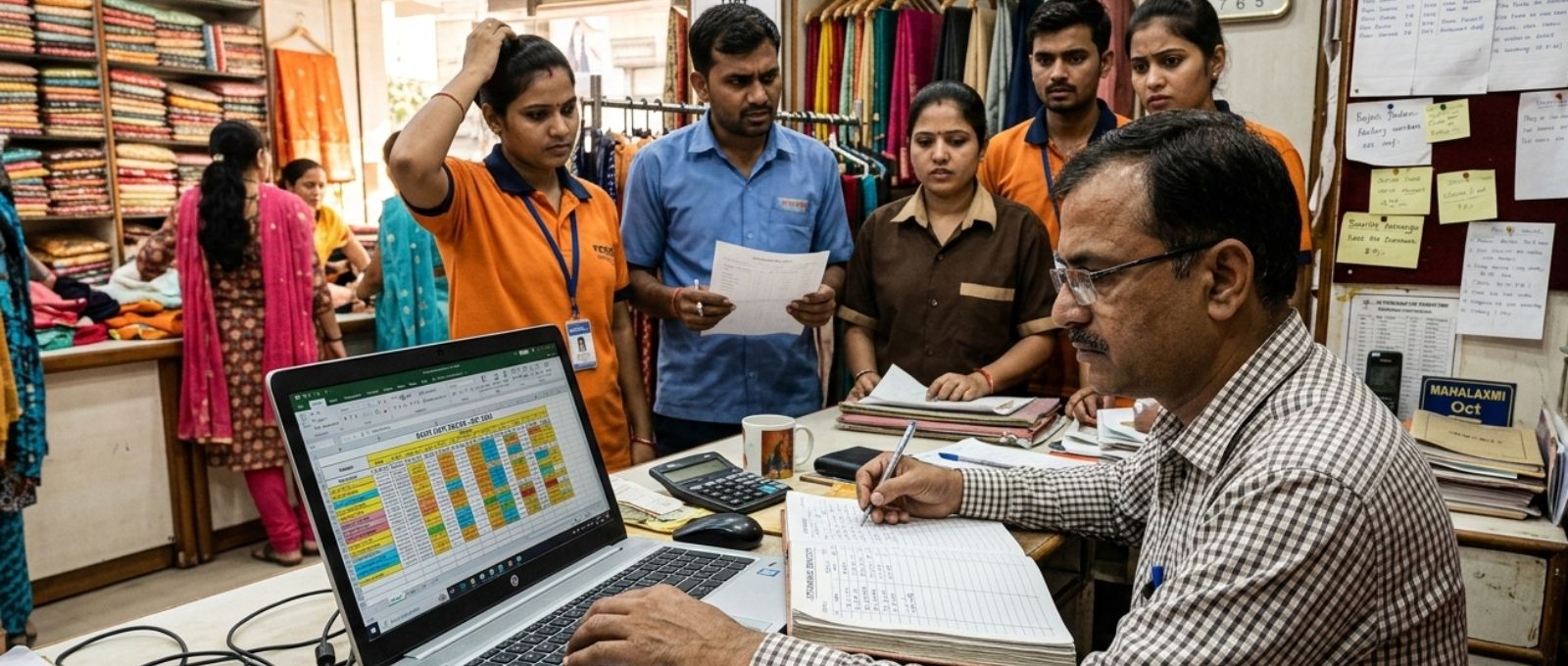
When we closely examine employee shift management challenges, several recurring issues appear across different industries. These problems may look small individually, but together they create serious operational disruptions.
Manual scheduling methods: Many MSMEs still rely on paper registers or basic spreadsheets for staff scheduling. While these tools are familiar, they lack automation and real-time updates. When a shift change happens or an employee calls in sick, managers must manually update schedules and inform everyone individually.
Last-minute shift changes: In sectors like retail and hospitality, sudden customer demand changes are common. Unfortunately, without proper systems, adjusting schedules becomes difficult. Managers often spend hours calling employees to fill shifts, which creates stress for both supervisors and staff.
Poor communication with employees: Shift updates are frequently communicated through WhatsApp groups or verbal instructions. Employees may miss messages, misunderstand instructions, or forget their assigned shifts. This communication gap is a major reason why staff shift planning in India often fails to run smoothly.
Difficulty tracking attendance: Another major challenge in workforce management for MSMEs is tracking whether employees actually worked their assigned shifts. Without digital attendance systems, verifying working hours becomes difficult, which eventually leads to payroll errors.
Real-Life Scenarios from Indian MSMEs
A small retail chain in Delhi operates three outlets with rotating shifts for sales staff. The store manager creates schedules using Excel sheets, but employees frequently swap shifts informally. By the end of the month, the manager struggles to track who actually worked which shift, resulting in payroll disputes. In a small manufacturing unit in Gujarat, machine operators work on day and night shifts. When one employee fails to show up, supervisors scramble to find replacements. Production slows down because there is no structured system for scheduling the MSMES workforce. Similarly, a mid-sized restaurant in Bengaluru experiences peak demand during evenings and weekends. Without proper staff shift planning in India, the restaurant often ends up understaffed during busy hours and overstaffed during slow periods.
Business Impact of Poor Shift Management
Poor Shift Management in Indian MSMEs doesn’t just create administrative inconvenience—it has serious business consequences.
Reduced productivity: When shifts are poorly planned, employees may either be overworked or underutilized. Both situations lead to lower productivity and employee dissatisfaction.
Higher employee turnover: Frequent scheduling conflicts frustrate employees, especially those who depend on predictable work hours. Over time, this dissatisfaction can push workers to leave for more organized employers.
Operational inefficiencies: In industries such as manufacturing and healthcare, incorrect scheduling can slow production or reduce service quality.
Customer experience problems: When businesses are understaffed during peak hours, customers face longer waiting times and poor service. This directly impacts brand reputation and sales.
How Digital Tools Are Transforming Shift Scheduling
Fortunately, technology is helping many MSMEs overcome these challenges. Modern shift scheduling software solutions in India are designed specifically for businesses that manage multiple employees and rotating shifts. Digital tools automate scheduling, simplify communication, and improve transparency across the workforce.
Instead of calling employees individually, managers can update schedules through the system, and employees receive instant notifications. Businesses that adopt these tools often experience significant improvements in scheduling efficiency and employee accountability. Businesses looking to implement reliable workforce solutions can explore platforms like QR Staff App to understand how modern shift scheduling tools are transforming MSME operations in India.
Practical Tips for Improving Shift Management in Indian MSMEs
While technology plays an important role, improving Shift Management in Indian MSMEs also requires better planning and management practices.
Create clear scheduling policies: Employees should clearly understand how shifts are assigned, when schedules are published, and how shift swaps are handled.
Plan shifts based on business demand: Instead of assigning fixed schedules blindly, analyze customer demand patterns or production cycles.
Use digital attendance tracking: Automated attendance systems help track working hours accurately and eliminate payroll disputes.
Encourage transparent communication: Employees should have access to their schedules and the ability to request changes through structured processes.
The Future of Workforce Scheduling for MSMEs
As India’s MSME sector continues to grow, businesses will need more structured systems for managing employees. The days of relying solely on spreadsheets and manual registers are slowly fading.
Modern shift scheduling software platforms in India offer powerful features such as automated shift creation, real-time attendance tracking, and workforce analytics.
For MSMEs that want to scale operations and compete with larger companies, adopting these technologies is becoming increasingly important.
Efficient MSME workforce scheduling not only improves operational efficiency but also enhances employee satisfaction and retention.
Conclusion
The reason why nearly 80% of businesses struggle with Shift Management in Indian MSMEs is not a lack of effort—it’s the reliance on outdated systems and informal scheduling methods. As businesses grow, manual processes simply cannot keep up with the complexity of workforce management.
From retail stores and manufacturing units to restaurants and healthcare facilities, the challenges of scheduling employees are remarkably similar. Miscommunication, attendance tracking issues, and last-minute shift changes continue to disrupt operations across industries.
However, the good news is that solutions are readily available. By adopting structured scheduling practices and using modern shift scheduling software in India, MSMEs can dramatically improve workforce efficiency.
Better shift management leads to happier employees, smoother operations, and ultimately stronger business growth. For Indian MSME owners looking to scale sustainably, improving shift management is no longer optional—it’s essential.
Frequently Asked Questions (FAQs)
What is shift management in MSMEs?
Shift management refers to the process of organizing employee work schedules so that business operations run smoothly across different time slots. In MSMEs, this often involves managing rotating shifts for retail staff, factory workers, or service employees.
Why do Indian MSMEs struggle with workforce scheduling?
Many MSMEs rely on manual scheduling methods like spreadsheets or registers. These systems lack automation and real-time updates, leading to communication gaps and scheduling errors.
What industries in India face the most shift management challenges?
Industries such as retail, manufacturing, hospitality, healthcare, logistics, and security services often face significant employee scheduling challenges due to rotating shifts and variable demand.
How can shift scheduling software help MSMEs?
Shift scheduling software automates employee scheduling, tracks attendance, and improves communication. It allows managers to assign shifts digitally and helps employees stay informed about their schedules.
What are the benefits of better shift management?
Improved shift management leads to higher productivity, fewer scheduling conflicts, accurate payroll processing, and better employee satisfaction.
Leave a Reply