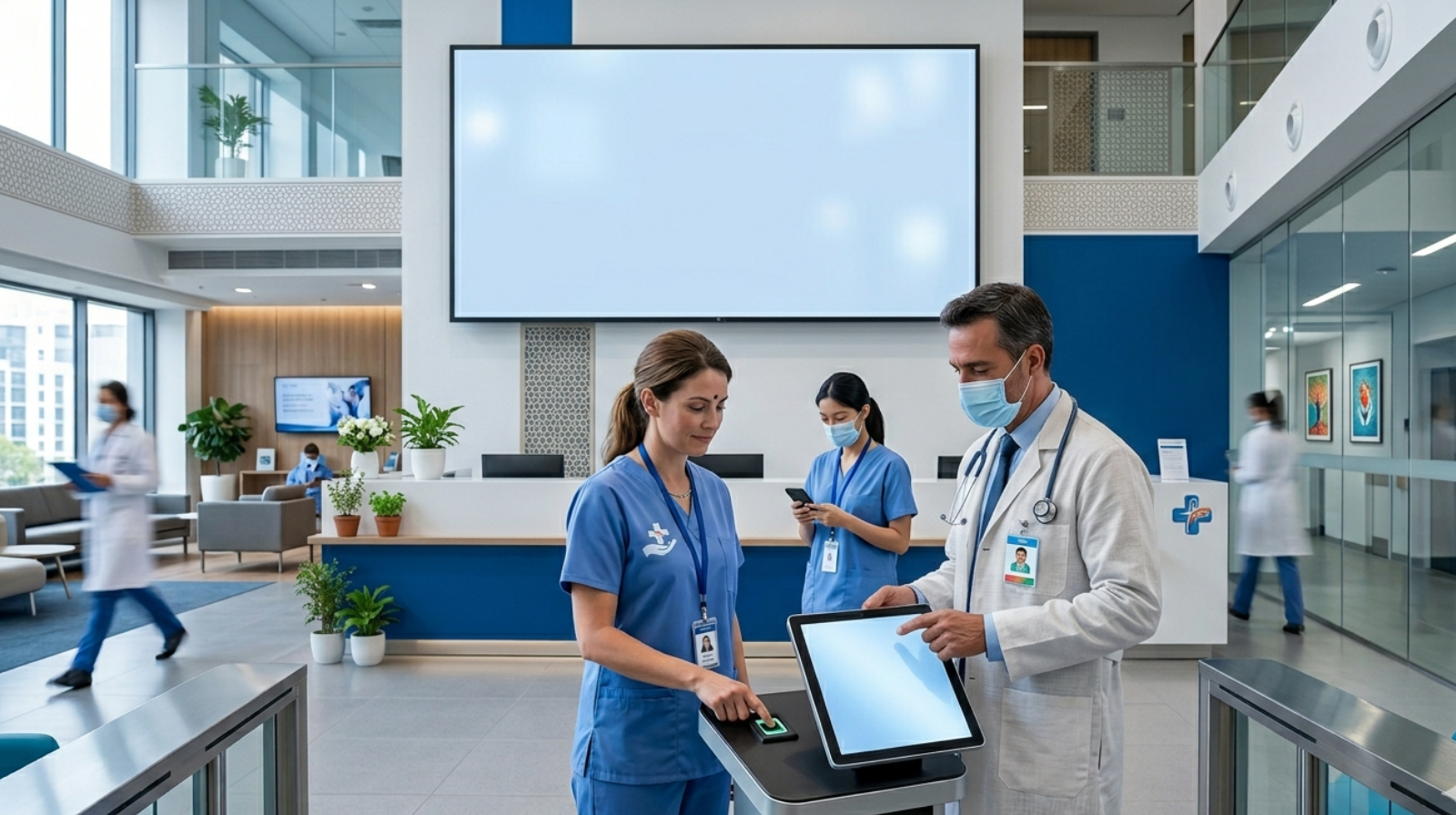
Managing healthcare staff efficiently is one of the biggest operational challenges for hospitals and clinics. A modern Attendance App for Hospitals helps healthcare organizations track employee attendance accurately, manage complex shift schedules, reduce payroll errors, and improve workforce visibility. Whether you operate a large hospital, diagnostic center, or small clinic, the right attendance management solution can streamline daily operations and support better patient care.
This is why healthcare services are choosing to use a modern Attendance App rather than manual attendance systems such as paper registers, spreadsheets, and old punch machines.
A multi-specialty hospital, a diagnostic center, a dental clinic, or even a small healthcare facility needs a modern system.
An attendance app is much more than a simple electronic attendance app. It can help healthcare services streamline their HR operations and field staff. Best of all, it can reduce absenteeism and help the organization stay compliant while also keeping the administrative burden to a minimum.
In this article, we will cover why the healthcare industry needs a modern attendance app and the challenges this industry faces. We will discuss the most important components of a modern attendance app and how the right attendance app can help radically change the daily operations of a hospital or a healthcare clinic.
Healthcare organizations looking to streamline workforce operations can benefit from an attendance and payroll management system that automates employee tracking, salary processing, and compliance management.
Attendance App for Hospitals: Solving Attendance Challenges in Healthcare
Healthcare is a people business. Unlike traditional businesses, hospitals are open 24/7 with varying staff categories that rotate shifts and cover emergencies.
Managing attendance without the aid of automated systems creates serious operational challenges.
Complexity of Shift Patterns
One of the challenges is the complexity of shift patterns. Staff across the categories and departments (doctors, nurses, ward staff, receptionists, pharmacists, technicians, housekeepers, and more) work shifts of different timings. Using registers or Excel sheets to capture staff attendance is almost impossible.
Proxy Attendance and Buddy Punching
The proxy attendance and buddy punching attendance systems are more common challenges. Many clinics and hospitals still employ traditional attendance machines, and some staff members enter attendance for their coworkers. This results in payroll discrepancies and poor accountability.
Overtime Management Challenges
Overtime is another significant challenge for hospitals. Employees are frequently required to take emergency shifts, work night duties, and perform surgeries that extend beyond the scheduled work. The manual systems are unable to capture this, and the result is broken staff relations and pay disputes.
Managing Mobile and Field Staff
Most healthcare organizations also have mobile or field staff, such as ambulatory care staff, unit-based small teams, hub-and-spoke models, and home healthcare staff. Without mobile attendance systems, attendance reporting is extremely difficult.
Administrative Burden
The final challenge is the administrative burden. The manual systems result in attendance and payroll discrepancies, and HR staff spend inordinate amounts of time calculating attendance, preparing payroll, correcting mistakes, and resolving disputes. This adds operational costs and reduces productivity.
Hospitals that employ home healthcare workers and outreach teams can improve accountability using a field employee attendance tracking system without compromising employee privacy.
What is an Attendance App for Hospitals?
A hospital attendance management system is used to digitally track and manage employee attendance at a hospital.
Healthcare attendance management systems manage more complex workforce needs and requirements compared to standard attendance management systems. Complexities of a workforce can include overtime, remote attendance, and attendance management by department; multiple and rotating shifts, and real-time data and analytics.
A hospital attendance management system can also combine:
- Mobile attendance management
- Location attendance systems using GPS
- Cloud-based attendance systems
- Real-time data and analytics
- Biometric attendance systems
Each of these systems reduces the hospital burden of keeping manual and accurate records for employee attendance.
The best employee attendance management systems integrate workforce management for all departments in multiple branches within a single system.
Why Every Healthcare Facility Needs an Attendance App for Hospitals
Effective attendance management systems help hospitals design and automate each employee’s attendance to ensure that attendance is never missed.
An effective staff attendance management system also eliminates manual attendance errors.
An effective attendance management system also enables hospital staff to effectively manage and plan operations, staff absenteeism, arrivals, and department staffing, and attendance in real time.
Improved Shift Management
Hospital staff, including physicians, may work split shifts, and many employees may work night shifts and rotate shifts. An effective attendance management system automatically records attendance for each shift. An effective attendance management system also enables effective staffing and planning.
Reduced Payroll Errors
Maintaining accurate attendance records is essential for payroll.
Without accurate attendance records, employees will dispute payroll calculations for missing overtime, incorrect deductions, or attendance records that do not match.
The integration of automated attendance monitoring software and payroll systems substantially decreases calculation errors and enhances the precision of payroll calculations.
Time savings for the administration augment employee trust.
Real-Time Workforce Visibility
Hospital administrators need immediate access to the availability of the workforce, such as:
- Who is the nurse on duty?
- Who is the doctor in the emergency ward?
- How many are absent today?
- Who is working overtime today?
A cloud-based healthcare employee attendance application provides real-time dashboards to respond to these queries instantaneously.
This results in more efficient operations and improved decision-making.
Improved Compliance and Record Keeping
Healthcare organizations often need attendance records for audits, compliance, labor regulations, and payroll documentation.
Manual registers can be very misleading.
A digital clinic staff attendance software automatically secures attendance data and generates reports on demand.
This allows hospitals to document attendance without additional administrative tasks.
Key Features of the Best Attendance System for Hospitals
Identifying the most valuable features in healthcare operations is critical to selecting the best solution.
Mobile Attendance Tracking
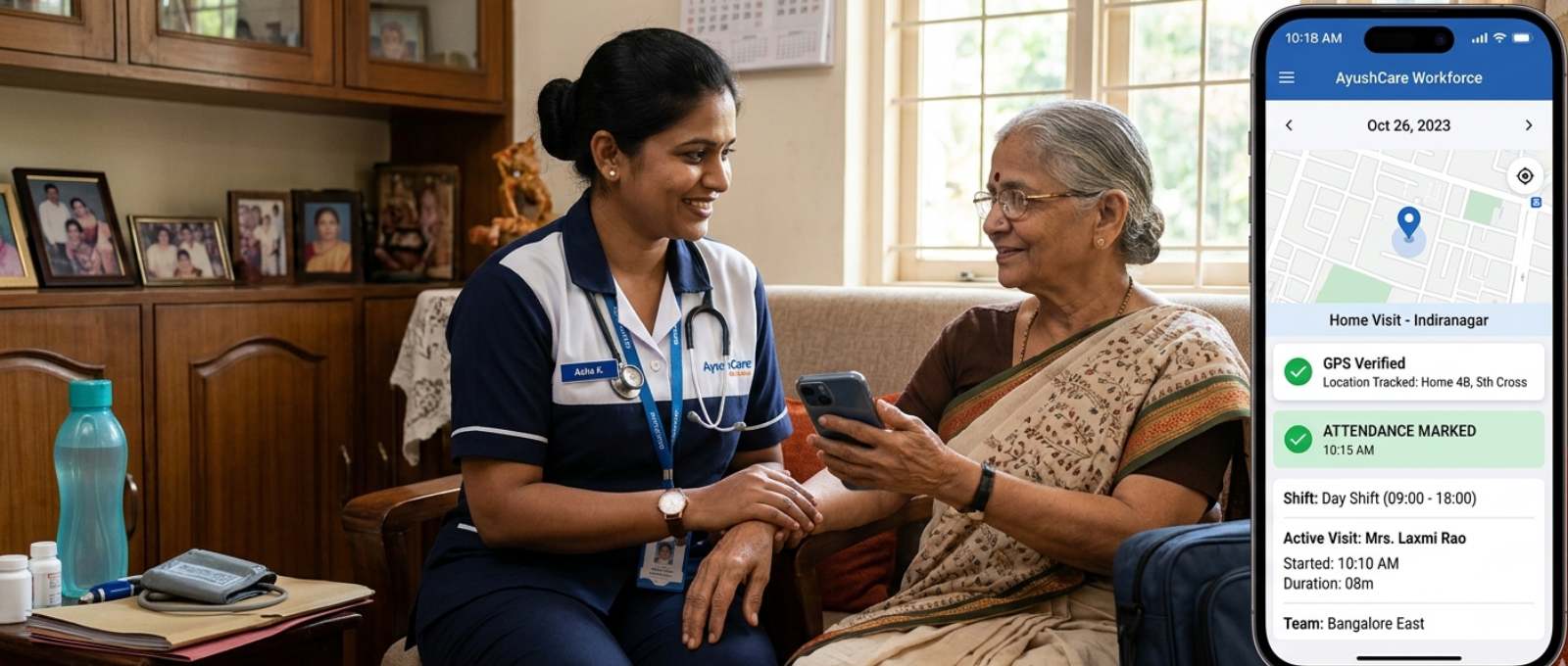
A contemporary mobile attendance application allows staff to log attendance on their mobile devices.
This is particularly beneficial for:
- Field healthcare workers
- Home visit staff
- Ambulance teams
- Remote medical teams
- Multi-branch hospital groups
Mobile attendance offers flexibility and accurate recordkeeping.
Using Biometric Authentication
With biometric attendance systems, fingerprint or facial recognition is used to deter proxy attendance.
Biometric systems allow accurate payroll processing, as only staff members can register attendance.
Biometric systems are especially helpful for larger hospitals where a significant number of staff are divided among multiple units.
Utilizing GPS for Attendance Purposes
To check attendance, staff members must be situated at designated locations.
It is most effective for:
- Staff are located at different points within the healthcare system
- Home health care services
- Collection staff
- Healthcare outreach services
In addition, GPS positioning promotes transparency and order.
Management of Shifts and Rosters
An ideal system allows the administrators to perform the following tasks:
- Construct shifts that rotate
- Allocate shifts every week
- Administer shifts that occur at night
- Monitor and control overtime
- Provide the means to cover shifts on short notice
This enables better workforce planning and lessens HR burdens.
Instant Notifications
Managers are notified when employees are:
- Delayed
- Absent
- Fail to complete a shift
- Complete over a shift
- Leave early
Real-time notifications allow healthcare organizations to make the necessary changes before disruptions occur.
In-Depth Analytics and Reports
Contemporary attendance tracking software contains the following types of reports:
- Attendance on an employee and departmental basis
- Reports containing records of overtime worked
- Performance of different shifts
- Trends in an employee’s punctuality
Management can enhance operational effectiveness by analyzing these metrics.
How an Attendance App for Hospitals Improves Patient Care
There are hospital owners who think attendance systems cover only HR functions.
This is, however, not accurate, as the management of attendance is directly correlated to the care of patients and the quality thereof.
Hospitals can optimally allocate staff to prevent shortages and delays, as well as improve the response time during emergencies.
Management has the ability to monitor attendance at all times, thus allowing staff coverage during unexpected absences.
Employee burnout is common in healthcare providers due to a lack of focus on shift management and poor scheduling. This ultimately can jeopardize the safety of your patients due to increased chances of error among staff.
Keeping a consistent system to track the attendance of doctors and staff will keep them organized and improve the coordination of the hospital.
Improving the management of workers will ultimately improve the management of and satisfaction of the patients.
Why Small Clinics Also Need Attendance Management Software
A common misconception held by owners of small clinics is that attendance management systems are meant only for large hospitals. This is incorrect.
Cloud-based systems can be affordably purchased and utilized in small clinics.
Common Challenges Faced by Small Clinics
- Late staff arrivals
- Confusion when processing payroll
- Unaccounted overtime
- Poor coordination of shifts
- Manipulation of attendance records
These clinic challenges can be solved by an affordable Attendance App for Hospitals that is designed to support both small clinics and large healthcare facilities.
Even clinics with as few as 15 staff members can benefit from improved operational management using an attendance tracking system.
Choosing the Best Attendance App for Hospitals and Clinics
Reliability Over Cost Savings
A major oversight made by many organizations wishing to install low-cost attendance solutions is the lack of features specific to the management of healthcare systems. This usually creates more problems later due to poor reporting, limited scalability, or inaccurate tracking. Hospitals should prioritize reliability, scalability, and ease of use.
Accessibility to Mobile Devices
A major focus of modern healthcare is mobility. If a system cannot be accessed from a mobile phone, it cannot fulfill the operational needs of a healthcare system.
A mobile attendance system should be adequately designed to fulfill the needs of a healthcare system.
Poor Design and Integration of the System
An attendance management system, at its core, is designed to function within the domains of:
- Payroll
- HR Management
- Workforce Management
- Shift Management
- Workforce Reporting
A poorly integrated attendance management system will only add to the complexity of administration.
Poor User Experience
Complex systems decrease employee adoption.
The best attendance solutions are simple, fast, and easy to use by both staff and administrators.
The Future of Attendance Apps for Hospitals
The Healthcare workforce management systems are becoming increasingly digital.
In the future, the hospital will be using attendance systems driven by AI to do the work:
- Forecast staffing shortages
- Optimize and manage shifts automatically
- Recognize absence anomalies
- Measure and analyze workforce productivity
Cloud-based attendance systems will become more integrated with hospital management systems.
AI-powered Attendance App for Hospitals solutions will help healthcare organizations predict staffing shortages and improve workforce planning.
The first organisations to modernise their attendance systems will be the ones to have a significant improvement in their operations.
As healthcare operations become more technology-driven, understanding the future of workforce management in healthcare can help organizations prepare for smarter staffing and workforce planning.
How QR Staff Supports Healthcare Workforce Management
QR Staff helps hospitals and clinics streamline attendance management, shift scheduling, payroll processing, and workforce monitoring through an easy-to-use platform. With features such as mobile attendance, GPS tracking, real-time reporting, and automated workforce analytics, healthcare organizations can improve operational efficiency while ensuring the right staff is available when needed.
Final Thoughts
The efficiency of the workforce is a crucial element in the operation of healthcare systems. No matter how well designed the other components of the healthcare system are, they will not operate as intended without well-coordinated staff operations.
A modern Attendance App for Hospitals allows accurate attendance tracking, timely payroll processing, better shift management, and complete workforce visibility.
As the size and complexity of the healthcare facility increase, so will the time savings, a reduction in the workload of administrative processes, and the gain in productivity, as a result of the investment in the appropriate attendance management software.
It is a well-known fact that a hospital’s capability to meet patient care demands is directly related to the adequacy of the staffing. Effective management of attendance is essential for the timely availability of staff.
In the current digital age, most healthcare systems find that managing staff attendance in an efficient manner is no longer an option but a necessity.
Frequently Asked Questions (FAQ)
Q1. What is the best attendance system for hospitals?
The best attendance system/solution for hospitals is one that includes management of shifts and attendance, biometrics, attendance recording on a mobile device or via GPS, instant reporting,g and a payroll module.
Q2. Why do hospitals need an attendance app?
Managing tight and complicated timetables, accurately tracking how many hours employees worked, minimizing mistakes on payroll, and clarifying the visibility of the workforce are all reasons why hospitals need attendance apps.
Q3. Can small clinics use attendance management software?
Absolutely! Thanks to the technological advances made in the design of cloud-based attendance systems, small clinics can use the same systems as larger hospitals.
Q4. What is a biometric attendance app?
A biometric attendance app is an attendance application that employs either fingerprint technology or facial recognition technology to capture attendance and eliminate mistakes related to proxy attendance.
Q5. How does a mobile attendance app work?
Mobile attendance apps let employees mark their attendance directly on their smartphones with systems integrating GPS and real-time tracking.
Q6. Is attendance software helpful for doctors and nurses?
Absolutely! A doctor attendance tracking system can help hospitals administer the scheduling of doctors, shifts, and rotations, as well as overtime and workforce planning.
Leave a Reply