Introduction
The Future of Workforce Management in India is being shaped by artificial intelligence, hybrid work models, skills-based hiring, employee well-being, and data-driven HR strategies. In 2026, Indian businesses are no longer treating workforce management as a back-office HR function. It has become a core business strategy that directly impacts productivity, innovation, retention, and long-term growth.
From startups and MSMEs to global enterprises operating in India, organizations are redesigning how they hire, manage, train, and engage employees. The Indian workforce is becoming more digital, flexible, and AI-assisted than ever before. Companies that fail to adapt to these changes risk losing talent, reducing operational efficiency, and falling behind competitors.
India’s workforce transformation is also accelerated by the rapid adoption of AI tools across workplaces. Reports suggest Indian employees are among the world’s fastest adopters of AI technologies in professional environments.
What is the Future of Workforce Management in 2026?
Workforce management in 2026 goes far beyond attendance tracking and payroll processing. Modern workforce management includes talent acquisition, AI-driven scheduling, workforce analytics, employee experience, learning and development, compliance, productivity tracking, and hybrid work coordination.
Organizations now focus on creating agile work environments where employees can collaborate effectively regardless of location. The rise of cloud-based HR systems and AI-powered workforce platforms allows companies to monitor performance, predict staffing needs, and personalize employee experiences in real time.
Indian businesses are increasingly moving toward intelligent workforce ecosystems where humans and AI systems work together. Experts describe this as an “AI-first workforce transformation,” where AI supports routine tasks while employees focus on creativity, strategic thinking, and decision-making.
AI and Automation Are Becoming the Core of Workforce Management
Artificial intelligence is no longer an optional technology for Indian companies. In 2026, AI is becoming deeply integrated into workforce operations, including recruitment, employee engagement, performance management, and workforce planning.
Many companies are using AI to automate repetitive administrative work such as resume screening, interview scheduling, payroll validation, leave management, and employee onboarding. This automation allows HR teams to focus more on strategy and employee development rather than routine tasks.
Indian workplaces are rapidly embracing AI tools at scale. According to recent workforce research, India is emerging as a global leader in workplace AI adoption, with a significant percentage of employees using AI several times a week.
Organizations are also introducing AI-powered productivity systems that help managers forecast workforce demand, analyze employee performance trends, and improve operational planning. Predictive workforce analytics is becoming one of the biggest trends in workforce management in India.
Another important shift is the rise of AI-human collaboration models. Instead of replacing employees completely, businesses are redesigning jobs where AI handles repetitive tasks while humans focus on leadership, creativity, customer relationships, and innovation.
Hybrid Work Is No Longer Temporary
Hybrid work was once considered a post-pandemic adjustment. In 2026, it became a long-term operational model across India.
As hybrid and mobile workforces continue to grow, companies need smarter ways to track field employees and improve operational visibility without intrusive monitoring practices.
Companies are no longer measuring productivity through office attendance. Instead, they are focusing on outcomes, project delivery, collaboration quality, and employee accountability. Modern workforce management systems are designed to support distributed teams working from offices, homes, co-working spaces, and tier-2 cities.
Indian companies are increasingly hiring talent from smaller cities due to improved digital infrastructure and remote collaboration tools. This approach helps organizations access skilled professionals while reducing hiring costs and improving workforce diversity.
Hybrid workforce management also requires stronger digital communication systems, cybersecurity policies, virtual collaboration platforms, and employee engagement strategies. Businesses are investing heavily in digital workplace technologies to maintain productivity and employee satisfaction.
The future workplace is becoming more flexible, personalized, and employee-centric. Companies that provide flexible work arrangements are seeing stronger retention rates and improved employer branding.
Skills-Based Hiring Is Replacing Traditional Recruitment
One of the biggest workforce management trends in India for 2026 is the shift from degree-based hiring to skills-based hiring.
Organizations now prioritize practical skills, adaptability, AI literacy, and problem-solving abilities over traditional academic qualifications. Employers are increasingly valuing certifications, project portfolios, micro-credentials, and hands-on experience.
This transformation is especially visible in technology, data analytics, cybersecurity, AI operations, digital marketing, and automation-focused industries. Companies want employees who can contribute immediately rather than relying only on theoretical knowledge.
The growing importance of AI and automation has also increased demand for continuous learning. Businesses now expect employees to upgrade their skills regularly to remain relevant in evolving work environments.
As a result, workforce management strategies now include strong internal learning ecosystems. Many companies are partnering with educational institutions, online learning platforms, and certification providers to build future-ready talent pipelines.
Employee Well-Being Is Becoming a Business Priority
In 2026, workforce management is not only about productivity. Employee well-being has become a critical business strategy.
Indian organizations are realizing that burnout, stress, disengagement, and mental fatigue directly affect business performance. Modern companies are therefore investing in mental health programs, financial wellness initiatives, flexible work schedules, counseling support, and employee assistance programs.
Research indicates that future workplaces in India will become more human-centered, with greater focus on mental wellness, financial planning, caregiving support, and stress management initiatives.
The modern workforce expects employers to support work-life balance and personal growth. Organizations that ignore employee wellness may struggle with retention and talent acquisition.
Companies are also using workforce analytics to identify burnout risks, disengagement patterns, and productivity fluctuations. AI-powered HR systems now help managers monitor workforce well-being more effectively while maintaining privacy and compliance.
Workforce Analytics Is Driving Smarter Decisions
Data-driven workforce management is becoming essential for Indian businesses in 2026.
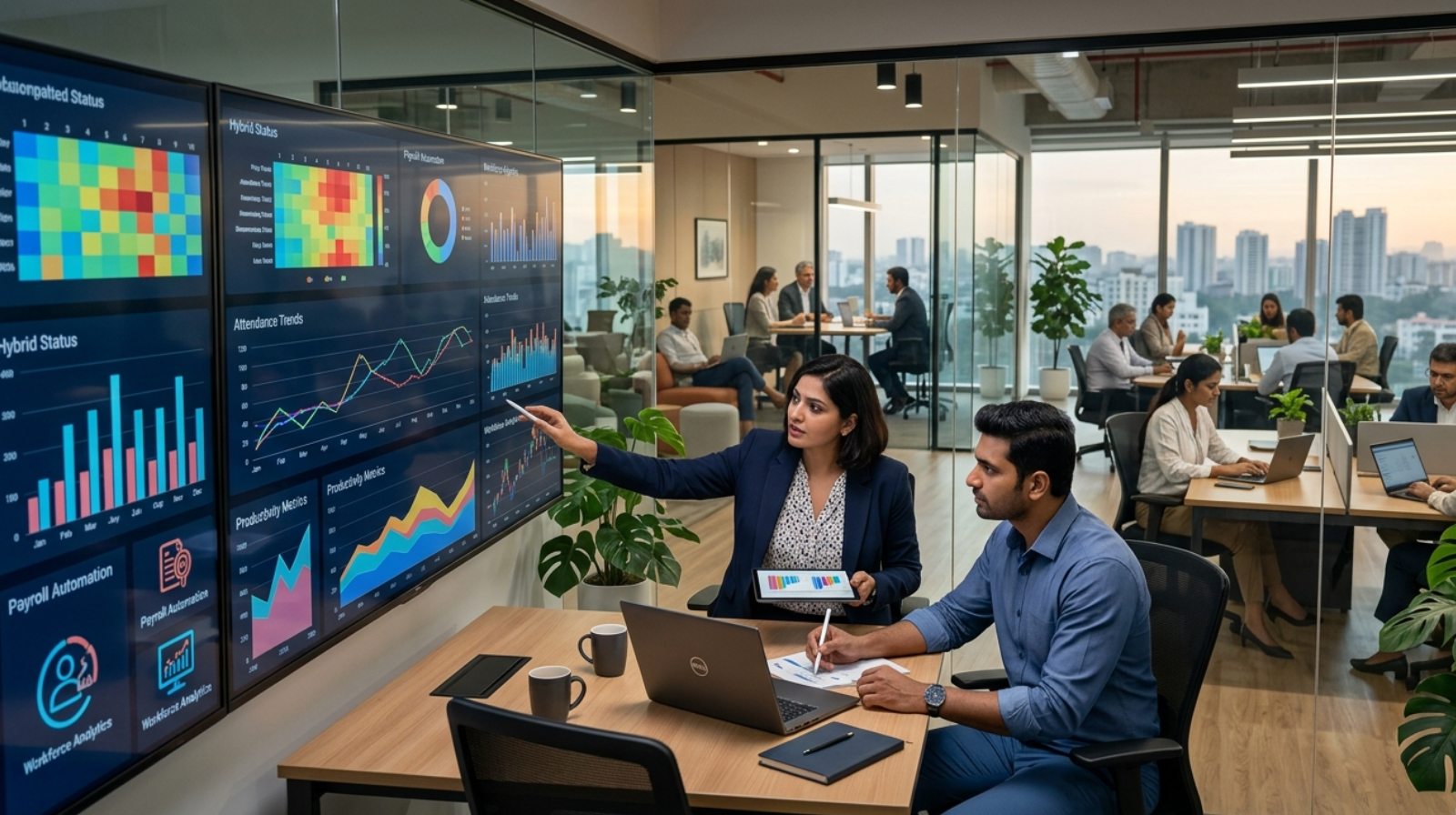
Organizations are increasingly relying on workforce analytics dashboards to track employee performance, hiring efficiency, attrition trends, engagement levels, productivity metrics, and training outcomes.
Advanced workforce management platforms can now predict staffing shortages, identify skill gaps, and optimize workforce allocation. This allows businesses to improve efficiency while reducing operational costs.
Predictive analytics is especially valuable for industries like retail, manufacturing, IT services, healthcare, logistics, and customer support, where workforce demand changes rapidly.
Modern HR leaders are no longer depending only on intuition. Workforce decisions are increasingly supported by real-time data insights and AI-powered forecasting systems.
Gig Workforce and Freelance Economy Are Expanding
India’s gig economy is growing rapidly, and workforce management systems are evolving to support flexible talent models.
Many businesses now combine full-time employees, freelancers, consultants, remote workers, and project-based specialists within the same workforce ecosystem. This blended workforce model allows organizations to scale operations quickly while controlling labor costs.
Freelancers and independent professionals are also using AI tools to improve productivity, learn new skills, and stay competitive in online labor markets.
This shift is forcing companies to redesign workforce policies, onboarding systems, compliance structures, and performance management frameworks. Businesses must now manage diverse worker categories while ensuring collaboration, engagement, and productivity.
Workforce Compliance and Payroll Modernization Are Evolving
As labor regulations and workforce structures become more complex, Indian organizations are modernizing payroll and compliance systems.
Cloud-based payroll platforms, automated compliance tracking, digital salary wallets, and flexible pay structures are becoming more common. Businesses are also adopting analytics-driven compensation systems that focus on fairness, transparency, and performance outcomes.
In 2026, payroll management is no longer only about salary processing. It is closely connected to employee experience, financial wellness, and workforce trust.
Organizations that invest in transparent compensation systems and modern payroll technologies are likely to attract and retain top talent more effectively.
The Rise of AI-Ready Workforces
Perhaps the most important workforce management trend in India is the creation of AI-ready workforces.
Companies are investing heavily in AI training, AI fluency programs, prompt engineering skills, automation awareness, and digital transformation initiatives. Organizations now understand that AI success depends not only on technology adoption but also on workforce readiness.
Educational institutions in India are also responding to this shift. New AI and machine learning programs are being introduced to prepare future professionals for AI-driven workplaces.
The workforce of the future will require employees who can collaborate effectively with AI systems while maintaining strong human skills such as leadership, communication, ethics, and creativity.
How QR Staff Supports the Future of Workforce Management
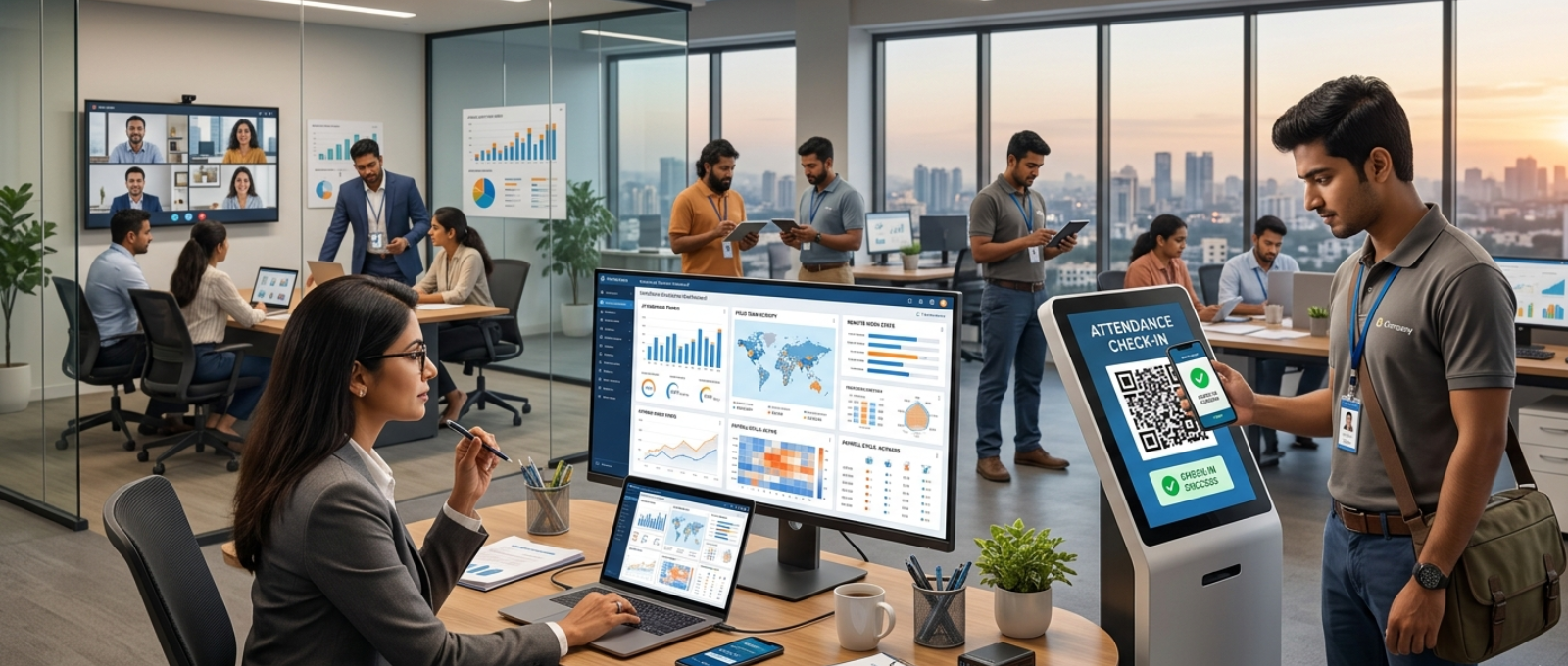
The future of workforce management depends on automation, mobility, and real-time workforce visibility. QR Staff aligns with these trends by providing QR code attendance, GPS-based employee tracking, payroll automation, leave management, overtime calculation, and workforce reporting from a single platform.
Unlike traditional attendance systems that require expensive biometric hardware, QR Staff enables businesses to digitize workforce management using smartphones and cloud technology. This makes it particularly valuable for startups, retail businesses, clinics, field teams, and growing organizations looking to modernize HR operations while controlling costs.
Conclusion
The future of workforce management in India is intelligent, flexible, skill-driven, and deeply connected to AI-powered transformation. In 2026, organizations are moving beyond traditional HR practices and building dynamic workforce ecosystems focused on agility, productivity, employee experience, and continuous learning.
Businesses that invest in AI readiness, workforce analytics, employee well-being, hybrid work infrastructure, and skills development will gain a strong competitive advantage in the coming years.
India is entering a new era where workforce management is not just about managing employees. It is about building future-ready organizations capable of thriving in a rapidly evolving digital economy.
FAQs
What is the future of workforce management in India?
The future of workforce management in India focuses on AI integration, hybrid work, workforce analytics, employee well-being, and skills-based hiring. Companies are adopting digital HR technologies to improve productivity and employee experience.
Why is AI important in workforce management?
AI helps automate repetitive HR tasks, improve hiring efficiency, predict workforce trends, and enhance employee engagement. It also supports smarter business decision-making through workforce analytics.
What are the biggest workforce trends in India for 2026?
The biggest trends include AI-powered HR systems, hybrid work models, skills-based recruitment, employee wellness programs, workforce analytics, and gig economy expansion.
How are companies managing hybrid workforces?
Organizations use cloud-based collaboration tools, digital HR systems, performance tracking platforms, and flexible work policies to manage distributed teams effectively.
What skills will be important for the future workforce?
AI literacy, data analysis, communication, adaptability, problem-solving, leadership, and digital collaboration skills will be highly important in future workplaces.
Why is employee well-being becoming important in workforce management?
Companies are recognizing that employee mental health, work-life balance, and financial wellness directly affect productivity, retention, and overall business performance.
Leave a Reply